
What Is a Brady Violation? Legal Definition and Examples
A Brady violation is the suppression of evidence favorable to a defendant. Learn the legal definition, real cases, and how it gets caught.



A Brady violation happens when the prosecution withholds evidence favorable to the defendant, and that evidence is significant enough to affect the outcome of the case. The rule comes from a 1963 Supreme Court decision, and it's one of the most important due process protections in American criminal law.
Brady violations aren't a technicality. They've overturned convictions, freed innocent people after decades in prison, and even ended political careers. Here's what the rule actually requires, why it gets broken, and how legal teams catch a violation before it costs someone their case.
How The Brady Rule Became Law
The Brady Rule came to fruition from a trial in Maryland. Here’s what happened: John Brady and Charles Boblit were arrested for robbing and killing William Brooks in Maryland. Brady admitted to being involved in the crime, but insisted Boblit had done the actual killing. Before trial, the prosecutors handed over several of Boblit’s statements to the police, but withheld the one where Boblit admitted to committing the murder himself.
Brady and his lawyers didn't see that statement until after he'd already been convicted and sentenced to death. In 1963, the Supreme Court ruled in Brady v. Maryland that suppressing evidence favorable to a defendant violates due process when the evidence is material to guilt or punishment — regardless of whether the prosecutor acted in good or bad faith.
“If the kind of technology we have today had been available when this case was tried, those police statements would have been flagged immediately as part of discovery,” explains Martin Gasparian, Attorney and Owner of Maison Law. “Brady’s case would have looked very different.”
The Court has refined the rule since. Giglio v. United States extended it in 1972 to cover evidence that could impeach a witness's credibility, like an undisclosed deal for testimony.
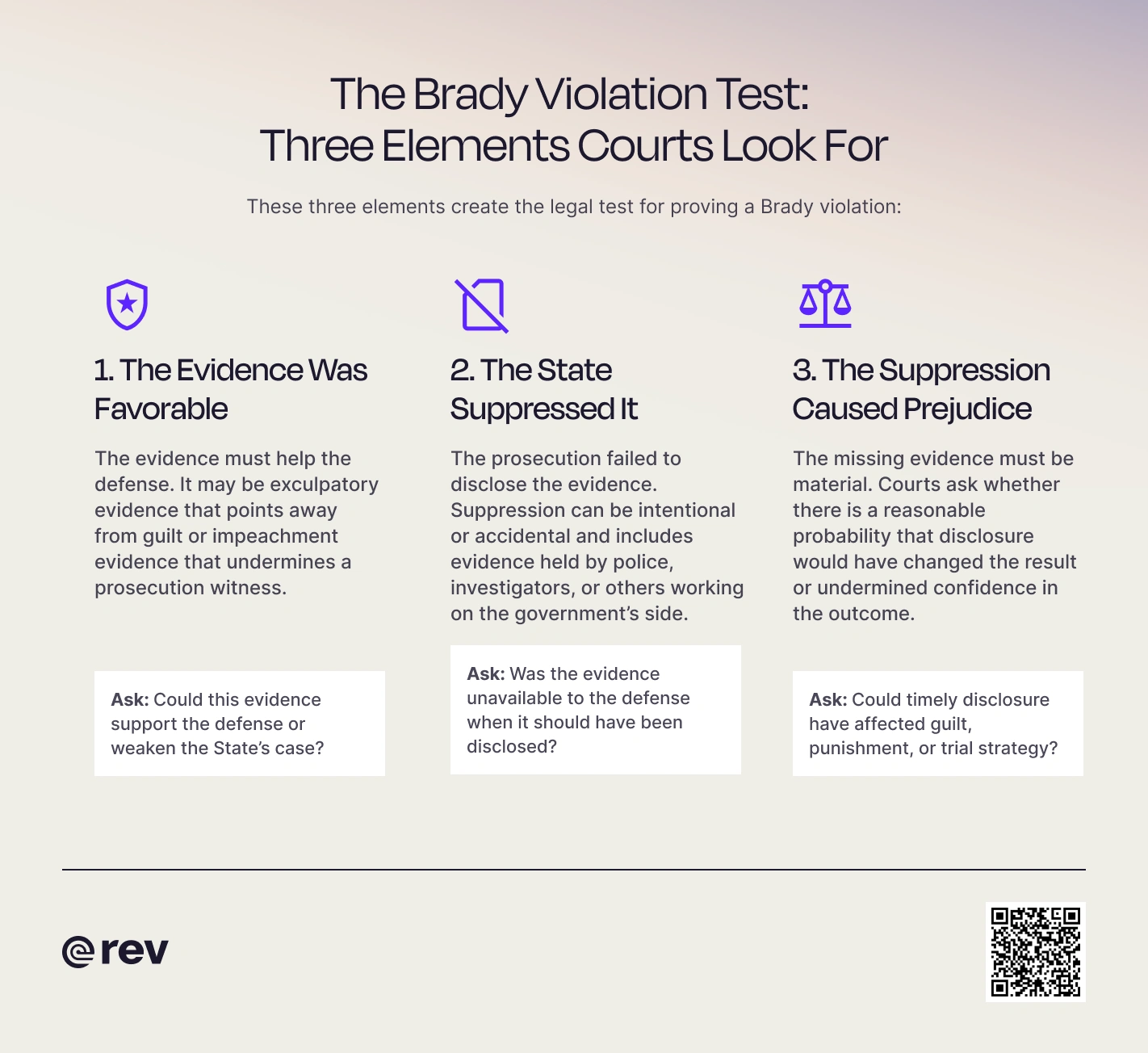
A later Supreme Court case, Strickler v. Greene, established the three elements needed to prove a Brady violation: the evidence was favorable to the defense, the State suppressed it, and the suppression prejudiced the outcome. All three have to be true. That's the legal test courts still use today.
Why Do Brady Violations Happen?
Most Brady violations aren't a prosecutor plotting to bury a smoking gun. They're a case file problem. A jail call, a witness interview, or a lab report sits in a folder that wasn’t flagged as favorable to the defense, and no one connects it to what the defendant needs until it's too late.
Some Brady violations are willful. More often, they come from decentralized systems: police hold evidence separately from prosecutors, and if that evidence never makes it into the shared case file, it never gets disclosed. Either way, the defendant pays the price for a filing issue nobody intended to create.
Obligations Under The Law
Brady puts the disclosure duty on the prosecution, not the defense. That duty covers exculpatory evidence, meaning anything that points away from guilt, along with impeachment evidence that undermines a witness's credibility.
The obligation extends further than most people expect. Under Kyles v. Whitley, prosecutors are responsible for favorable evidence held by anyone working the government's side of a case, including police and investigators. If a detective knows about a report that clears the defendant and never passes it along, that's still a violation, as they had a constitutional duty to disclose the evidence.
Defense attorneys carry their own disclosure obligations in most states, typically narrower and reciprocal. Brady evidence works differently. It's a constitutional floor, not a discovery courtesy, and it applies whether or not the defense specifically asked for it.
Examples Of Brady Violations
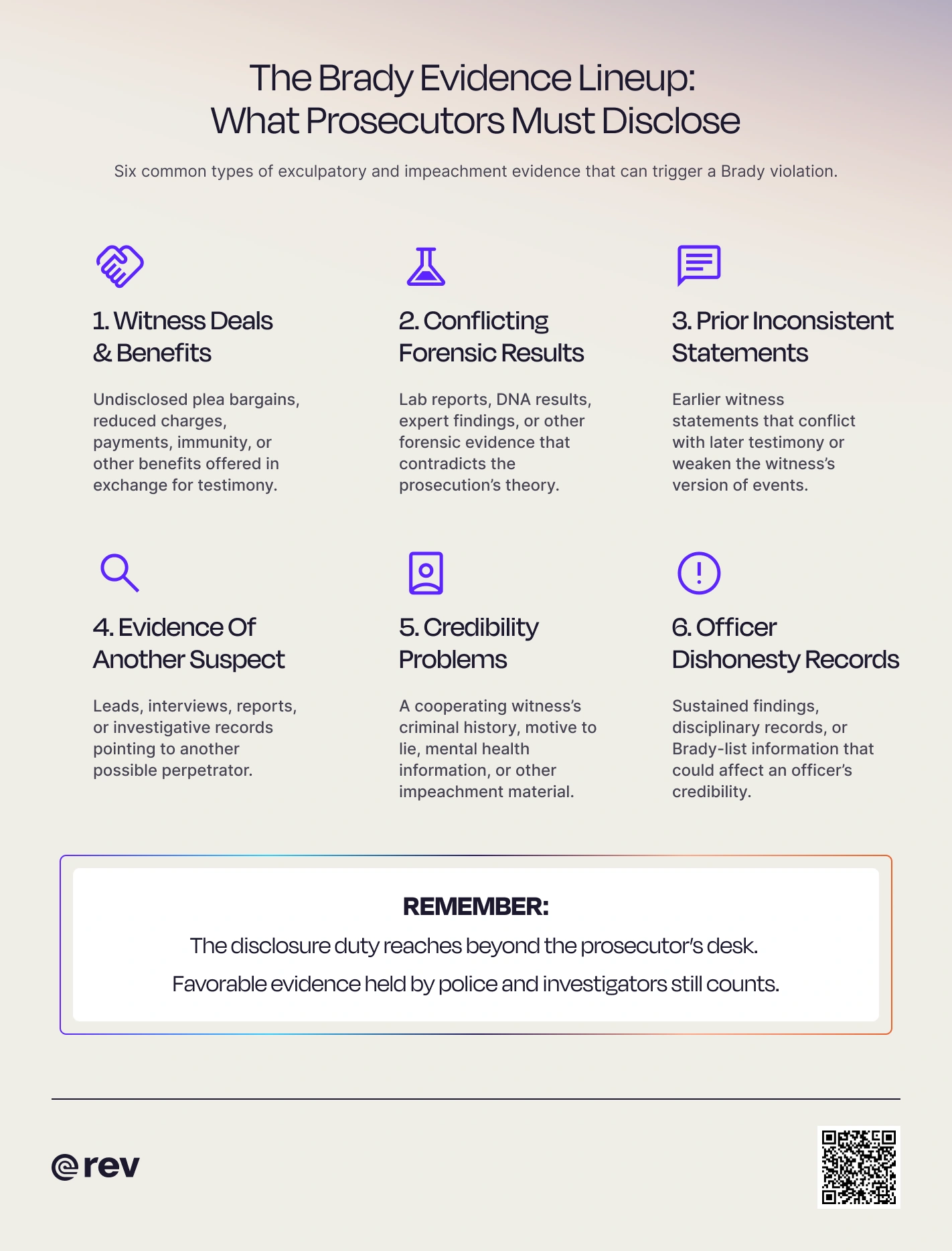
Brady evidence takes several forms, and it isn't always obvious. Some of the most common examples of withheld evidence that trigger a violation include:
- An undisclosed plea deal or other benefit given to a witness in exchange for testimony
- A lab report or forensic result that contradicts the prosecution's theory of the case
- A prior inconsistent statement from a witness that never made it into the case file
- Evidence that police investigated another suspect and didn't pursue it
- A cooperating witness's criminal history, motive to lie, or mental health record
- An officer's documented history of dishonesty, sometimes tracked on an internal Brady list
Brady Violation Consequences
When a court finds a Brady violation, the remedy depends on when it's caught. Before trial, judges can order the evidence disclosed, delay proceedings, or exclude testimony. After a conviction, the remedies escalate: courts can grant a new trial, vacate a conviction, or dismiss charges outright.
Case prosecutors face consequences too, though enforcement is inconsistent. Bar discipline, contempt findings, and public reprimands happen, but they're rare relative to how often Brady violations surface. Civil lawsuits against prosecutors for withholding evidence rarely succeed, since prosecutors generally have absolute immunity for conduct tied to their role in a case.
That gap between how serious a violation is and how rarely it's punished is exactly why courts and legislatures keep pushing for more upfront disclosure. Open-file discovery laws, mandatory Brady orders, and stricter case management standards all aim at the same problem: catching favorable evidence before it gets buried, not after.
“It's clearly devastating for a criminal case if, say, the best impeachment material is buried inside this mountain of information,” explains Alex Freeburg, founder and managing attorney of Freeburg Law.
“So nobody identifies it, the defense never sees it, and then you have a defendant being prosecuted without information that may have helped challenge the case. That's exactly the kind of eventuality Brady was designed to prevent.”
Well-Known Brady Cases
A few cases show how much damage a Brady violation can do, and how long it can take to undo one. Here are a few examples:
- Morton v Texas
- Michael Morton spent nearly 25 years in prison for his wife's murder before DNA evidence cleared him. The prosecutor had withheld a statement from Morton's son describing a different attacker, among other evidence. The case led to the Michael Morton Act, one of the broadest open-file discovery laws in the country.
- United States v. Stevens
- This case ended Senator Ted Stevens's political career. His corruption conviction was set aside and the indictment dismissed after it came out that prosecutors had withheld evidence favorable to his defense.
- Kyles v. Whitley
- This case established that prosecutors are responsible for favorable evidence held by police, even when the prosecutor's office never personally saw the file.
Strategies When Brady Is Called Into Question
Whether you're building a Brady claim or making sure you never have to defend against one, the fight usually comes down to two things: finding the evidence, and proving it mattered. A few strategies help on both fronts.
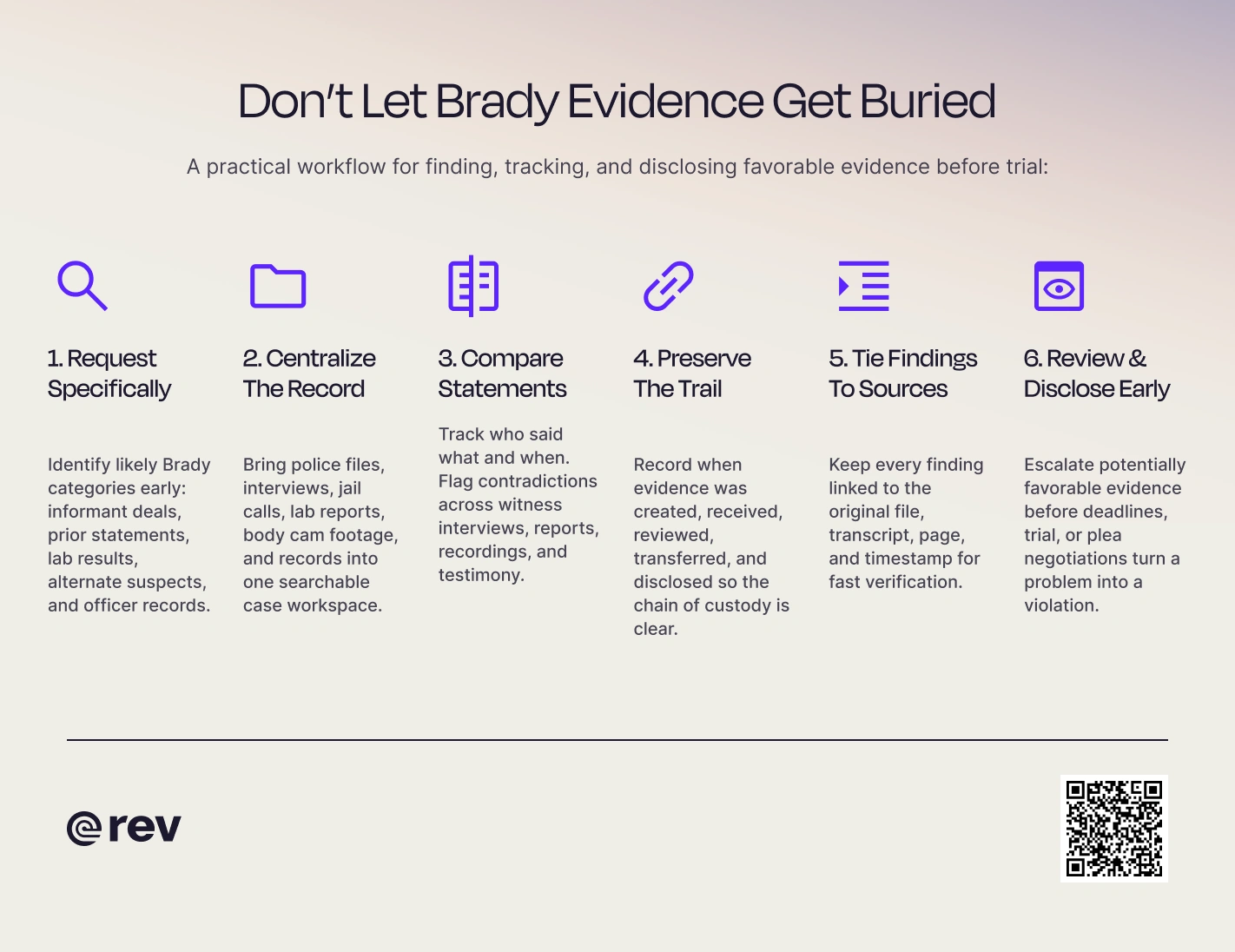
1. Request Brady Material Early And Specifically
General discovery requests are easy to answer with a general production. Specific requests — for informant deals, prior statements, lab results, officer disciplinary records — are harder to bury, and easier to prove that they were ignored if they're not turned over.
“The explosion of digital evidence has made Brady compliance much harder because evidence can now be hidden in plain sight. The problem is not always that the prosecution intentionally keeps something from the defense. Sometimes the helpful evidence is buried in a huge file dump, saved in a format the defense cannot easily search, or contained in small details like timestamps, location data, missing files, or metadata,” notes Aaron A. Pelley, Partner at Gleam Law.
“In these cases, simply handing over a hard drive is not enough. If the defense cannot reasonably find or understand the favorable evidence, then the State may have complied on paper while still undermining Brady in practice.”
2. Track Every Inconsistency Across The Record
Brady claims often live in the gaps between what different witnesses said at different times. Building a clear record of who said what, and when, makes it easier to spot the moment a prior statement should have surfaced and didn't.
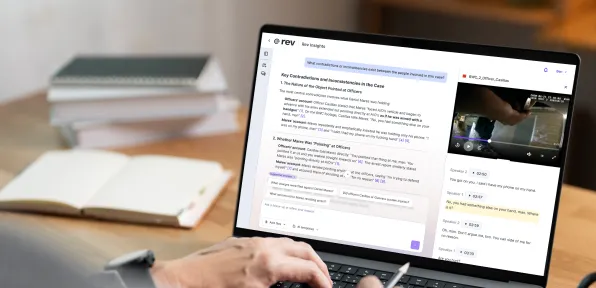
This is where legal technology can come in handy. Investigative platforms like Rev can help you parse through all your evidence at once, surface inconsistencies automatically, and interrogate your files like you would a witness.
3. Document Chain Of Custody Meticulously
A Brady claim is stronger when someone can show exactly when evidence existed, who had it, and when it should have been disclosed. Gaps in the paper trail work against whoever can't account for them. Getting proper chain of custody guidelines in place for your entire team, and regularly auditing against them, will help prevent any issues down the line.
4. Use Technology To Track Evidence Across The Case
Case files with hundreds of hours of body cam footage and interview recordings make it easy for a single favorable statement to get lost in the shuffle. Rev makes every recording searchable and timestamped, so a prior inconsistent statement or an overlooked lead surfaces before it becomes an appeal instead of a trial exhibit.
Instead of relying on memory or manual review to catch what's buried in the file, teams can use tech to search across every recording at once and cite exactly where a piece of evidence lives. That’s the kind of organized evidence review that makes Brady compliance a byproduct of good digital evidence management instead of a scramble at the eleventh hour.
Don't Let Evidence Slip Through The Cracks
Most Brady violations start from one simple issue: disorganized evidence.
Whether you're a prosecutor meeting Brady disclosure obligations or a defense team building a claim, the fastest way to close that gap is to make every recording, transcript, and file searchable and citable from the start. Rev helps legal teams do exactly that, turning hours of civil and criminal case evidence into a record that's easy to search, verify, and disclose. Looking to expand your knowledge outside of traditional discovery? Learn more about the cell phone ediscovery process on our blog.