


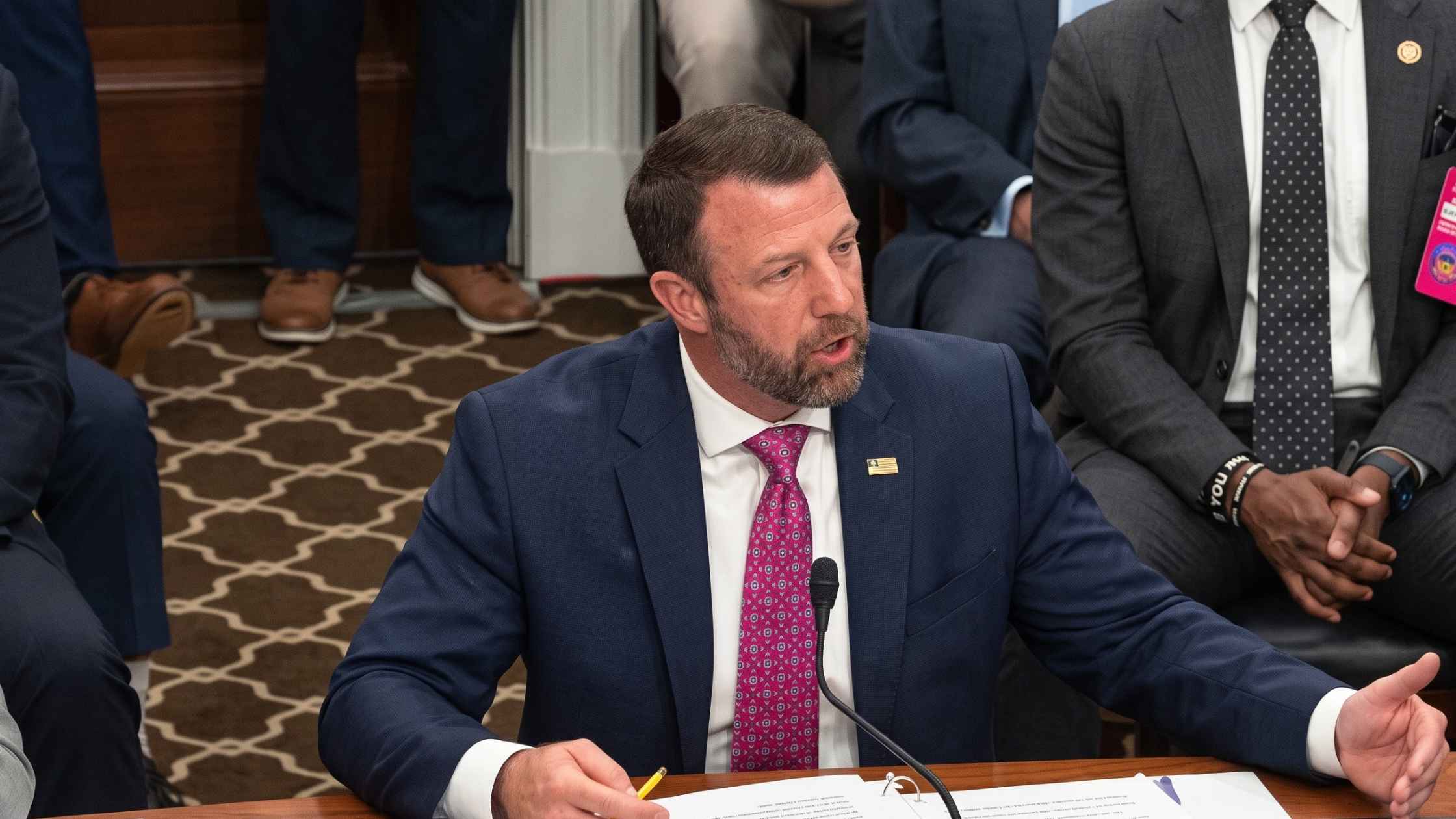
Mr. Chairman (00:00):
... the Congress [inaudible 00:12:00] everyone in here.
Representative Tom Cole (12:00):
Okay.
Mr. Chairman (12:00):
[inaudible 00:12:34].
Representative Tom Cole (12:34):
We're all shamed and please exit the building. Thank you. Is it time? Well, we're actually two minutes late, Mr. Secretary.
DHS Secretary Markwayne Mullin (12:43):
[inaudible 00:12:48].
Representative Tom Cole (12:47):
Well, Mr. Secretary, you're a young guy. I'm an old guy- Homeland Security is now called to order. Welcome back to the House, Mr. Secretary. It's been our tradition to have the Secretary of Homeland Security appear before the committee about once a year on average. And so since it's been I think a year ago last May, since your predecessor was in front of the committee and we're right in the middle of the fiscal year process for 2026, we're going to have a little visit with you as is the tradition.
(13:50)
And so I would like to start out by recognizing members for opening statements. I'm going to waive my opening statement. I reserve the right to do a closing statement if I see fit, but with that and moving right along to the gentleman from Laredo, the floor is yours for your opening statement.
Representative Henry Cuellar (14:08):
Mr. Chairman, thank you so much. And again, we want to thank you for your leadership. As you know, you'll be leaving Congress at the end of the year and I just have to say it's been a pleasure working with you and your staff along with our staff. So thank you again for the many years of experience.
(14:25)
I'd like to welcome the Secretary again. It was a pleasure talking to you yesterday and the Deputy Secretary, also Mr. Egger also, and we look forward for your testimony and the dialogue as we start here this morning.
(14:38)
There's many issues that we want to talk about, but before I get started, I'd like to take this time to acknowledge the bravery of a Border Patrol agent, Alex Medellin, who while he was off duty, he responded to a fatal plane crash in Laredo, Texas. On June 16th, he joined first responders and good Samaritans to rescue people from the flames of an airplane that crashed there in Laredo. I understand that his bravery is a reflection of the courage and the commitment of those that serve not only Laredo but all across the nation. But I just wanted to say thank you for that individual, that border patrol agent.
(15:22)
As I move forward, we certainly want to look at hearings that we've had in the past and I think we know the work that Homeland does. It's critical to the national economic security safeguarding physical and technological infrastructure and networks and making sure that we counter the foreign threats. And again, I appreciate all the work and we understand the way threats have been evolving and the way this committee has been working with your department.
(15:56)
Let me start off with the $260 billion from reconciliation. Despite the efforts of the chairman and myself, we try to finalize the funding for all of DHS in fiscal year 2026. We tried, didn't get to that, but we do know that there was a reconciliation that added $260 billion to the department. I'm a big supporter of the department, but I'm big support of Article one of the Constitution and that $260 billion is more than four times that Congress usually allocates to the department in one fiscal year, not including the disaster relief fund. These funds were never considered by the members of this subcommittee, nor did the reconciliation include a single safeguard to keep the funding accountable to the taxpayer. That should concern every member of this appropriations panel.
(17:02)
The power of the purse and the duty of oversight are inseparable, not because Congress is entitled to this authority, but because the American people deserve accountability. We attempted during the markup to add additional oversight to the reconciliation through various amendments, but we were not able to do that. We did have a few of those amendments that were put in the chairman's mark and I certainly want to thank the chairman for adding some of that.
(17:39)
A lot of the language that we were trying to add have been there for many, many, many years, but were laws when the Border Patrol and the ICE were removed from the FY26. And I'm a big supporter of ICE, of Border Patrol, but I want to see those safeguards. And they've been common sense measures like reporting deaths in federal custodies, minimum standards for detention contracts, partnership agreements, and certainly protections as we talked yesterday about the river land in my district. I do want to say that I am thankful to the chairman because he did reserve some of that, some of those protections in the chairman's mark. And I certainly want to say thank you for that.
(18:32)
I believe in strong border security, but it's got to be more than fiscal barriers, especially to the border communities where we've had historical lows. I think the numbers have gone down by 96% that I congratulate all of y'all. I did not support open borders and I do not support open borders, but again, we got to have the right measures at the border.
(18:57)
And keep in mind, the numbers went down without a single foot of border wall being constructed, without a single foot of border wall constructed. In my opinion, it's something that I've advocated for many years, you got to have repercussions at the border. You can't slap people on their hands and say, "Come into [Spanish 00:19:16]." You got to have repercussions at the border. And then at the same time, you got to work with our neighbors, Mexico and other countries. And again, numbers went down. I believe that your numbers are at 96% without a single foot of border wall.
(19:35)
But again, we got to look at what's important and technology, intelligence, well-trained personnel. I think we have reached 21,000, almost 21,500 Border Patrol agents, which I support and I supported funding for our Border Patrol, but we got to include our communities when we talk about border securities.
(19:59)
The right policies matter and as I mentioned, repercussions at the border for anybody that enters the border, the United States illegally, we got to have those repercussions.
(20:13)
The reality is the $260 billion that we added, it's going to run out. It's going to run out in three years. And when we talk about hiring the 21,500 Border Patrol agents and as you know, the reconciliation added 3,000 agents to this, but at the end of this, we got to annualize their salary.
(20:38)
So again, we got a lot of issues that we certainly want to look at and I look forward to asking some of the questions of Mr. Secretary. It's always a pleasure seeing you again and the Assistant Secretary. Look forward working with both of you all. With that, I yield back the balance of my time.
Mr. Chairman (20:57):
Thank you, Mr. Cuellar. So I'm going to go to you now for questions. Shall I deduct a minute 44 from your questioning?
Representative Henry Cuellar (21:04):
No, sir. You should add an additional minute and a half to my time.
Mr. Chairman (21:08):
Thank you for your advice. I want to let the committee members know that we had a couple of ways to go with this and so I thought it would be, especially with what's going on or not going on on the floor or that we don't know for sure what's going on on the floor. We're not going to do two rounds of questioning, but Mr. Guest, would you like to come grab your seat or are you sitting by the door for a reason the rest of us should know about?
Speaker 1 (21:34):
Didn't want to interrupt.
Mr. Chairman (21:35):
If there's a problem, we'd like to go too, but anyhow. So we're going to do one round of eight minutes per person to allow you, since it's been over a year, to allow everybody to have a good shot at having a discussion with the Secretary, but that's it. One of eight and I am going to attempt to be fairly disciplined about the eight minutes, but with that said, we're going to turn right around ...
Speaker 2 (22:02):
Mr. Mullin's opening statement. Mr. Mullin's opening statement.
Mr. Chairman (22:06):
Oh yeah, that's right. Mr. Secretary, would you like to do an opening statement?
DHS Secretary Markwayne Mullin (22:10):
Well, for the sake of time, and I think you're pushing pretty quick to get in and out, I will do what you did and waive opening statement. I think the Ranking Member's going to ask me the questions that he talked about, so I'd be happy to address all those. I wrote them down here and discuss them and I can discuss them through the open market or opening or if it's part of your questions, I'll just defer to you when you ask the questions because there's several of them here I want to address.
Mr. Chairman (22:34):
As you can see, the Secretary's training as a member of the House of Representatives is still strong in his ethos.
DHS Secretary Markwayne Mullin (22:40):
Well, I think it's part of the Senate that taught me best, but I'm kidding.
Mr. Chairman (22:44):
Well, okay. Those eight-minute questions [inaudible 00:22:47]
(22:48)
So with that, we're going to start with questions. I don't see Ms. DeLauro here yet for her opening statement. So Mr. Cuellar, the floor is yours for eight minutes for questions of the Secretary.
Representative Henry Cuellar (22:58):
Thank you, sir. Again, on the oversight provisions that we've had, detention, all that that we had, look, right now we know, look, next year there might be a different chairman here and we are certainly going to put it in the chairman's mark on this, but you voted on this, I assume when you were in the House and the Senate, because we've had a lot of those provisions, standards and detentions, the protections that we talked about yesterday. We added under what I call the Trump one administration six protections, SpaceX, the chapel and all those protections that we have down there in the valley. They've been there since Trump one. We negotiated under the Trump one, the Secretary that was there in your place and we added those protections. But then when the reconciliation came in, some folks were saying, "Well, those dollars are outside Congress, are we going to go ahead and do that?" In the chairman's mark, the way I understand it, we did put language there in the chairman's mark saying that those areas will be protected. Texas has 1,200 miles of border and we just want those one mile here, one mile here, one mile here, be protected. And I'm hoping you can work with us dealing with those reconciliation dollars.
DHS Secretary Markwayne Mullin (24:27):
Thank you, Ranking Member. The reconciliation dollars and appropriation dollars are by statute two separate funding and has two separate regulations. Same thing with detention centers and reporting language. We know the difference and honestly, it's kind of a quagmire because we have to deal with so many different statutories. It would be easy if we just had one and just move forward. I would prefer that because it'd be an easier way for us to report, but bureaucracy gets in its way. We understand that.
(24:58)
The wall, my number one job is to protect the homeland. And I'm telling you, Ranking Member, I love my job. I love that President Trump gave me this opportunity. I wake up every single day and I get to protect my yard just like I protect your backyard, people in California, people in New York, people in Oklahoma. I look at it all the same. It's part of homeland and we strive every single day. My deputy, Troy Egger, who is truly invaluable to me, we talk on a daily basis on the best way to deliver this. Rodney Scott, the head of CVP, we're meeting almost daily on the wall.
(25:34)
Our thing that we're seeing with the walls, the cartels are always changing and they're a threat. There's not one inch of Mexico's northern border that isn't covered by a plaza. Plaza is cartels, nine cartels that control it. And they have plaza centers, they call it plazas, that they have plaza bosses and they're always looking for vulnerabilities to push human trafficking and drug trafficking across our border. And they're getting very good at it. They're even using UAS now that we just discovered our first tunnel in years because our wall is being effective. We are pushing them and to what we consider choke points. So the more walls we put, the more we can focus on traffic areas.
(26:17)
And we take a hard look at this and there's members on this committee that has called me about it and there's committee and other people throughout the house and the Senate that when you call, I answer the phone. If we got to go out there and take a look at specific areas, we will do that. I've been on [inaudible 00:26:33], traveling those borders. We've been in vehicles traveling those borders to see where are the most sensitive areas because we want to be cognitive of the surrounding areas, but we also got to take in first and foremost the safety of the homeland.
(26:45)
And those are always something that we take in consideration when we're looking for any type of corridor.
Representative Henry Cuellar (26:49):
Yes, sir. And I'm with you. I live there. I don't just go visit the border.
DHS Secretary Markwayne Mullin (26:54):
Yes, sir.
Representative Henry Cuellar (26:55):
And I would love to have you go down to Laredo and if you would allow me, we'll find a time to go visit.
DHS Secretary Markwayne Mullin (27:02):
We'll do it.
Representative Henry Cuellar (27:03):
And Mexican food is pretty good down there.
DHS Secretary Markwayne Mullin (27:05):
I agree, but I just found out that queso is like maybe like an Oklahoma thing, white quesos.
Representative Henry Cuellar (27:10):
Hey, we'll take any import from, but I'd love to have you down there if you make the time and we'll invite the chairman down there.
DHS Secretary Markwayne Mullin (27:21):
Sure, I'll do it. We can do it as a committee with the chair, however you want to do it. I'll absolutely do that.
Representative Henry Cuellar (27:24):
Yeah. And let me just talk about a couple things on the border. And again, I'm with you on security on the border. Problem is the river goes this way. This is a border wall. What happens is imagine if you were in Oklahoma, had property here and they would take all this away. The middle of the river is actually the boundary. We're not going to put a fence in the middle of the river. We are not going to put it at the river banks because they'll get washed off. The thing is, this is where they put the actual fence at. If you look at it and I've taken planes just following down here with Michael McCaul, this is the way the river is. And when you put a fence over here, you're just taking things away from property that's been there.
(28:19)
Laredo, for example, was built in 1755, little older than our country. And all we want is go down there. Let's look at the best way to provide security down there. And that's all we're asking when you go down there is just sit down with the folks there. We're patriots down there. We've been around for a long time. We live there. We just want you to come down and sit and spend a little bit of time with us there.
DHS Secretary Markwayne Mullin (28:53):
Ranking Member, actually the deputy just got back from there yesterday. He spent a day and a half down there. The issue that we run into is the people look at the river as being the exact location of the border. It's not. The river is moved. And when we're talking about putting a barrier, we fought this in Trump 45 when we first started looking at surveying this. And the question was, do we follow what we consider the natural barrier is the river or what actually the lines were when we drew them back 200 years ago.
(29:28)
Because of some of the court rulings it came to that we have to look at where our actual border is and that goes back to the Roosevelt line. So when we start looking at the Roosevelt line is where we try to put it at. And there's some circumstances where we can't always run the Roosevelt line, but where we can, we do, but that's where we try to run is our true borderline.
Representative Henry Cuellar (29:52):
Right. And we have fences down there in the valley with the exceptions of those six exemptions that I talk talked about, these are numbers from Border Patrol. Even with offenses, look at the heat maps, you still have people addressing. And if you ask any Border Patrol chief, I haven't asked this Border Patrol, but I've asked Border Patrol chiefs from Bush one all the way up except for this current one and I've asked them, how long does a border fence slow down somebody? And they have always said from a few seconds or a few minutes. So again, I'm for border security. I got about 20 seconds left because I will make sure we follow this.
(30:41)
But look, we can talk about it. I'm for border security, you're for borders. All I ask you is go down there. I understand Tom Homan was down there also in Laredo, appreciate notifications before instead of hearing that from my mayor and other folks, but I ask you to go down there and spend a little bit of time with our communities.
DHS Secretary Markwayne Mullin (31:01):
We will do that and we are addressing the primary wall. That's why we're put-
Speaker 3 (31:00):
And with our communities.
DHS Secretary Markwayne Mullin (31:01):
We will do that. And we are addressing the primary wall. That's why we're putting in the wall system now, which is called the secondary wall too. Because the cartels have been exposing it. We're putting in smart fences, which allows us to respond when they're tampering with the wall. The second wall, which is a primary wall, which will still be within our footprint, we are constructing it sometimes at the same time. Partially we're going to have to come back and do it, but we're all have it done before President Trump is out office. We'll have the complete primary and secondary wall done. And that gives us time when they cut the fence, we can react. Because they're doing it in very rural areas, and we can react before they can get past the secondary wall. And we know how many we're dealing with. Plus we're using UAS now to put up with heat sensors to be able to track them and see what we're dealing with.
(31:41)
You're absolutely correct, the cartels have got really good. But that's what they do. They're criminals. And so every time you do something, they try to figure out a way to get around it, and we're going to defeat them at every turn.
Speaker 3 (31:51):
Yeah. My time is up. Thank you. By the way, according to FBI statistics, Laredo is the safest city in Texas. Thank you. Looking forward to see you in Laredo.
Mr. Chairman (32:05):
Thank you, mister ranking member. Next, we're going to go to the gentleman from Florida. Mr. Rutherford, the floor is yours for eight minutes.
Mr. Rutherford (32:14):
Thank you, Mr. Chairman. Mr. Secretary, it's great to see you. Particularly in this position as a former law enforcement officer myself, it's great to have somebody in there that understands law and order. We wouldn't need the wall, like he said, if every administration would enforce the current law as it is, but they won't, and so we need this wall. The first one is an impediment. The second one gives you time to get there. And great, great plan.
(32:47)
I want to speak a little bit about organized retail crime and cargo theft because they are no longer isolated property crimes. They are sophisticated, they are interstate, and they are often transnational criminal enterprises that threaten the integrity of the US supply chain. They impose higher cost on consumers and generate illicit proceeds that support these cartels who are running these things and other criminal enterprises.
(33:20)
I would also mention that these are the non-domicile CDL drivers that are killing our American public out on our roadways because they don't know how to drive. Last month, the House overwhelmingly passed the Combating Organized Retail Crime Act, CORCA. This committee also passed the FY27 Homeland Security Appropriations Bill, which we included language in that bill for the $4 million to establish the organized retail and supply chain crime center that would be created through CORCA. We're funding it in advance, hoping that the Senate will do the right thing. We have to start fighting these cartels who are absolutely taking over our trucking industry.
(34:14)
First, I'd like to know, would you agree that combating cargo theft in this organized crime is imperative to our national security? And from a homeland security perspective, how important is it that Congress provides DHS with the tools and statutory direction that CORCA gives to treat organized retail crime and supply chain crime truly is a national security threat?
DHS Secretary Markwayne Mullin (34:43):
Thank you, Sheriff... or Congressman for the... I've called you sheriff for so long.
Mr. Rutherford (34:47):
Sheriff, please.
DHS Secretary Markwayne Mullin (34:48):
Yeah.
Mr. Rutherford (34:48):
Yeah.
DHS Secretary Markwayne Mullin (34:49):
Sheriff, thank you for that question. It is something that we're seeing organized crime expanding into. Unfortunately, underneath the Biden administration they had four years to build a network because there was just no enforcement on this. The Trump administration has had a zero policy, and we're kicking all the networks. We're going from the cities on down to the borders. That's part of the president's enforcement is going by city by city because they do have networks there. And what we're seeing is cartels and other organizations that are... Because of the drugs that we are having a strong effect on, because of the human trafficking that we have taken away from the borders from them being able to traffic humans and across, they're moving more towards the retail theft.
(35:36)
There's been a hands-off policy. We're seeing this really bad in sanctuary cities. We're seeing CDLs, drivers that they're not required to have the same amount of training or hours in a truck or months or years of service, they can just simply switch their DOT number out and move right on. And we're seeing that they're directly tied to it. And we're seeing CDLs come out where it just simply says no name. Oklahoma, I would say we're one of the strongest to enforce this, but the more cooperation we have with the 287G program, we can combat this. Because ICE, even though people consider them just rounding up illegals, ICE is immigration custom enforcement. HSI, who falls underneath ICE, is also part of that. They combat human trafficking, retail theft all the time.
(36:23)
For Congress to convey their interest in this, we have the authorities already to do it, but to convey it helps us get more cooperation from sanctuary states and sanctuary cities saying that this is different. Because when you have these sanctuary governors and sanctuary mayors that go out and say, "You cannot cooperate at all with ICE," what they're doing is the same time saying you can't cooperate not just with immigration but with other investigations that ICE does, which is much more than that. And so it really handcuffs us from being able to do it.
(36:53)
What we're doing is we're hitting all the red states, we're hitting the blue states that will cooperate with us, but we're just pushing them then into these high sanctuary cities, which is why you're seeing retail leave on a constant basis, which is not good for the economy. It's not good for anybody to do that, so the more you guys can help us and convey your interest... Especially this should be a bipartisan issue. This would be something that-
Mr. Rutherford (37:14):
Oh, absolutely.
DHS Secretary Markwayne Mullin (37:14):
... no one is looking at this is a blue or red issue. This is across the state. Because when you lose a pharmacy or you lose a grocery store or you lose a mom and pop shop or you lose a jewelry store because they're getting robbed to death literally and no one's enforcing it, that's not good for anybody. That affects all your all's constituents. I almost said all of ours, but I guess they're all your guys' constituents now. And we just simply want to enforce laws. What we don't do at DHS is pick and choose which law to enforce, we enforce the laws that Congress passed.
Mr. Rutherford (37:45):
Right. And I think it's important that DHS and DOT that we come together on this because part of the enforcement... I can tell you if you want to end this, let's start seizing some of those trucks instead of passing the cargo on and when we stop these drivers-
DHS Secretary Markwayne Mullin (38:04):
Right. We have the authority. Yeah.
Mr. Rutherford (38:05):
... drivers who are violating cabotage, let's start some seizures and forfeitures on these vehicles and that'll stop.
DHS Secretary Markwayne Mullin (38:12):
We actually had that authority through the 287G program. And when I go back to Oklahoma, Oklahoma, even though we have 4.3 million people in the state, we have more arrests and are at the 287G program and we've revoked and confiscated more illegal CDL drivers than any other state. The only one that has more arrests is Florida. Their population is quite different. Oklahoma has stopped, revoked license and arrested and confiscated vehicles more than any other state because we have complete cooperation with a 287G program.
Mr. Rutherford (38:43):
Yeah, I'm glad you brought up 287G because that leads right into my next issue. Because when I was sheriff, I started a 287G program within my jail.
DHS Secretary Markwayne Mullin (38:54):
I didn't know it was that old.
Mr. Rutherford (38:55):
Oh, yeah.
DHS Secretary Markwayne Mullin (38:57):
I'm kidding, sir.
Mr. Rutherford (38:59):
But here's the thing: We've made significant investments in the program. And I want to say thank you. You all have done so much in expanding the 287G program across the country. I think there's now over 2,000 state and local agencies involved in the program. That's phenomenal. Can you talk a little bit about that and how important that is?
(39:28)
I can tell you the former ICE chief who retired told me at the hearing it's the best thing since sliced bread, and we can't get these darn sanctuary cities and states to participate in this program. And I like your idea, Mr. Secretary. We need to find a way to hold them accountable.
Hon. Troy Edgar (39:50):
Yeah. The 287G has been super successful for us. One of the things that I want to tie back to, because again, that's allowing us to have the partnerships with all the sheriff organizations, the secretary has been very focused on recovering UACs, children that have made it across the border, 450,000, through the secretary's leadership and working with the White House, we've been able to use the 287G program. We've been using Big, Beautiful Bill money to actually work and fund that, basically helping the sheriff's department and going out and working with us to help us locate these kids. We've located over about... What is it? 100-
DHS Secretary Markwayne Mullin (40:25):
140.
Hon. Troy Edgar (40:26):
Yeah.
DHS Secretary Markwayne Mullin (40:26):
147,000.
Hon. Troy Edgar (40:26):
147,000. And again, it really thanks to you guys funding the Big, Beautiful Bill, being able to give us the money. And really with the partnerships with the sheriffs, this also helps build your local communities. This money goes directly to them. That helps them build up their facilities, their capital, their cars, all of that stuff, so thank you.
Mr. Rutherford (40:45):
Thank you very much. And Mr. Chairman, I see my time is up, and I yield back.
Mr. Chairman (40:53):
Thank you to the gentleman-
Mr. Rutherford (40:53):
Sorry.
Mr. Chairman (40:54):
... from Florida.
Mr. Rutherford (40:54):
I'm sorry.
Mr. Chairman (40:55):
You are now tied with the gentleman from Laredo for best timekeeping skills. It is my understanding that the distinguished ranking member of the full committee wants unanimous consent to enter her opening statement in the record. If that's true, without objection, so ordered. And the floor is yours for eight minutes for questioning.
Rep. Rosa Delauro (41:14):
Okay. Okay. Well, I was just going to say, because I was late and my colleagues have been sitting here as I would... I do want to put my statement into the record, but let me just have my colleagues go first, and then I'll come back. Okay? Thank you. Thanks, Mr. Chairman.
Mr. Chairman (41:28):
Yes, ma'am. Your statement will be entered in the record.
Rep. Rosa Delauro (41:31):
Thank you very much.
Mr. Chairman (41:32):
And we now recognize the gentlelady from Illinois for eight minutes for her questions.
Ms. Underwood (41:35):
Secretary Mullin, I want to discuss FEMA's denial disaster assistance for families in Illinois. You and I both come from communities that deal with tornadoes. Just last week, Northern Illinois was under a tornado watch. A severe storm swept through the region downing trees, disrupting flights in and out of Chicago, and leaving thousands without power. And between August 16th and 19th of last year, severe thunderstorms, extreme rainfall, flooding and damaging winds impacted communities across Northern Illinois. Homes were damaged, roads were flooded, power lines were downed, and families suffered significant losses.
(42:08)
Illinois requested a major disaster declaration that included individual assistance, which helps affected families pay for home repairs, property losses, childcare, temporary housing, moving assistance, moving expenses and recovery costs. FEMA denied Illinois's request in October Illinois appealed in November. Then on February 7th, 2026, FEMA denied the appeal and reaffirmed its decision.
(42:32)
Unfortunately, Illinois is not alone. Since President Trump took office, the number of disaster declarations approved has been 30% lower than the historical average. And there's reason to be concerned that they're being politicized. An analysis from March of this year found that FEMA approved just 23% of disaster requests from democratic-led states compared to 89% from republican-led states. Don't get me wrong; concerns about FEMA's response are coming from both sides of the aisle, including from your former Republican colleagues in the Senate. This should not be a partisan issue. Americans expect timely disaster assistance decisions that follow the law and not politics. What makes this even harder to understand is that Republicans have provided DHS with tens of billions of dollars through reconciliation funding twice on top of annual appropriations. Your department has repeatedly stated that this funding could support operations for years, yet families in my district were told there was no assistance or funds available to help them recover.
(43:33)
On top of that, this committee does not have a comprehensive spend plan explaining how these funds are being used despite my repeated requests over the last several months. Secretary Mullin, will you commit to a member level meeting with my colleagues and I to discuss why Illinois' disaster declaration was denied and to see how we can support my constituents?
DHS Secretary Markwayne Mullin (43:54):
Ma'am, we haven't denied anybody a meeting with us. If you reach out, we'll meet with you just as long as... I mean, and we'll do it in a timely fashion; maybe not the next day, but we'll get to as soon as possible.
Ms. Underwood (44:03):
Thank you.
DHS Secretary Markwayne Mullin (44:04):
But I do want to address, if you don't mind, what you talked about here on politicizing it, because I don't-
Ms. Underwood (44:10):
I actually don't want to talk about politicizing.
DHS Secretary Markwayne Mullin (44:12):
Well, but if you-
Ms. Underwood (44:13):
I want to meet with you to discuss this in depth.
DHS Secretary Markwayne Mullin (44:15):
But, I mean, you made some accusations-
Ms. Underwood (44:15):
This is my time, Mr. Chairman.
DHS Secretary Markwayne Mullin (44:16):
... here about President Trump that's actually not accurate because-
Ms. Underwood (44:19):
Mr. Chairman.
Mr. Chairman (44:19):
Go for it.
DHS Secretary Markwayne Mullin (44:20):
If you're going to make accusations, though, you have to let us respond back.
Ms. Underwood (44:25):
Mr Chairman, reclaiming my time, Mr. Chairman.
Mr. Chairman (44:25):
Okay.
DHS Secretary Markwayne Mullin (44:26):
Okay, so you're lying about it, then.
Ms. Underwood (44:28):
Mr. Chairman.
DHS Secretary Markwayne Mullin (44:29):
Because you don't want to hear the truth.
Ms. Underwood (44:30):
Mr. Chairman, this week President Trump's nominee-
Mr. Chairman (44:32):
Mr. Secretary, the record will reflect-
Rep. Rosa Delauro (44:33):
[inaudible 00:44:34].
Mr. Chairman (44:34):
... that you have agreed to meet with the lady and her folks. And since I'm trying to keep people in eight minutes-
Rep. Rosa Delauro (44:39):
[inaudible 00:44:40].
Mr. Chairman (44:41):
... please proceed.
Ms. Underwood (44:41):
Thank you. This week, President Trump's nominee to head FEMA, Cameron Hamilton appeared before the Senate Homeland Security and Government Affairs Committee and pledged that FEMA would be fair and reasonable when evaluating requests for disaster aid. Secretary Mullin, will you make the same commitment as Mr. Hamilton to evaluate disaster requests fairly, reasonably, and out regard to politics? Yes or no?
DHS Secretary Markwayne Mullin (45:04):
It's interesting that you won't allow me to answer those questions. I explain it to you. Because I don't look at states different between blue or red, I look at them across the country as a whole.
Ms. Underwood (45:14):
Thank you.
DHS Secretary Markwayne Mullin (45:14):
If you actually want to know what we're doing, I'll be happy to so you're not worried about this. I don't look at this any different, ma'am. And I'm not here to argue with you. I'm not here to fight with you. I like facts.
Ms. Underwood (45:24):
Great.
DHS Secretary Markwayne Mullin (45:24):
Accusations doesn't help anybody.
Ms. Underwood (45:26):
I appreciate that, and I will hold you to that commitment.
DHS Secretary Markwayne Mullin (45:27):
The more you're informed, the better you know, because you're saying some stuff that's not true.
Ms. Underwood (45:29):
And I hope that Illinois receives the same fair consideration as any other state. Now I'd also like to address another deeply concerning matter, detainees who died while in your custody. Secretary Mullin, since Donald Trump took office, DHS's immigration detention system has been plagued by medical neglect, abuse, overcrowding, and a historically high death rate. I saw these dangerous conditions with my own eyes when I visited the Miami Correctional Facility in Bunker Hill, Indiana where I met with individuals who told me that it takes months to receive medication refills, including for life-threatening illnesses like diabetes. Others reported being left unattended with infected boils and other serious conditions. It's no surprise that a detainee at that facility died shortly after my visit or that more detainees died in ICE custody in 2025 than ever before. Secretary Mullin, does DHS have any official, specific internal goals or policies to reduce deaths in custody?
DHS Secretary Markwayne Mullin (46:26):
Ma'am, your numbers just aren't accurate. We've had 0.009%.
Ms. Underwood (46:31):
I didn't ask. Mr. Secretary, I didn't ask.
DHS Secretary Markwayne Mullin (46:31):
You're asking about this.
Ms. Underwood (46:32):
I asked a specific question.
DHS Secretary Markwayne Mullin (46:33):
It's 0.009% of death.
Ms. Underwood (46:36):
Mr. Chairman, Mr. Chairman.
DHS Secretary Markwayne Mullin (46:36):
And we've had 54 total in the president's time.
Ms. Underwood (46:39):
Reclaiming my time.
DHS Secretary Markwayne Mullin (46:40):
Those are dangerous accusations you're making.
Mr. Chairman (46:42):
[inaudible 00:46:42], Mr. Secretary.
DHS Secretary Markwayne Mullin (46:43):
Those are dangerous accusations that she's making.
Mr. Chairman (46:49):
I get that, but we are not-
DHS Secretary Markwayne Mullin (46:49):
Because in the state of Illinois, they're twice-
Ms. Underwood (46:49):
This is my time.
Mr. Chairman (46:49):
We are not doing a talk over [inaudible 00:46:49].
DHS Secretary Markwayne Mullin (46:49):
They're twice as high to die in the state penitentiary in Illinois than they are in detention centers.
Ms. Underwood (46:52):
You're invited to this committee. This is my time. You are a guest.
DHS Secretary Markwayne Mullin (46:53):
And you need to be informed by what you're saying.
Ms. Underwood (46:54):
I am informed.
DHS Secretary Markwayne Mullin (46:54):
No, you're not, ma'am.
Ms. Underwood (46:55):
Mr. Secretary, does DHS have any official specific internal goals or policies?
DHS Secretary Markwayne Mullin (46:58):
Do you realize that we have one doctor per 1,000-
Ms. Underwood (47:01):
Mr. Chairman.
DHS Secretary Markwayne Mullin (47:02):
... for detention centers and for our federal detention centers?
Ms. Underwood (47:06):
Mr. Chairman.
DHS Secretary Markwayne Mullin (47:06):
In the state of Illinois, they have one per 1,800-
Ms. Underwood (47:08):
Mr. Chairman, this is my time.
DHS Secretary Markwayne Mullin (47:09):
... but yet she wants to focus on our detention centers.
Mr. Chairman (47:11):
I understand that. You'll get your time.
Ms. Underwood (47:12):
Thank you.
Mr. Chairman (47:13):
You're welcome. I guess this is a good place to stop. We are trying to keep members to eight minutes. Mr. Secretary, you know that too. That's fine. We all know how the clock runs here. The idea is to get together to forward questions. And I'm going to have you repeat your question-
Ms. Underwood (47:29):
Thank you.
Mr. Chairman (47:29):
... when we start up again.
Ms. Underwood (47:30):
Thank you.
Mr. Chairman (47:32):
But I can tell you this, if this format won't work, then we'll reschedule the meeting for later when we can keep it to all the issues accordingly. This is the efficient way to do it, but if we can't do it the efficient way, then we'll go to plan B, which will not be today. And I don't mean that as a threat to anybody, I'm just saying this is not Meet the Press or Fox News or whatever for anybody involved, it's what's the question? What's the answer?
(48:05)
Mr. Secretary, if you need more time to respond to that, the committee will make any of your comments part of the record, and we will endeavor to make sure that you get to meet with whoever wants more time. But while we've got the whole committee sitting here, we're not going to do the X, Y, Z debate, whatever the heck. Ma'am, please repeat your question. And, as near as I can figure, you got about four minutes left.
Ms. Underwood (48:31):
Thank you, Mr. Chairman.
Mr. Chairman (48:32):
You're welcome.
Ms. Underwood (48:33):
Secretary Mullin, does DHS have any specific internal document, policies or goals to reduce deaths and custody?
DHS Secretary Markwayne Mullin (48:41):
Ma'am, we do a wonderful job on providing medical to-
Ms. Underwood (48:45):
That's a yes or no question, sir.
DHS Secretary Markwayne Mullin (48:46):
We're doing a wonderful job.
Ms. Underwood (48:48):
Okay. Is it your testimony-
DHS Secretary Markwayne Mullin (48:50):
We have a 0.009% of deaths in our prison-
Ms. Underwood (48:51):
... that you do not know whether the department that you lead has a policy-
DHS Secretary Markwayne Mullin (48:52):
... which is a lot better in the state of Illinois.
Ms. Underwood (48:53):
Is it your testimony that you do not know whether or not the department that you lead has a policy to reduce deaths in custody?
DHS Secretary Markwayne Mullin (49:00):
No, I did not say that, ma'am. We-
Ms. Underwood (49:02):
You didn't answer my question. You-
DHS Secretary Markwayne Mullin (49:03):
Yes, I did.
Ms. Underwood (49:04):
Do you-
DHS Secretary Markwayne Mullin (49:04):
You're making accusations and you're not even looking at your own state.
Ms. Underwood (49:06):
Okay, I'll take that as a no, you have no policy or plan to reduce desk in custody.
DHS Secretary Markwayne Mullin (49:09):
That's not true.
Ms. Underwood (49:10):
Now, two months ago, I asked ICE Acting Director Todd Lyons the same question, and he said-
DHS Secretary Markwayne Mullin (49:12):
Our medical staff does a phenomenal job. In fact, every detainee sees a doctor or a nurse with every two weeks.
Ms. Underwood (49:20):
Mr. Chairman, I reclaim my time.
Mr. Chairman (49:21):
Okay, ask your next question.
Ms. Underwood (49:23):
Okay. Two months ago, I asked ICE Director Todd Lyons the same question. He said that ICE, quote, "Hopes that there will be no deaths in custody," but admitted that the agency had no actual policy in place to prevent them. Rather than implement one, he resigned just a few hours later.
(49:40)
Secretary, since that hearing, three more people have died in ICE's custody, and those are the only deaths that we know about based on your agency's public reporting. Mr. Chairman, I would like to request unanimous consent to enter into the record a report that came out today from Human Rights Watch and Physicians for Human Rights titled Dying in Detention: Rising Deaths in an Expanding US Immigration Detention System. Drawing on... I'm sorry.
Mr. Chairman (50:06):
Without objection, so ordered.
Ms. Underwood (50:07):
Thank you so much, Mr. Chairman. Drawing on government records, detention data, and expert medical reviews, this report outlines 52 deaths in ICE custody during President Trump's second term and highlights the concerns we've been raising to your department regarding the lack of access to medical care, suicide prevention, transparency, and accountability in detention facilities.
(50:27)
Secretary Mullin, ICE's detainee death reporting has not been updated since April 28th of 2026. The death rate in ICE custody has doubled during President Trump's second term. Will you commit to reporting detainee deaths as required by law?
DHS Secretary Markwayne Mullin (50:41):
We do report them, ma'am. No one-
Ms. Underwood (50:44):
Is it your testimony then that there is no-
DHS Secretary Markwayne Mullin (50:46):
We report these. What you're talking about is what Congress has asked us to do, which we're not required to do, is report the deaths after they're released.
Ms. Underwood (50:56):
No.
DHS Secretary Markwayne Mullin (50:56):
That doesn't make any sense.
Ms. Underwood (50:58):
Okay, Mr. Secretary-
DHS Secretary Markwayne Mullin (50:58):
They're not under our watch at that point. If they die in our release, report them.
Ms. Underwood (51:01):
... is it your testimony that there have been no deaths since April 28th?
DHS Secretary Markwayne Mullin (51:04):
I didn't say that.
Ms. Underwood (51:07):
Okay. Are you going to commit to complying with the required reporting requirement?
DHS Secretary Markwayne Mullin (51:11):
Ma'am, we were shut down for 115 days-
Ms. Underwood (51:16):
Okay. Under-
DHS Secretary Markwayne Mullin (51:16):
... in this department.
Ms. Underwood (51:16):
Reclaiming my time. Mr. Secretary.
DHS Secretary Markwayne Mullin (51:16):
We just now reopened, so I don't know what reports you're wanting us to do.
Ms. Underwood (51:19):
Mr. Chairman, I [inaudible 00:51:20] reclaim, Mr. Chairman.
DHS Secretary Markwayne Mullin (51:20):
When you're not willing to fund us. You want the reports, but you don't want to fund us? That makes no sense.
Ms. Underwood (51:24):
The secretary's belligerent here and has been taking up my time.
Mr. Chairman (51:26):
What's your next question?
Ms. Underwood (51:27):
My next comment is that the ICE director-
DHS Secretary Markwayne Mullin (51:30):
There's no questions, it's just comments.
Ms. Underwood (51:31):
No, I had a question. He didn't answer my question. And so-
Mr. Chairman (51:34):
The record will reflect that. What's your next question?
Ms. Underwood (51:37):
Yes, sir. There is a policy of reviewing and publicly reporting deaths that occur within 30 days of a detainee's release from custody. And that policy existed to prevent ICE from avoiding accountability by releasing seriously ill people shortly before they die. And as a nurse, I find this deeply troubling change in their reporting posture. Families deserve answers and Congress should be able to conduct oversight and the American people should have confidence that deaths connected to federal detention are not being hidden through administrative loopholes or filibustering. Transparency is not optional. There are laws and reporting requirements, and if this administration is unwilling to account for what happens to people in its custody, then it's Congress' role to question whether it deserves more authority, more detention capacity, or any additionals sent from the American people. Mr. Chairman, thank you for letting me finish my comments. And I yield back.
Mr. Chairman (52:33):
Thank you. You have been much more timely than a couple of your predecessors on either side of the island, and I appreciate that. Mr. Shreve, you were here first. Are you having a good time so far? The floor is your for eight minutes for questioning.
Mr. Shreve (52:53):
Thank you, Mr. Chairman. I have been interested by the chippy discussion this morning. And this subject is important. I appreciate this opportunity to put some questions to our secretary. Mr. Secretary, thank you for being with us. Saw you in Indianapolis not too terribly long ago when you came in with Senator Young. Congratulations on the new work.
(53:19)
I want to use my time to focus on some practical issues that matter to my home state. The subjects are roadway safety, trade processing, and counter drone readiness. And so if I could start with roadway safety, Sheriff Rutherford spoke in this lane to some degree, but Indiana, like Texas and other states, specifically suffered two crashes recently involving individuals that were unlawfully present in the US operating commercial vehicles. Five Hoosiers were killed. These tragedies expose a weakness in our federal verification system. In both cases, the drivers were able to obtain or to maintain CDL's commercial driving privileges because the DHS SAVE system did not accurately reflect their immigration status. That's why I introduced the Verify Act. The purpose is pretty straightforward. It modernizes SAVE to make sure states have accurate, timely immigration information before issuing or renewing licenses to people that can plow an 80,000 pound rig up and down our highways. Hoosier families, like families across our country, deserve confidence that this federal system is working, that the information is timely and that ineligible drivers are not allowed to get behind the wheel of these big rigs.
(54:49)
Mr. Secretary, how will the Verify Act help ensure that states can quickly identify, timely identify illegal aliens before licenses are issued or renewed? And if I may append to that, what additional steps is DHS taking to ensure that CDLs meet all federal requirements that are already in place, sir?
DHS Secretary Markwayne Mullin (55:12):
Well, Congressman, we work closely with Secretary Duffy with the Department of Transportation to do this. That obviously falls underneath his committee. But we do find them on the road when we're enforcing 287G. And when we do, we report it to him. When we're doing road enforcement, we work hand in hand with the Department of Transportation.
(55:32)
When it actually comes to the license being sent out, we can investigate them if they're being done illegally. The standards that is set for federal, not state CDLs, but federal, so if you're crossing state lines or interstate versus intrastate, when that happens, we are constantly in communication with other agencies as well. Some of this stuff, especially if it's negligent, we can work closely with the FBI if we feel like it's organized crime to which the sheriff referred to a while ago. When we're talking about unlawful CDLs that are issued for international or for intrastate, not just interstate, then we also work closely with the Department of Transportation. We go after the illegals that should never have had the documentations to begin with. When we find the documentations, we work with that.
(56:20)
And Congressman, can I ask you to do me a favor and let me respond to Ms. Underwood since she wouldn't so I can point out some of the hypocrisy between the federal detention centers, but yet most Democrats don't pay attention to their own correctional facilities? Because we see this quite common in our state. Just some facts here. Illinois has failed in 29 of their facilities to have adequate medical or dental care. That's from their own state health inspectors. Illinois employs 16 full-time physicians for 29 facilities across the state. We're one for one. Every detention center has a doctor put on staff. Illinois has a quarter of their facilities that doesn't have a medical director. 60% of their nursing positions are vacant right now.
(57:06)
By the way, this is in the state of Illinois. They have one doctor per 1,875 detainees. We have one per 1,000, plus we have nurse assistants that offset much of it, Illinois' state correction facility doesn't. I would suggest that maybe our Democrats should look at their own backyard and look at their actual constituent base. We have people in our detention centers that enter this country illegally, and we're trying to get them off our streets because one death at the hand of an illegal is 100% preventable. And they shouldn't be in this country if they didn't come here legally.
Mr. Shreve (57:45):
All right. Well, I was glad to offer you that time to respond to my colleague from Illinois and then back to Indiana. We have foreign-
Mr. Chairman (57:55):
Very good. You have three minutes on the Indiana project.
Mr. Shreve (57:58):
Thank you, sir. Mr. Secretary, Indianapolis is not only my home, but it's home to the second-largest FedEx air hub, and the subject of foreign trade zones matters much to distribution-based economies, such as that which we have in Indiana, the crossroads of America. Businesses in and around my district depend on the functioning of these foreign trade zones. They offer not just logistical convenience for Hoosier manufacturers and employers, they mean savings through duty restrictions, lower processing fees, reduced costs, helping companies compete. And we compete globally doing value-added work here in the US.
(58:42)
The Foreign Trade Zone application process is handled by CBP, and there have been significant delays, in some cases six months to 12 months in those applications. I know CBP is operating under resource constraints, and I appreciate the work our officers are doing under difficult circumstances. The fiscal year '27 house mark includes important investments in CBP that may enable, excuse me, sir, modernization in the automated commercial environment improvements. What resources could CBP benefit from to ensure that companies in Indiana and beyond can take full advantage of these Foreign Trade Zone programs quickly and efficiently?
DHS Secretary Markwayne Mullin (59:33):
Consistent funding is the most important thing we can have, which is what Reconciliation 2.0 does. It gives us three years of full funding so we can't allow some of the radical that serves in our chambers to play games with our custom border protection. When we talk about having funding that's been shut down four times over the last fiscal year, the last time was 115 days, it makes it very difficult for us to deploy new technology, more techniques. And it's very hard to hire when you're shut down and no one's getting paid. It's very, very difficult. Having consistent funding, we have the men and women inside all DHS, but especially through CBP that can do their job; and they're experts at it. We have new technology that we're constantly wanting to deploy.
(01:00:18)
I will say, because of the Republicans in both chambers passing Reconciliation 2.0 with President Trump's initiative, we're going to be able to have new technology to keep these trade zones operate and keep our economy moving forward. Which right now, because of President Trump, he constantly says it: We were a dead country, now we're a thriving country. We're the hottest country in the world because people want to do business inside the United States. And we need to be effective and efficient on bringing products in and out of this country.
Mr. Shreve (01:00:48):
I appreciate the secretary's commitment. Much of this shouldn't be ideological, we just got to take care of the customer.
DHS Secretary Markwayne Mullin (01:00:55):
It creates jobs. That's right.
Mr. Shreve (01:00:56):
Yes. Mr. Secretary, I appreciate your testimony and the time today. Mr. Chairman, I yield back.
Mr. Chairman (01:01:04):
To my colleague from the Hoosier state, thank you for winning the timekeeper award for today. And your first place position is probably pretty strong. I'm just guessing. To the gentleman from Hawaii whose name is not King but Case, Mr. Case, the floor is yours.
Mr. Case (01:01:20):
Thank you so much, Mr. Quayar. I appreciate that.
Mr. Chairman (01:01:24):
I see that your time has expired.
Speaker 4 (01:01:26):
You get an extra eight-minute time.
Mr. Case (01:01:31):
Mr. Secretary, I want to return to a point that Mr. Quayar for Rio made in his opening statement, which comes down to this basic point. We've thrown a heck of a lot of money at Homeland Security in the last few years. We started with a base budget for Homeland Security of $62 billion in FY 2025. Of course, for FY 2026, we had the exclusion of ICE and CBP at $48 billion back to $65 billion-
Mr. Case (01:02:00):
We at 48 billion back to 65 billion in FY27 as passed out by this committee over the objections of all Democrats. But most directly $191 billion in reconciliation in '25 and another 70 in '26 for a total of $261 billion. Now granted, that's spread out over a number of years. But the committee's concern, and I think this goes to all members of the committee, is really a failure to itemize where that reconciliation money is actually going. It's been very, very slow in all departments for us to get information on the reconciliation money. And so I'm just wanting to understand what information the department has provided to the committees of jurisdiction, both funding and authorization on your actual utilization of the reconciliation monies. And I asked that in the two tranches. First of all, the 191 billion, do we have the information from you we need now to know where you're spending that money and then the 70 billion as well, which is more recent granted, but we still need that information to make budget decisions.
DHS Secretary Markwayne Mullin (01:03:16):
Congressman, thank you for the question. And I just got to say, honestly, you guys have a beautiful state. I hate what you guys have been through since I've been in office. You guys have had two trillion gallons of water dumped on your beautiful state earthquakes and volcanoes and Governor Green and I have worked very closely together. I seriously think I talk to him more than I do my own governor of the state of Oklahoma. There's not a week that goes by we're not visiting. We've done pretty good about getting you funding there. So it's interesting because through reconciliation, we're required by statute on what we report and what we don't report. Because we had to go through reconciliation to get funded and it shouldn't have been that way. I would love to done it through regular order because we had some substantive changes that was in the first bill that we brought up, but because we started playing politics with it, and I'm sure that wasn't you, but there was politics that was played with it because there's no excuse for not funding ICE and CBP.
(01:04:09)
There's reconciliation issues on the statute side of it, but we are trying to be as transparent with all the dollars that we spend. There's nothing that we don't want to share. We have nothing to hide. I tell all of our employees, we do stuff here. I don't do anything under the table. I understand that we are way behind on reporting from the previous secretary. We're trying to catch up on all the letters that was sent. We're trying to catch up on all the requests that was sent and some of the stuff that we're behind. We're not there yet, but I can tell you, I'll let the deputy talk about this. His office and the undersecretary's office, once it gets filled, works on this nonstop.
Hon. Troy Edgar (01:04:50):
So the short answer is, especially for the 191 billion, we have all the detail that's required. I did see letters coming through from this committee asking for this information. Of the 191 as approximately 124 billion that we've actually apportioned, worked with OMB going through and we've committed or obligated about 66 billion at this point.
Mr. Case (01:05:11):
And is that information been made available to us?
Hon. Troy Edgar (01:05:13):
It will be made available. There's the reporting process that we be... And like the secretary said, with the delay, we've had a lot of challenges with the back office, with all the delays with the shutdowns, but we'll be getting everything updated. And then within the department, we absolutely track this very carefully.
Mr. Case (01:05:29):
Okay. And what about the 70 billion? Is that not due to us yet?
Hon. Troy Edgar (01:05:33):
The 70 billion obviously passed fairly recently. All the department or the two areas, ICE and CBP are putting together their spend plans, working with OMB to get the apportionments. And once the apportionments are in place, we'll start working through the obligations that'll follow the same path that we're going through right now with the 190 billion.
Mr. Case (01:05:51):
Okay. One of the concerns with the 70 billion as we went through that debate was that five billion of that 70 billion was allocated to the secretary's office unspecified. First of all, do you agree with that? I just want to make sure we're on the same page. And second, what exactly are the plans for the secretary to have five billion to spend at his discretion?
Hon. Troy Edgar (01:06:16):
Yeah. The five billion is very similar to what you saw in the 190 billion OSOM fund that we had out there for the secretary. And it's really broken up into two categories between the judicial or stuff that's done non-immigration and the 2.5 that would be potentially stuff that we could do to augment stuff in. The example that I would say the secretary has been very focused on is Counter-UAS. So this type of money outside of a program of record allows the secretary the flexibility to whether where we are only spending 40 to $60 million a year, he can go all in, set up a task force and put in up to probably five to 600 million at his discretion.
DHS Secretary Markwayne Mullin (01:06:54):
And we're also doing 3.5 billion is going to ICE cutters. We had one ice cutter, President Trump's initiative is get us up to actually get to 50, but we're doing 11. We're buying some of that through section 9007, which is a secretary's fund, replenishing some of it with the five billion out of this reconciliation 2.0. This is also the way we're able to keep CBP and ICE operated during the 115-day shutdown. And then the Counter-UAS were vulnerable, extremely vulnerable and it was made more apparent during our preparation for FIFA. So for the first time in history, we have all 11 stadiums covered with Counter-UAS. It's never happened before. In fact, none of these stadiums even had Counter-UAS. So this funding, because there's no line item for Counter-UAS in our budget, we were able to use this funding, which is a lot because we got to work with local partners and we also got to reimburse certain agencies too.
(01:07:50)
So this gives us the ability to flex when we need to because of the new threats that are facing the homeland every single day that isn't always line item.
Mr. Case (01:07:59):
Okay. Thank you. I think we all want the information on how you're spending that money very transparently. I appreciate your comment on transparency. And by the way, I don't want to let your comment on FEMA's help to Hawaii go undiscussed. We have in fact had major challenges and FEMA has been very, very good. And in prior hearings with your predecessor, I commented in particular that what appeared to be a vendetta against FEMA was completely uncalled for, given what FEMA has actually done for Hawaii on the ground with three straight disasters in the last couple of years. So appreciate your partnership on that.
DHS Secretary Markwayne Mullin (01:08:37):
Governor Green has been very helpful in this because the way he reports to us when some governors don't, his accountability, what he says, what he gets reports in on a timely manner, the way you communicate is the key to getting this done.
Mr. Case (01:08:49):
I'm texting him as we speak to say that you're saying nice things about him.
DHS Secretary Markwayne Mullin (01:08:52):
No, don't say it. Don't publish it. I hope that [inaudible 01:08:55].
Mr. Case (01:08:55):
This is published. My time is about to expire and I'm not going to incur Mr. Markwayne's wrath. And so I'm going to list some questions for rhetorical purposes. Why does the Coast Guard need $2 billion more in the supplemental, which was submitted yesterday, number one? Will you reverse course on the cuts to CISA, which I think are penny-wise and pound foolish and how much do you actually... I'm going to stop right there because I'm over time. I don't want to get in trouble.
DHS Secretary Markwayne Mullin (01:09:31):
Can I answer those real quick? I can do it real quick.
Mr. Chairman (01:09:34):
No, Mr. Secretary, I can make it easy for you. I am going to yield Mr. King, who some know as Mr. Case, two minutes of my questioning time for you to answer those two questions.
DHS Secretary Markwayne Mullin (01:09:43):
Well, it won't take me two minutes. So the $2 billion supplement fund that we sent back, we've had a tremendous amount of more expense because of the threats that are facing us with the actions in Iran plus the narco boats that we're having in, those weren't there. The president has put a tremendous amount of emphasis on putting new cutters on the water and utilizing the Coast Guard in a way that hasn't been used before. That comes with manning power too. And so the $2 billion to stand up to meet the forced needs of us moving forward and also on some reimbursement costs that we accrued during the shutdown. So while we're shut down, DOW was paying our fuel bill because we still had missions. Our international waters, they weren't patrolling themselves. And since we didn't have the funding, we had to do it. And so that's reimbursing also to the DOW and for our mission sets.
Mr. Case (01:10:43):
And you have-
DHS Secretary Markwayne Mullin (01:10:45):
And Counter-UAS. Sorry. Counter-UAS, yes. Or CISA, I mean. CISA, absolutely. Listen, CISA has very unique authorities and we have adversaries that are attacking not just our government, but attacking our businesses every single day. And the one that has that authority to do it is CISA. It probably got a bad rep because it wasn't utilizing authority. It was politicized for a little bit. We're hiring the best people. We're bringing in a director for CISA. We want to stand it up and be not just average. We want to be the go person for cybersecurity in the nation. That's our focus. That means we're going to hire back up. We are about half-staffed what we need to be. Do we need to hire everybody back? No. Do we need to hire about 600 people back? Yes, but I don't want to put bodies in position.
(01:11:31)
I want to put the talented individuals that know what they're doing and have partnerships with our state and local officials.
Mr. Case (01:11:38):
Thank you. Thank you very much for your forbearance, Mr. Chair.
Mr. Chairman (01:11:44):
Mr. Cuellar, thank you for helping out your colleague from Hawaii on getting those questions answered. And we're going to go now to Mr. Guest, the gentleman from Mississippi. The floor is yours for eight minutes.
Speaker 5 (01:11:53):
Thank you, Mr. Chairman. Ms. Secretary, thank you for being here. Thank you for your leadership. I want to start first with an issue that is a priority not only of mine personally, but also of my delegation. In May of this year, tornadoes hit South Mississippi causing extensive damage. There is an outstanding FEMA disaster declaration. I will say that it has been approved by your agency. Your agency has been extremely receptive. We have contacted FEMA and I can say that they have provided all the information that we've requested and you have done everything on your end and your agency's end to try to get Mississippi the needed relief. At this point, we are still waiting on that to be signed off by the White House. And so my request to you, Mr. Secretary, is if you would please press the White House to review the outstanding request for assistance because it is something that is extremely important to my home state of Mississippi.
(01:13:03)
Ms. Secretary, thank you for the work that you've done in securing the World Cup. I know that we are now two weeks in and it appears that the World Cup has been a great success for America. I have enjoyed watching videos of fans from across the world come to some of the 11 host cities across the country. Speaking of the reception that they've received, getting to experience American hospitality and getting to feel secure in the 11 different sites that you and local and state agencies are responsible for securing. You mentioned some of the challenges, the UAS anti-drone, some of the challenges securing the stadiums themselves and then some of the outer events that are occurring. And so as we are two weeks in, just want to get your thoughts. I know we're not done. The mission is not complete, but one, I want to congratulate you, but I also want to get your thoughts as at this point give us an update on where we are two weeks into the FIFA World Cup.
DHS Secretary Markwayne Mullin (01:14:24):
Thank you so much, Congressman. First, real quick on the disaster, the president's well aware of Mississippi, him and I, actually he was texting me while the governor was texting me with Cindy Hyde-Smith was in the vehicle with him and we were working together. I turned around and called the president. The president said, "Make sure they get the disaster declaration over to me. We'll start working on it. We're waiting on preliminary numbers to come in that the governor knows about. When he sends us to us, he'll go straight to the president, get to the president's desk and we'll put in," but they're still assessing the damage there, which was horrific. Discussing FIFA, thank you. DHS has done a phenomenal job and keep in mind we're shut down through the majority of this, trying to stand this up. We have 78 Super Bowls in 11 cities in 38 days. Plus we're assisting 13 games in Monterey, Mexico and Mexico City. So we've been spread thin and we couldn't do it without our private partnership and public partnership in our state. This hopefully can show that DHS with CBP, with ICE, with TSA, with the FBI, we can work together and have a good working relationship when we're looking all together for enforcing laws and making sure that we're safe. So when we're working in New Jersey or working in New York or we're working in Seattle or we're working in LA, we're working flawlessly together and hopefully we can do that to enforce other nations laws too, because we've had no serious major incident.
(01:15:58)
Now, there's a lot of fans that go around. Things happen, but there's been no serious issue. We've had some threats come up. We've been able to knock it down because of our relationship with FBI plus ICE, which has HSI, which can investigate, go make the rest. So we've had a great fan experience. We've got great rapport back from our fan base, even in the fan zones that they have set up for the fans that experience the games that can't get in. We've had a great time. We do have a tremendous amount of counterfeiting. We're starting to see more human trafficking come in place. Just in Dallas last week, we rescued four kids and one adult female arrested over 90 people that was involved in that human trafficking ring. We continue to push on that, but because of our great men, women in uniform, not just in DHS, which we have 80,000 badge officers inside DHS, but because of the state and local police and sheriff departments, we're able to say that we have a safe and secure area to which our fans can experience something.
(01:17:08)
And I'm not a soccer fan. I've never been at a soccer game before until LA and our opening day on the 12th of June. I loved it. It's like becoming a NASCAR fan. Watching it on TV isn't as fun as being there in person and being there in person was something to experience. And so now I find myself watching it all the time in the evenings. I'm even going back through and speeding through games and it's pretty exciting.
Speaker 5 (01:17:33):
Well, thank you. And again, the men and women that serve with you and our state and local partners for the great job that you're doing. I want to talk-
DHS Secretary Markwayne Mullin (01:17:41):
Congressman, can I use your 30 seconds, 15 seconds of your time real quick?
Speaker 5 (01:17:45):
Please.
DHS Secretary Markwayne Mullin (01:17:45):
There's been two things brought up about deaths inside of detention centers across the United States. Across all the detention centers in the United States, there's been 54 deaths, 54, which is one too many. I get it. We don't want any deaths, but it's 0.009%. In the state of Illinois only in the last 12 months and there are 29 facilities, 170 deaths. I just want to again point out the hypocrisy from those that are against our detention centers which aren't even paying attention to their own backyard in the facilities. And by the way, these numbers aren't unusual to state penitentiaries across these blue states.
Speaker 5 (01:18:20):
And thank you for the job that you do of providing quality healthcare to those people that are in detention under your watch. Want to switch and talk briefly about the border. I know Representative Cuellar talked a little bit about the importance. Again, thank you for the incredible job that you and your agency have done. The border is as secure as we've seen in our lifetime. We know that under budget reconciliation bill that there was money for technology, not only wall construction, but technology. I am a huge fan of the autonomous towers that are there placed along the border. I believe that they serve as a force multiplier, that they allow agents to then perform other missions until they are notified of suspected breaches there along the border. I know that there was a first tranche of money that came out. There's scheduled to be a second awarding or second tranche of money for border security technology.
(01:19:23)
Two questions. One is, can you tell me if you know, Mr. Secretary, an anticipated timeline as to when those awards will be announced? And then the second part, and then I will let you answer and yield back is as we look at investing in new systems, I would ask that you take into account the input of your rank and file officers who are there too many times it seems like that systems have been purchased not just within DHS but across the government that don't necessarily advance the overall mission of the agency. We don't seek the input of those people who are there going to be operating the systems. And so I know I'm about over, but I wanted to give you a chance to answer those two questions before I yield back.
DHS Secretary Markwayne Mullin (01:20:11):
Absolutely. The technology we put in place is technology of today. We don't want technology that we bought last year and it's outdated by the time it gets put in place. So the AI is a game changer. It is a force multiplier. These autonomous towers do allow us to have capabilities that we didn't have in the past, but they've also changed since we first deployed them last year. We're currently going through new testing, new requirements that we see that was holes and laps in the systems and also greatly taking the input of the individuals that patrol the area and where we need to be paying attention to. Some of those areas just doesn't make any sense