Speaker 1 (00:00):
(silence)
Judge (38:02):
Please be seated. I see we have a full house. Good morning.
Group (38:07):
Good morning.
Judge (38:07):
For those of you who've never been to Lexington County, welcome to the Lexington County Courthouse. Are you ready to call? Can you call us? Give it right back to me. All right. We're here for a status conference. I'm going to get the clerk to call the case please.
Clerk (38:41):
In the matter of State of South Carolina versus Richard Alexander Murdaugh indictment number 2022GS1500592 through 595.
Judge (38:57):
Thank you. All right. Mr. Waters, how are you?
Mr. Waters (39:01):
Good morning, Your Honor. Good to see you.
Judge (39:03):
Good to see you. Now, let me ask you, I know some of your counsel at the table, but I don't know all of them. Can you please just let me know who the state's team is?
Mr. Waters (39:18):
So I have David Fernandez, Assistant Deputy Attorney General David Fernandez.
Mr. Fernandez (39:22):
Morning, Your Honor.
Mr. Waters (39:22):
He's my number two in the State Grand Jury section. I have my boss, Mr. Don Zelenka who is here.
Judge (39:25):
Okay.
Mr. Waters (39:25):
We have John Meadors as well.
Judge (39:25):
I know Mr. Meadors.
Mr. Waters (39:25):
Good to see you, Your Honor.
Mr. Waters (39:33):
You may see at various times we have Assistant Attorney General Walt Whitmire, Senior Assistant Deputy Attorney General Melody Brown.
Judge (39:42):
All right. Welcome. Mr. Harpootan, can you tell me, I think I know just about everybody at your table, maybe not everybody, but can you introduce the defense?
Mr. Harpootan (39:54):
Please the court, Your Honor. This is Jim Griffin.
Judge (39:58):
Mr. Griffin.
Mr. Harpootan (39:58):
Phil Barber.
Judge (40:00):
Mr. Barber, good to have you. Okay. All right. I've made some notes on a status conference and I'll let y'all talk in just a little bit, but I want to go over what I want to go over because I want to make sure that all the discovery in this case is complete and I made some notes and let me tell y'all, I don't know anything about the first trial so when you tell me something, please be complete when you tell me because don't assume that I know, because I don't. I want to know about phone records. Do we have all the phone records and are they complete, text messages, cell phone extractions? And if there's any supplemental extractions, video recordings, whether there's ballistic firearms, are we complete in that? Fingerprints, toxicology. I think there was a blood splatter expert last time. I just want to know where we are with these discovery items. I'll let the State address that please.
Mr. Waters (41:24):
Yes, ma'am, Your Honor. So we have provided and obviously provided well in advance of the first trial a very extensive discovery. I'm not aware of anything in the items that you mentioned that have not been provided to the defense. And if anything, the defense has more than the state does because a very heavy privilege review was done, for example, on Murdaugh's phone and formerly being an attorney and that sort of thing. So it's my understanding complete extractions were provided to them whereas the prosecution team, the investigative team only received the privilege review cell phone extraction as it relates to his phone and that sort of thing. As always, we are constantly auditing and looking at everything, but I'm not aware of any discovery from the very extensive productions that were made, not only from just the murder investigations, but also from the very extensive statement investigations as well. So we have provided those and obviously I'm not aware of anything in the categories that you mentioned that have not been provided to the defense.
Judge (42:28):
And not anything that needs to be reanalyzed or anything that the court would be waiting on.
Mr. Waters (42:34):
At this time, no. Now as you're aware, and we of course sent our responses to everyone last night to the defense motions that were filed late last week, came out the Sunday to write those. One of those is their request for independent testing on DNA as we put in our motion and I actually got an email from Mr. Griffin this morning that if they want to have their defense expert reach out to SLED as to specifically what capabilities they think they have and what they're proposed to do, happy to facilitate those conversations and discuss those with the defense and then with Your Honor if necessary. Right now that's kind of where we stand on that and of course any other issues that arise along those lines, we're very reasonable and we're perfectly willing to discuss those with the defense and if there's something that we can't agree on, obviously we'll raise those to the court.
Judge (43:30):
Okay. All right. Mr. Harpootan or Mr. Griffin?
Mr. Harpootan (43:32):
Your Honor, I want to address everything but the DNA.
Judge (43:37):
Right. I'll talk about the DNA later.
Mr. Harpootan (43:41):
So we don't know what we don't know and I'll give you an example. Let me hand this up to Your Honor and hand copies to... Your Honor, this is a transcript of an interview done for a guy named Chapman and another officer who were folks that arrived on the scene to begin with, processed the scene and were very involved in the forensics of processing the scene. And if you go to page six, Chapman, who was in charge of the scene says this. This is some of his interview on March 13th, 10 days after the verdict in this case.
(44:43)
He says in response to the question, "I believe he had some help in the aftermath." [inaudible 00:44:55] yes. Captain Chapman. "You know the disposal of weapons, the moving around a vehicle. We heard so much about [inaudible 00:45:01] AG's office and they don't have anything. It's all circumstantial. So I pose this question to you. It was a clean crime scene, staged crime scene, clean crime scene, would you expect to find more evidence or less and that's what's kind of hard to get people to understand is we didn't find a lot. Why didn't we find a lot? Because it was clean. I mean, it was manipulated. This evidence removed from the scene."
(45:21)
Now this is 10 days after the trial. This is not what Chapman testified to and if Chapman has evidence there were other people on the scene, that he had assistance under their theory or there were other people there, we need to have that furnished to us and we have other witnesses that testified at trial or saying something totally different indicating there's evidence believed that somebody else was at the scene or there were other people at the scene. And this guy's the chief guy in charge of the scene along with Rutland processed that night. We need and we're in the process of doing this to determine other statements or the reports. So we don't know what we don't know. We don't know what we don't have. We need some period of time to try to process that. Your Honor, I say this and no emphasis on trying to... We're not alleging that the state has hidden anything from us. We do know there are people that came to see us that said they had important information. We have no ability to investigate. We don't have subpoenas. We don't have a grand jury. We don't have a search warrant and two or three of those people we sent to SLED. Did they follow up? One had extraordinary evidence about a tie in between Paul's murder and the murder of a young man named Steven Smith, but we had no... I can't compel anybody to come anywhere. We sent that to SLED. Did they investigate it? Did they investigate it? And I must tell you there are a lot of pieces of information out there and maybe they just stopped once they got the conviction, didn't do anything else that is inconsistent with our desire to get a conviction, have a conviction held so they didn't follow it up. Maybe it does need to be talked about, but we're going to have to go back and look at all of that. We're going to have to determine whether or not additional materials developed since the trial.
(47:26)
And of course, all of us were shocked by the perfect court's conduct in the trial. I know we were, I know the state was, but it's hard for us to go back and look at and we haven't done a thorough check of it with all the testimony and read it all, not in the sense of an appeal which we've done, but the sense of, in criminal cases, we don't have depositions. We don't have them here. We have a transcript of every... I'm sure they're going to get rid of some of these witnesses that are horrible the first time around. We get additional witnesses, but most of the witnesses, we have their transcript, their deposition. We need to go back and read all of that. We need to get a sense of how you in a civil case. I can't say that we've got it all.
(48:23)
I can't say that we don't have it all. Again, I don't know what I don't want, but I think we will be very diligent. One of the other things we talked about is Murdoch's access to that information in a way that makes it convenient for him and doesn't need to use anybody else. We'll talk about that.
Judge (48:48):
I'll get to your motions in just a little bit. What I really want to know is about phone records, text messages, cell phones, video recordings, toxicology, fingerprints. You have all that discovery.
Mr. Harpootan (49:06):
We're not sure, but we need to review it as if we're getting ready as if we're brand new. We looked at it five years ago, four years ago. It doesn't mean we know we have it. We'll be diligent in doing that, but certainly I would think it'll take us some period of time to review that. One other point, reminding me we did not have On Star data on Mr. Murdaugh's vehicle until halfway through the trial. That is not the attorney not furnishing it. We had to do that on the run. We want to go back and analyze that and have an expert analyze that even more. I do want to emphasize [inaudible 00:50:11] anything improperly.
Judge (50:14):
Okay.
Mr. Harpootan (50:14):
So part of what we need to do, we need to hire additional experts based on some of the views we now have on some of the witnesses, both the state and the defense have may need to examine those reports to determine whether we have. So it's going to take a little bit of time, Judge. I can't tell you today we have everything because we don't.
Judge (50:44):
Okay. Let me ask you, Mr. Waters, what about the OnStar data? Do you have all of that?
Mr. Waters (50:50):
Yes, ma'am. So Your Honor, we actually, SLED sent two search warrants to GM well in advance of trial and were told we ain't got nothing. And I think what happened was during the course of the trial we actually had the FBI by a suburban and essentially reverse engineer the black box in the suburban in order to provide us telemetry data, which of course is all provided to the defense. I think when that testimony came out during trial, somebody at GM was watching and they were like, "Uh-oh." And so in the middle of trial, I get a phone call saying, "You know about all that OnStar data, actually we got a bunch of it." We immediately advised the judge, advised the defense, provided that to a usual form, they assisted and agreed to go forward because each hour period is about. So that was nothing but the call of the state and we immediately engaged in what we needed to do to ensure the defense had accessed all that information.
(51:46)
After him saying, "We don't know what we don't know." Well, I know my obligations are, and if I have knowledge of something that's discloseable, then it's been disclosed. And so to imply that there's something out there, we're always constantly auditing that and doing our obligation, but I take discovery obligations-
Mr. Waters (52:00):
... and doing our obligations, but I take discovery obligations very, very seriously, and Mr. Harpootlian knows that. As far as these musings, I haven't watched this TV interview, and the musing some captain about whether the scene was clean, whether there was evidence presented at trial, that there was standing order on the concrete pad of the kennels, that the hose was not put back the way that it normally was coiled by the person who was in charge of taking care of those kennels. He may have been talking about that, but ultimately, while Colleton responded initially, the scene actually was in charge and being processed by SLED, and they've had access to all that information.
(52:39)
To sit here and imply we don't know what we don't know, well, I'll recognize that, but I know that my obligation is to provide that information to the defense, and if I'm aware of it, then it's been provided. And we have done that, they've had it since well before the original trial, and we will continue to do that. And as he freely recognizes the OnStar data came in late despite our best efforts, and it was immediately disclosed to them, they have every opportunity to process that information, and then they agreed, you know what? Let's continue on, so, that's not any sort of indication of a bad process [inaudible 00:53:15].
Judge (53:15):
The bottom line is they have everything that you have?
Mr. Waters (53:17):
To my knowledge, yes ma'am, and we were very careful about going through all that discovery.
Judge (53:22):
And you don't know of anything else that needs to be analyzed at this time?
Mr. Waters (53:28):
Well, again, we have that DNA-
Judge (53:30):
The DNA, and I'm going to get to DNA in just a moment.
Mr. Waters (53:32):
Of course, it was analyzed ahead of time.
Judge (53:34):
Right.
Mr. Waters (53:34):
Now, what they're talking about is some additional capability, and as I expressed in our motion, and Mr. Griffin has responded, I'm happy to facilitate discussions, and if there's some capability out there that's beyond the capability of SLED, and it has a reasonable chance of providing some sort of analysis, then we're happy to do that. Now, of course, as we put in our motion, ultimately, there's absolutely no evidence that Maggie Murdock was in a struggle with anyone, that she had any sort of defensive wounds, that she was scratching any sort of attacker, and we also know that it's very common with how sensitive touch DNA is, we're constantly shedding DNA, and picking up DNA from others by shaking hands, and doorknobs, and all the rest of it. This is a bit of a red herring, but that doesn't mean that we are not willing to discuss with the defense anything that they want to do, and if reasonable, we'll be the first to do that. And if there's [inaudible 00:54:31] of this court, we'll do that as well.
Judge (54:33):
Okay. Thank you.
Mr. Harpootan (54:33):
[inaudible 00:54:34].
Judge (54:33):
Sure.
Mr. Harpootan (54:37):
We know, from testimony in the first trial, that the chief SLED officer involved admitted he misrepresented things to the grand jury. Since the trial, the case was dismissed in which he testified, because the judge found he was hiding evidence, and misrepresenting that, that's the chief officer. [inaudible 00:55:00]. But, it raises questions with us, not whether it's been withheld by the state, by the prosecution, but did he give them everything he had? Did he do what he did in the subsequent case after the trial when he hid evidence? And I think we've got to go through it and look and say, "Are there gaps here? Are we missing something?" And look, we want to try this case as quickly as possible, [inaudible 00:55:27]. But, what we don't want to do is not be prepared based on what we now know happened at the first trial. And we'll have a motion probably next week that'll expand on that a little bit. We didn't feel that we wanted such a motion to reset.
Judge (55:46):
Well, and I don't. I really wanted to go over and see where we were with discovery, I want to set a timeline, I want to set out some pretrial conferences, and I want to set a trial date. That's why we're here today. And I want to go over some of these motions. I think some of them are not substantive, that I could go ahead and rule on those today and be done. And I will set up a pretrial. I'll give y'all some dates, and hope you brought your calendars, and we'll set a pretrial. I don't know that one pretrial is going to do it for this case, we'll probably have several, and that's fine. The court's amenable to anything that y'all need, and happy to hear what you have. If you find something, Mr. Harpootlian, that you need to bring to the court's attention, and you want to file a motion, I am more than happy to hear it, okay?
(56:46)
All right, so let me move on to my next notes, and we've touched on it a little bit, experts. Do you know how long ... And the reason I'm just asking is because I do want to set a trial date. Believe it or not, overnight, when I was assigned this case, this case became the oldest case on my docket. And anybody who knows me knows that I will move an old case, and I intend to do that with this one. I'm asking, Mr. Waters, expert witnesses, do you know how long you need to get expert witnesses, and talk to people, and get everything that you need for the prosecution of this case?
Mr. Waters (57:36):
Yes, ma'am. The vast majority of our experts will be from SLED. And so, I think that we are ready within reason, of course, to move this as expeditionally as possible. We do have another expert that testified from the FBI and things like that, but much of that is the same. And so, as far as the state's position as to scheduling, and I know we do want to state this publicly that we were trying to do this before the end of the year, late towards the end of the year, or whatever [inaudible 00:58:14]. I'm not aware on the state's side of any expert issues [inaudible 00:58:21] for additional [inaudible 00:58:24].
Judge (58:24):
All right. Mr. Harpootlian, how about for the defense?
Mr. Harpootan (58:26):
Your Honor, we have eight expert witnesses, all of them are new, all of them are just beginning to get the information they need. The DNA, we are told may take up to six months, [inaudible 00:58:47] unlike what's been represented by the state. Critical. Certainly, we'll address the specifics of that in just a moment. But, to try this case this year, these guys were talking about going for the death penalty four months ago or three months ago. To try it before the end of the year can not be done for us to be adequately prepared. And we talked about the laptop. Without the laptop, we can't try it next year. We'd have to go down there, and take a banker's box, and find the three documents, almost 20,000 pages of documents. We came up with a way [inaudible 00:59:25]-
Judge (59:24):
Well, surely, Mr. Harpootlian, he reviewed those before his first trial, did he not?
Mr. Harpootan (59:31):
Five years ago. It's just ... Judge, I can't remember a case I tried three months ago when the materials [inaudible 00:59:42]. It's ridiculous to require him, not, with all due respect, to require him to have a memory of each document that he looked at almost five years ago. And by the way, our solution to that contrary with Mr. Waters [inaudible 00:59:59] motion is iron clad. There's no chance of it being distributed. We'll give him a laptop that's scripted, since there's no attorney client on it, corrections can look at it, SLED can look at it, anybody can look at it, and let him look at that without us having to take hard copies of stuff down there and review it with him. Can't leave it with him under the court order, because the court chiefs can't take him to discovery and leave it because the court order won't allow that.
(01:00:29)
And I'm sure the warden does not want boxes, and boxes, and stuff sitting in his ... But, if we have that and he could be reviewing these documents, and experts as we're reviewing them ... Let's not forget he's a lawyer. Now, he's a just-barred lawyer, but he has probably more trial experience than many of the folks on either side of this courtroom, so he understands what he's looking at much better than any client I've ever had. I think it's important if you're going to try to expedite this for him to have ... And we can talk about the laptop separately, but that's going to be a condition. It's going to take us at least six months to get these folks to retain, have them look at the adequate material, look at the state's testimony the first time around. And of course, if they have a change we are using, or taking a different approach, we need to know that as soon as possible.
(01:01:29)
I would point out that they were giving us discovery in the last case after the first week of trial in the second week of trial, so we can't have that happen again. They say they got it all. We can assume we have it all unless they want to supplement it. They supplement it sooner rather than later that allows that to happen. I think what we probably ought to try to do is figure out a trial date, and then back up from that. What we're comfortable with is late spring, early summer months if we can do that.
Judge (01:01:58):
Okay.
Mr. Harpootan (01:02:01):
We can live with that. Given we have to go down there, one of us has to go down there five days a week [inaudible 01:02:09] incarcerated. I want to announce it's two and a half hours from here, it's a half an hour to get in. Before you ever see anyone, it's three-hours, and then you only have three-hours with them, and then it's a three-hour trip back. That's why the laptop is so important.
Judge (01:02:23):
Okay. Mr. Griffin, anything you'd like to add as to experts?
Mr. Griffin (01:02:30):
I have been in contact with the DNA lab in Houston. I can talk more about that. But, when I mentioned that they were asked, "How soon do you need it?" And I said, "Well, hopefully, we're looking at a spring, early summer trial date." And the answer was, "Well, we need to put a rush on it." And I can talk more about the lab if Your Honor wants to hear it. I mean, they are the-
Judge (01:02:55):
I'll get to the DNA in just a minute, and then we'll go forward on that. All right, let me talk about this computer at the Department of Corrections. I did receive your response, Mr. Waters, yesterday at 5:00. Did you get the opportunity to look at that, Mr. Harpootlian?
Mr. Harpootan (01:03:25):
[inaudible 01:03:26], and yes.
Judge (01:03:32):
Basically, I just made myself some notes. You were concerned about the state grand jury material, and talked about a protective order, and some other issues. I agree about there are some sensitive issues. The state grand jury material is protected, and should be protected. And then, you mentioned an order that Judge Newman had. I think, Mr. Waters, that when this case was reversed, that order goes out the window, and we might need a new order for this case. It's my understanding that the order stated that the grand jury material is secret, and that's pretty straightforward, and I know that you would like to prohibit the digital dissemination of the state grand jury material, that there's no photocopying, scanning. I breezed through this. You don't want any digital copies, and all of this, while it doesn't prohibit the defendant from reviewing the case materials, you want the attorneys to make sure that they keep in their possession the state grand jury material. Is there any objection to that, Mr. Harpootlian?
Mr. Griffin (01:05:21):
Your Honor, the issue of that is what is the state grand jury material? I think if we can designate what that is, it's beyond grand jury testimony, which is there's very little of that in the discovery. I think they've gotten things through grand jury subpoenas that have been produced, underlying records and whatnot, and so, is that really sensitive grand jury material, and some of us introduced into evidence at the trial, I'm sure of that. But, so no question about grand jury testimony. We've had no issues with that, but it's just hard to say what exactly are grand jury materials when a lot of the subpoenaed documents and information have been produced.
Mr. Harpootan (01:06:05):
And Your Honor, if the issue is dissemination, I mean, he has a right to read it.
Judge (01:06:11):
Oh, absolutely. I said that. It does not prohibit him from reading it.
Mr. Harpootan (01:06:14):
The issue of dissemination, we're just basically talking about the big Kindle, you can read on it, you can't send emails. It's not connected digitally, or cell, or wifi to anybody. It can be. Let me say this, the Department of Corrections is extraordinarily professional in dealing with us, giving us access to that, but no complaints with them whatsoever. But, what we'd like is we'd like that laptop with the warden, and corrections to have total access to it. It can be inspected by SLED to make sure it can't transmit the image a message can't be used in any way. There is no wifi at this particular institution, so it has to be by cell service. And these are not difficult technical issues and if they're concerned about grand jury testimony, we have to take that out. That's a very difficult one of what we want them to look at and we can certainly do that separately with hard copy. We'd be happy to go down there and do that.
Judge (01:07:16):
Well, let me tell you, Mr. Waters, let me hear from you first.
Mr. Waters (01:07:18):
Yes, ma'am. We really, as far as the protective order, we really have two things. There was the state grand jury investigation, and ultimately, there was the standard protective order for that. He's pled guilty to all those defenses. There's nothing more about that. But, necessarily, as that state grand jury investigation was going, things came up that were ultimately relevant to the murder. It was much bigger than they say. I don't have the number in front of me, your honor, but it was at least 20 witnesses, multiple and multiple subpoenas, and so, all of this within that independence, as well as Judge Newman issued a second, to my recollection, protective order as it related to just the murder evidence as well. There are two separate things, but they all went together. All of this evidence is sensitive. On top of that, the murder evidence is in fact very, very sensitive.
(01:08:06)
And frankly, we've been trying our best to protect it from improper dissemination because it's worth a lot of money. Now, one thing SCDC is adamantly opposed to is having an inmate have a laptop. They are absolutely a hundred percent opposed to that. And I have to remind you that this is an individual who already had his tablet privileges taken away for misuse of that. This is an individual who was caught receiving contraband that was passed from a family member [inaudible 01:08:38]. And so, this is not a guy who is ... And this is also a guy who's been convicted of over a decade of fraud.
(01:08:45)
Now, they say that these things can be locked down and [inaudible 01:08:49]. Now, I understand these issues very well. The state grand jury made a point to partner with SCDC to fight the problem of fraud and corruption from there. And it's done with the use of devices. This is a very severe security issue. No matter what protections are put in place, there's always ways around this and SCDC has experience with that. The fact remains is he's in this, and SCDC is adamantly opposed to there being a laptop that he has access to.
(01:09:20)
This idea that SLED is going to be able to review attorney communications and work product on that, I don't understand how that's going to happen. Now, SCDC is happy to accommodate the defense, and to any meetings they have. And no one says that the defense can't bring down digital evidence to review with them under their supervision, and then, take it with them when they leave. That is absolutely the way it should be. But, ultimately this information, whether state grand jury or not, is too sensitive to have an inmate, despite what protections are put in place have a laptop, because frankly, the reality is inmates are constantly and successfully violating whatever protection is in place. Despite everyone's best efforts, you're doing a great job I should mention this.
Judge (01:10:01):
Okay.
Mr. Waters (01:10:03):
[inaudible 01:10:04], Your Honor?
Judge (01:10:07):
Sure.
Mr. Harpootan (01:10:11):
I had a series of emails, and I don't see the Department of Corrections here today objecting. I had your email chain with the warden at the particular position and he doesn't raise those objections, and we were bringing another laptop, because we can't have cellular, or wifi capabilities, and that's what this says. With all due respect to the Department of Corrections, if we don't get the ability, Mr. Griffin and I, or Mr. Barber, or Ms. Fox have to go down there three hours down, sit with him for three hours, three hours back, we're talking about at least the end of next year, not the beginning of the following year to get this report. We can't be working on experts, and we can't be interviewing witnesses while we're tied to sitting there and babysitting him while he's reading a laptop that doesn't have any capability to communicate. And we'll be happy to have SLED inspect it.
(01:11:20)
We'll be happy to have Department of Corrections inspect it, but the idea we bring laptops in, as you can see, permissions to bring laptops in, laptops are brought in all the time. The question is, can he keep, not he, but can the warden keep it, or some office at the institution keep it, and give it to him when he needs it? And Your Honor, I got to say, this idea of bringing him in here chained up, the idea of not letting him have access to a laptop, the idea of opposing everything we're trying to do to expedite this process, I understand it's Mr. Waters job to legally prejudice the defendant. But, this is beyond the tail. This is beyond the tail. I'd ask you to remind Mr. Waters that he has an ethical duty to see that justice is done, not to get a conviction. Thank you.
Mr. Waters (01:12:17):
Mr. Harpootlian, [inaudible 01:12:21].
Mr. Harpootan (01:12:21):
I don't, and that-
Judge (01:12:22):
Okay. We're not going to go there.
Mr. Waters (01:12:25):
And I have no intent to prejudice anything. Prejudice suggests a decision on an improper basis.
Judge (01:12:31):
And the court doesn't take it that way, Mr. Waters.
Mr. Waters (01:12:33):
Thank you, your honor.
Judge (01:12:35):
All right, let me tell both of you. I took the liberty of calling the warden and talking to him about the laptop situation, because I too used to practice law. I remember terabytes of discovery that I had to carry to my clients to go see, and I know that it can be cumbersome, and I would imagine the discovery in this case is a lot. How many pages do we have, Mr. Waters?
Mr. Waters (01:13:11):
It's very expensive. It's a half a terabyte.
Judge (01:13:14):
Half of a terabyte. Okay. I talked to the warden. He will not allow a laptop and for safety reasons. He said he would, quote, "Make available a conference room. Counsel may bring their computer. They could have a law clerk come, or the attorneys could come their cells. They could look at it. He could review his discovery. They could bring their own laptop." However, somebody must be with him. His concern was having a laptop in his cell. No other inmate has a laptop in their cell. They do have access to an iPad that has Westlaw on it. Now, I just have to be honest with you, I didn't even think about asking him if you could download any discovery on that iPad. I don't know if that's available.
(01:14:19)
But, I certainly will call and check and see if that's acceptable to him. If that's the case there, I'm going to have Mr. Waters draw me up a proposed order on the state grand jury material. I haven't looked at Judge Newman's yet, but I will. Please run that proposed order by Mr. Harpootlian and Mr. Griffin. I will check on the downloading on an iPad, but I'm not going to allow him to have a laptop computer in his cell. It's for safety reasons. That's out of my control. I think it's not only for the safety of the others at the institution, but probably Mr. Murdock for your own safety, okay?
Mr. Griffin (01:15:16):
Dr. Warden, we're not proposing he have it in his cell. We're proposing that the warden have it and give it to him to go to a conference room as he would with us to look at it there. Does that make a difference?
Judge (01:15:26):
Well, I'll ask. I'll ask him. But, when I read your email here, this seems like he could go to his cell. He could keep it in his cell. I know good and well that the warden is not going to allow that I talk to him personally.
Mr. Harpootan (01:15:45):
Objection.
Judge (01:15:46):
Okay. We'll follow up on that in our next pretrial, or if I can ... I'll probably let you know before pretrial, but if he says no, and it's for security reasons, then the answer is no. I'm not going to allow it. Do you understand, Mr. Harpootlian?
Mr. Harpootan (01:16:06):
Yes, Your Honor.
Judge (01:16:08):
Mr. Waters?
Mr. Harpootan (01:16:08):
Would you allow a law clerk or other person, a paralegal?
Judge (01:16:11):
He'd let a paralegal go? All he wants is the name of the person, and you're more than happy. And he said he's not going to limit you to three hours. They can stay eight hours if they want. He will make a conference room available so he could see the material. It does not have to be a lawyer.
Mr. Waters (01:16:39):
Your Honor, I spoke with the director of general counsel this morning and they expressed the same thing. We're here to facilitate the defense doing that.
Judge (01:16:46):
Right. I want him to have all his discovery. He's entitled to all of it. It's safety concerns. It's-
Mr. Harpootan (01:16:58):
Your Honor, we're 100%-
Judge (01:17:00):
If you can have a law clerk or a paralegal go down, then you're satisfied, Mr. Harpootlian, that'll help you out?
Mr. Harpootan (01:17:07):
If you're not limited to three hours, it makes that two and a half hour trip down, and two and a half hour back worthwhile.
Judge (01:17:17):
Okay. Well, then I will verify that, and send y'all an email tomorrow on that if that's okay.
Mr. Harpootan (01:17:25):
Absolutely.
Judge (01:17:25):
All right, perfect.
Mr. Waters (01:17:25):
Thank you, Your Honor.
Judge (01:17:25):
All right. Now let me go through. I had a motion filed for the defense and I just want to put this on the record. The defense wanted the defendant to be unshackled in the courtroom. I received a response from the state. They objected. Then I had a response from Mr. Harpootlian where he withdrew that motion. That still stands, Mr.-
Judge (01:18:00):
On that motion. That still stands, Mr. Harpootlian?
Mr. Harpootan (01:18:04):
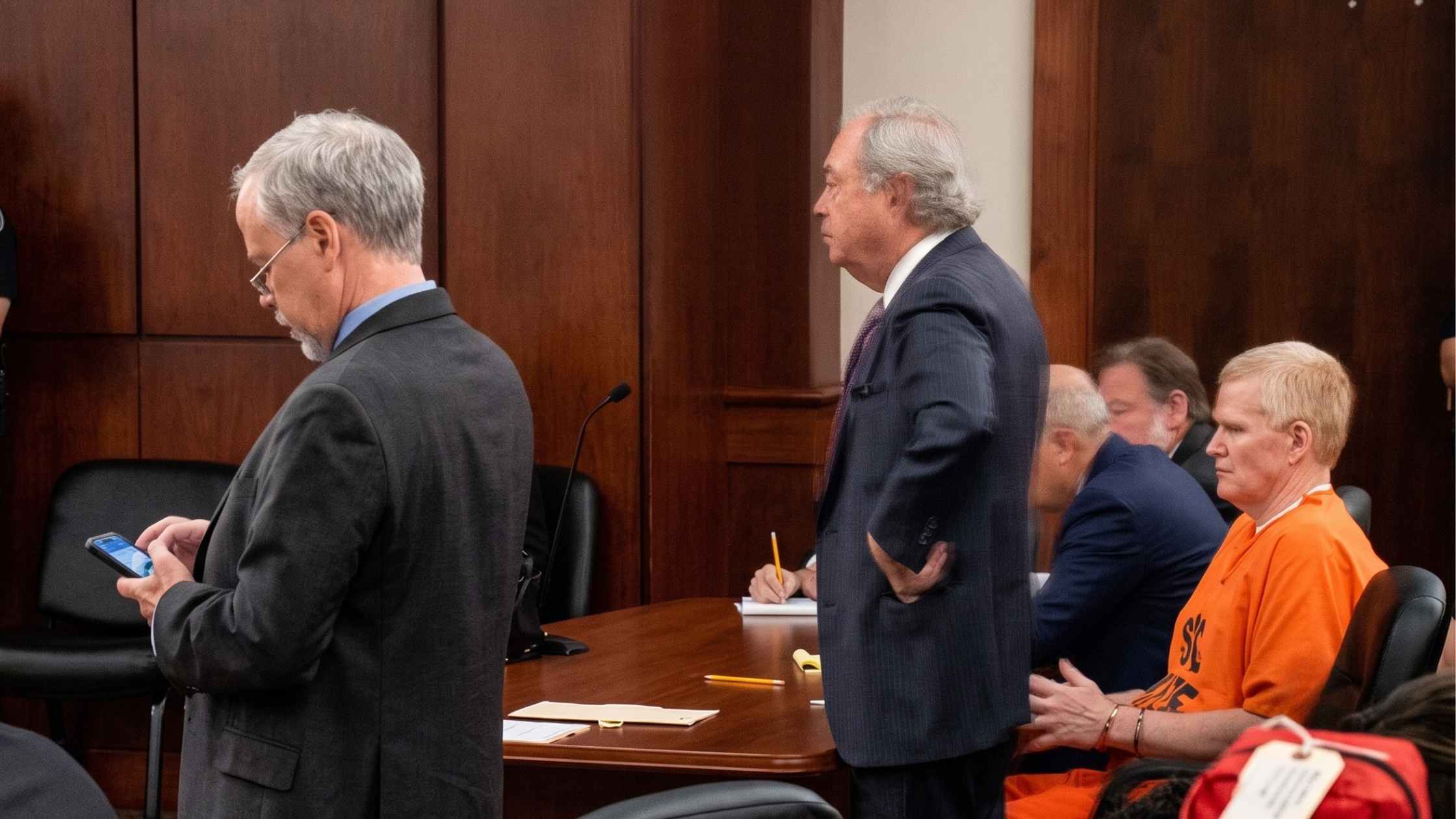
Yes, Your Honor. Although we may renew the motion, our reason for this is jurors, potential jurors are watching this right now. It's going to be wherever this goes. It's going to be difficult to get a jury. And the extent that parading him around in a jumpsuit, shackled like an animal impacts their view, it's going to make it more difficult for us to get a jury. Now again, Mr. Glover's argument is specious. He's not dangerous. He's only seen convicted of stealing money. Now Judge Newman let him come to the courtroom in street clothes and unshackled. I know Mr. Waters feels compelled to get every advantage he can, but this is one that this is our ability to get a jury. So I would ask that he be allowed to come in the courtroom unshackled in I will call them street clothes. Now-
Judge (01:18:59):
So are you renewing your motion now?
Mr. Harpootan (01:19:01):
Sure.
Judge (01:19:03):
Just want to make sure.
Mr. Harpootan (01:19:05):
I wanted you to see today... Stand up. Chained around the waist, chained at the hands, chained on the feet. I mean this guy is not a serial killer. He's not Ted Bundy.
Judge (01:19:22):
You can sit down, Mr. Murdaugh.
Mr. Harpootan (01:19:33):
[inaudible 01:19:28], but he was accused of killing his wife and son. Judge Newman allowed him to come unshackled and street clothes for every hearing we had.
Judge (01:19:39):
All right. Mr. Waters, I did read your response, but I'll be happy to hear anything and I'll take it under advisement.
Mr. Waters (01:19:46):
Well again, they withdrawn the motion and now they-
Judge (01:19:47):
Now they...
Mr. Waters (01:19:51):
Again, this goes back to it's not the state's fault. He's an inmate serving a 27-year sentence. Okay? This is again SCDC's policy for non-jury court, [inaudible 01:20:01] just that, and then restraints. He's not only facing 27 years, but an additional 40 years in federal court and then he's also indicted for a double murder. So this is a basic security consideration. Again, the intent is not to prejudice either one. The intent is the security of every time someone is transported out of court, it is a security risk. And the first two goals of any escape attempt is to constrained any civilian [inaudible 01:20:31]. So I'm here tonight to represent what is basic policy and procedure for inmates serving long felonious sentences with SCDC. I completely understand that we have a jury that the calculations are different and that is going to be a different thing to do. But the remedy for all of that ultimately is in our process. It's going to be jury selection and it's going to be instruction from the court which the jurors need to follow. I know our citizens can.
Judge (01:21:00):
Okay. Thank you. All right. I'll take it under advisement and I'll issue an order on that. Let me move on to the DNA. Again, I just received the state's response yesterday at 5 PM. I read it and I'm going to save it for the next pretrial because this is what I want to know. I'd like to know how long, Mr. Griffin, it's going to take to analyze exactly what it is you're asking for. And I believe it's genetic.
Mr. Griffin (01:21:44):
Yes, Your Honor. And the state's response says, give us somebody to talk to at the lab.
Judge (01:21:51):
Okay.
Mr. Griffin (01:21:51):
So that was conveyed to them this morning the CEO of Othram's name, email and telephone number. They have received the VP of law enforcement division at Othram, his cell phone number and the client intake person that we use now, that I've been interfacing with and they will be better able to answer specifically how long it will take. We've agreed to pay for it and just background information-
Judge (01:22:26):
I'm going to let you pay for it.
Mr. Griffin (01:22:30):
These murders happened in 2021. We're in 2026. 2021, there's no such thing as artificial intelligence. In 2021, this genetic genealogy was just on the ground floor. In 2026, we are light years ahead. And so what we're asking for didn't really exist in 2021. It does exist today and Othram is the leading lab that performs this analysis. Last year in 2024, the statistics are that they cleared 200 cold cases on behalf of law enforcement around the United States and the country. They work with law enforcement every day. The most high profile case they did was at the University of Idaho. The Moscow, Idaho murders that took place about the first week of our trial. College kids were massacred in a house at the University of Idaho. They had a DNA sample they ran through CODIS. Came up nothing. There was nothing. The State of Idaho Police Department like SLED had a contract with Othram.
(01:23:41)
They sent the test to Othram. Othram does this genetic genealogy DNA analysis and it comes back to a family member who'd done a DNA test, ancestry test of the person who committed these murders, Bryan Kohberger. That's how they solved the Moscow murder cases was through Othram Lab. The difference between, and they say they don't have enough samples to get through CODIS and I've talked to the lab about that and that's not an issue. CODIS uses analysis called STR. This analysis is SNP and they call it SNPs. CODIS has 20 data points. SNPs has half a million data points that they analyze. Now it takes a while to do that. And so we're going to have to see what the lab says. They've asked me to get information from SLED as to, they like to see the electropherogram or mixture proportions so they can have a better handle on it.
(01:24:53)
And I've asked Mr. Waters to give us a name so that these experts can interface. But what they're doing in Houston, Texas, they don't do in South Carolina at the SLED lab. There are handful of labs around the country and they're certified. They work with law enforcement. I don't know that they worked specifically with SLED. They're familiar with SLED when I spoke with them, but they have a whole division.
Judge (01:25:21):
So you need an expert's name or whoever has this sample to see if there's a viable sample that you can send, that they could send?
Mr. Griffin (01:25:33):
Correct. And they can work with an extract that SLED used when they did their STR analysis. They can work with that out there, they've told me, but...
Judge (01:25:42):
Mr. Waters, can you give him a name so he can move forward?
Mr. Waters (01:25:46):
That's what I put in my motion, Your Honor, is please give us a name and I'm happy to have SLED reach out and talk to them about what their supposed capabilities and proposals are and any procedures. And I've been made privy to that information. I'm happy to discuss those with the defense. If for whatever reason we can't agree, we'll come back before Your Honor. It's precisely what I put in my motion is let's let the experts talk so that my experts can hear what it is that they propose to do. I'm happy to consent.
Mr. Griffin (01:26:15):
And I gave him three names and contact information this morning and I've asked a name that I can send back to my folks. I do want to address this red herring argument. The DNA that we're talking about, Your Honor, came from Maggie Murdaugh's left fingernails. That was tested by SLED with this STR analysis. The DNA sample number 70 that we're asking to be tested, it positively was not Alex Murdaugh. Any of the other folks who they took buccal swabs from was a long list, not them, except for on potential and that potential, the ultimate result was it's 11 times more an unknown male, so they know it's a male than it was this person. That's how they do things in their DNA analysis.
(01:27:19)
And Mr. Waters said, "Well, there's no evidence of struggle," but there was a shell casing under Maggie Murdaugh's body from the gun that killed her. I mean, that shell casing and that gun had to be in very close proximity. Maggie Murdaugh's cell phone was missing from the crime scene. Was DNA transferred at that point in time? And so we don't think it's a red herring. We think it's very important. Now it may turn out to be innocuous. We don't know, but it's worth looking into.
Judge (01:27:57):
Okay. I haven't said no. This is what I do want you to do though, Mr. Griffin. I want to know how long it's going to take to analyze what it is that you're asking for? And even if I expedite it, I'd like to know how long it's going to take. And I'd also like to know if there's even a viable sample that they can get and we will discuss this at our next pretrial. Anything, Mr. Waters, you're going to give them, the name of the person at SLED that he can get in contact with. Let's see if there's a viable sample.
Mr. Griffin (01:28:43):
And the lab has told me if there's not a viable sample, we'll tell you that. But they work with a lot less than...
Judge (01:28:51):
Okay. Well, let's start with that. Let's make sure we get a viable sample and then we'll go forward and we're going to go forward at the next pretrial. I promise you, the pretrial is not going to be that far away. All right. Let me move on to the motion for change of venue. The defense filed a change of venue motion. The state has not had the opportunity to answer yet. So I'm going to give them time. In the meantime before our next pretrial, if at all possible, if y'all agree on a change of venue, please give me some suggestions if y'all can agree on it. If you can't, make your own suggestions and then I will decide for you if we go that route.
Mr. Harpootan (01:29:53):
Even in spite of the action here today, [inaudible 01:29:57] was able to talk to each other and we have already talked about this and I think we'll have continuing discussions in [inaudible 01:30:04]-
Judge (01:30:02):
Got an answer for me?
Mr. Harpootan (01:30:04):
We tried, but I don't have to drive you down [inaudible 01:30:22].
Mr. Waters (01:30:21):
Yes, Your Honor. Of course, without taking a specific position right now-
Judge (01:30:26):
Right.
Mr. Waters (01:30:27):
Mr. Harpootlian this morning that we can take some things around and like you just said, if we agree, great. If you we don't, then the court will decide.
Judge (01:30:34):
That's right. Don't have a problem with that. Okay, perfect. All right. Now let me address, I see Mr. McCullough sitting out there and then I also have another... They're both the same protective order, but they're wanting two different things.
Mr. Waters (01:30:55):
Charge is not the same.
Judge (01:30:57):
That's right. They're two different things. Right. As far as... But I think before we go there, Mr. Harpootlian, I believe Mr. Waters, am I correct in stating that you're working on a response to both of these? There might be some redactions that you wanted and you're going to submit that to the court?
Mr. Waters (01:31:23):
We will have that for you [inaudible 01:31:25].
Judge (01:31:25):
Okay. And I'll be able to address that at the next pretrial conference?
Mr. Waters (01:31:29):
Again, we are generally in favor of those being unsealed, but they will have to be done judiciously and with appropriate redactions to preserve your identities and [inaudible 01:31:41].
Judge (01:31:41):
Right, because I did... Yeah, and I did receive something from SLED, an email from SLED.
Mr. Waters (01:31:48):
General counsel [inaudible 01:31:49] is present here today and SLED-
Judge (01:31:51):
Where is he?
Mr. Waters (01:31:52):
He's right there.
Judge (01:31:54):
Okay. I did receive your email and just get me an answer on that and we'll decide at the next pretrial then. Okay. Those were all my bullet points. So let me ask the lawyers, did I miss something? Is there something you would like to add?
Mr. Waters (01:32:18):
One thing Your Honor had mentioned is the location of pretrial hearings and from the state's perspective we're happy to come wherever Your Honor happens to be and [inaudible 01:32:27].
Judge (01:32:26):
Okay.
Mr. Harpootan (01:32:27):
Your Honor, we're more than happy to come wherever you are, although this production of these hearings might dictate, but certainly suggest you come to a venue like Lexington County where there's plenty of room [inaudible 01:32:46].
Judge (01:32:49):
I think they've done a really good job with security and with the press and being organized and this is my home county. Let me just ask and throw this out there. Mr. Waters, is there any objection if we hold pretrial here? The reason being we have a big courtroom. I already have security set in place. I think the clerks, both clerks and security have done a really good job. This is not the only courtroom in this courthouse so I won't disrupt holding court in Lexington, which I would not want to do to any county. Sometimes I go to really small counties and I don't think it would be good to hold a pretrial there. Does it suit-
Mr. Waters (01:33:51):
I mean, from the state's perspective, and again, being a longtime AG, I've been in pretty much all of them and as an AG, Lexington is like a second home obviously.
Judge (01:34:01):
Convenient.
Mr. Waters (01:34:02):
Solicitors, law enforcement, the court of course are very accommodating here. So this is certainly, I think, would be of most convenient court case as we get ready for the order [inaudible 01:34:12].
Judge (01:34:12):
Okay. It's not far for anybody to travel, Mr. Harpootlian?
Mr. Harpootan (01:34:15):
We agree, Your Honor.
Judge (01:34:17):
Okay. And I will try to make sure that when we arrange these pretrials that we will try to be here in Lexington. Anything else, Mr. Waters?
Mr. Waters (01:34:27):
[inaudible 01:34:29].
Judge (01:34:28):
The defense?
Mr. Harpootan (01:34:33):
Your Honor, that's all we have, but if we could talk about that schedule for the next pretrial.
Judge (01:34:38):
Oh, I'm getting ready for it right now. Let me tell you what I have. I've gone through my calendar and so it's hard to get lawyers together, especially when I have this many lawyers. So let me throw some dates out to you, August the 13th and the 14th, July 29th, the 30th or the 31st.
Mr. Harpootan (01:35:10):
Your Honor, so the chronological order the first would be?
Judge (01:35:12):
July 29th.
Mr. Waters (01:35:16):
I'm scheduled to be out of state from the 29th through the 31st.
Judge (01:35:22):
Okay. Then let me move on to August 13th and 14th.
Mr. Griffin (01:35:25):
Your Honor, we have a mediation on the 13th. The 14th's available.
Mr. Waters (01:35:36):
The 14th works for the state, Your Honor.
Judge (01:35:36):
August the 14th it is. That will be our next pretrial. Now with that said, I'd like to have all motions by August the 7th if I could. I like to read my motions. I like to be prepared. So if I could have your motions, I understand that some of them are late. You might think of something at the last minute, that's fine, but please, please don't file something at 10 o'clock at night and expect me to rule on it in the morning. Okay?
Mr. Waters (01:36:16):
I apologize for those coming in late. We had-
Judge (01:36:18):
No, you're fine.
Mr. Waters (01:36:20):
I came down into the office just to make sure we had something out there.
Judge (01:36:22):
Mr. Waters, you're fine. I was not planning on ruling on those motions. Now, had I been, I might say something different, but please don't do that to me. Okay? Now let's talk about a trial date. The only other information I would like to know is how long this DNA is going to take? I would like to know that, but I'm going to tell y'all I'm thinking April the 5th and this being I'm trying to get through Easter and I know how hard it is to pick a jury when you've got spring break. That's usually right before Easter.
(01:37:15)
It is the March, is it the 28th? I think it's the week. It's March 28th. So I'm thinking April 5th. I know that we'll have a new attorney general coming in. Mr. Harpootlian has already told me it's going to take six months to get experts prepared and ready to go. That would give the new attorney general time to look at his case in case he's going to be here and join us. And let me tell you this, tell both of y'all, I think y'all know me pretty well. When I set a trial date, I don't do continuances. I don't do it. It better be a really good reason. So how does April the 5th sound, Mr. Waters?
Mr. Waters (01:38:24):
Yes, ma'am. State will be ready.
Judge (01:38:25):
Mr. Harpootlian?
Mr. Harpootan (01:38:29):
We'll be ready with some contingencies if the DNA takes longer, for instance, or...
Judge (01:38:37):
I will have that information by next pretrial. If I need to extend it out a couple of weeks, I will if that's the case. Please do not think that this case is going to be tried a year later because it's not. We're going forward.
Mr. Harpootan (01:38:52):
Your Honor, we're more than happy with that. Mr. Murdaugh is more than happy with that. I just again, ruling everything because the science in all these areas is much better than the work five years ago.
Judge (01:39:09):
I understand. Technology changes overnight. Overnight. I understand. Mr. Griffin, anything you'd like to add?
Mr. Griffin (01:39:18):
Yes, Your Honor. The Supreme Court reversed this case on misconduct by clerk of court, but the Supreme Court also addressed financial crimes evidence and depending on how much of that or any of that comes in will determine the length of the trial in many respects. Judge Newman last time would not rule pretrial on that issue and it's going to be an issue that we're going to have to brief and argue with Your Honor as to we don't think any of the financial crime evidence should come in at trial. And so I'm just flagging that, that it would be helpful to us, I believe, and to know if we're going to have to defend against that during the trial or are they going to be able to put it up? And so I'm just asking maybe some earlier date where we can have Your Honor address those issues.
Judge (01:40:17):
We will. I'm just going to tell y'all, I like to address all pretrial matters beforehand because when I say April the 5th, we're picking a jury and going forward. All those issues should be decided by then.
Mr. Waters (01:40:34):
Your Honor, that's my practice as well. We filed extensive pretrial motions prior to the prior trial laying all our cards on the table. It's exactly why we thought that was admissible but [inaudible 01:40:44].
Judge (01:40:45):
Thank you. I appreciate it. Anything further before we adjourn, Mr. Waters?
Mr. Waters (01:40:49):
[inaudible 01:40:50].
Judge (01:40:51):
And Mr. Harpootlian?
Mr. Harpootan (01:40:53):
Nothing from the defense, Your Honor.
Judge (01:40:55):
All right, perfect. Have a good evening.