


Mike Simpson (00:00):
... in leadership is in supporting our federal wildland firefighters. These men and women are the backbone of our wildfires response, often risk their lives under extreme and dangerous conditions. The fiscal year 2027 President's Budget shifts the approach on wildland fire management and transfers the Forest Services wildland fire management appropriations and activities to the Department of Interior.
(00:24)
As we all know, wildfire isn't just a policy issue, it's personal. And this subcommittee is dedicated to ensuring that we provide the proper resources needed to ensure the safety of our communities and public lands. From fire and fuel managements to active forest restoration, recreation and infrastructure, the demands on our public lands are increasing.
(00:44)
Chief Schultz, your leadership comes at a critical time. I look forward to hearing how we can work together to ensure our forests remain healthy, resilient, and accessible for generations to come. Thank you for joining us today and thank you to all of those who participated in this important conversation. I look forward to a productive discussion. Now I'd like to turn over to my Ranking Member Pingree for any opening statements that she might make.
Chellie Pingree (01:09):
Thank you, Mr. Chair, and thank you for having this hearing. I'm very pleased that we're here and I appreciate the chance we had to talk before the hearing. But unfortunately, what I see in the Forest Service budget request greatly concerns me, from the elimination of state and private forestry programs in most of our forest and rangeland research to the proposed move of the wildland fire management of the Department of Interior. It seems that political goals and arbitrary top line funding cuts have driven the creation of this budget, not the needs of our forests. I'm also very concerned that despite this budget request being very late, it does not include any details related to the proposed reorganization. Congress cannot fully evaluate the proposals to reorganize the Forest Service in fiscal year 2027 without receiving detailed information on the budget, the organization, and staffing changes under consideration. The law is clear. If the USDA wants to reorganize the Forest Service in this fiscal year, it is required to submit additional details to this committee so that we may consider whether or not to approve the request.
(02:16)
I'm also concerned about the effect of any further loss of expertise and what it could have on protecting and preserving our forests. Last year, the Forest Service lost thousands of employees to the deferred resignation program. In Maine, we know the value of our forests from supporting our economy to improving our environment through the production of climate-friendly wood products. We also know the importance of research, technical knowledge, and programmatic support that the US Forest Service provides. The Forest Service is an essential partner in both maintaining the health of our forests and also in driving forward innovation for new wood products. Biochar is a perfect example of a method that could have dual benefits from its use in hazardous fuels reduction while also sequestering carbon.
(03:03)
As we discuss each year, wildfire prevention efforts are at the top of all of our minds. The funding we provide to combat wildfire looms large in its potential impact to all of the other essential programs the Forest Service executes. As the expiration of the fire fix approaches, we cannot allow a loss of fire funding to result in a return to borrowing and the critical loss of funding for other Forest Service programs which maintain the health of our forests and work to prevent those very fires.
(03:36)
I thank you for being here today. I hope this hearing is only the start of an open and productive line of communication between the Forest Service and this committee as we consider the many issues we will deal with this year. I yield back. Thank you, Mr. Chair.
Mike Simpson (03:49):
Thank you, from Pingree. With that, Chief Schultz, I'd like to give you the floor for any opening remarks that you might have. Your complete statement will be included in the record. Floor is yours.
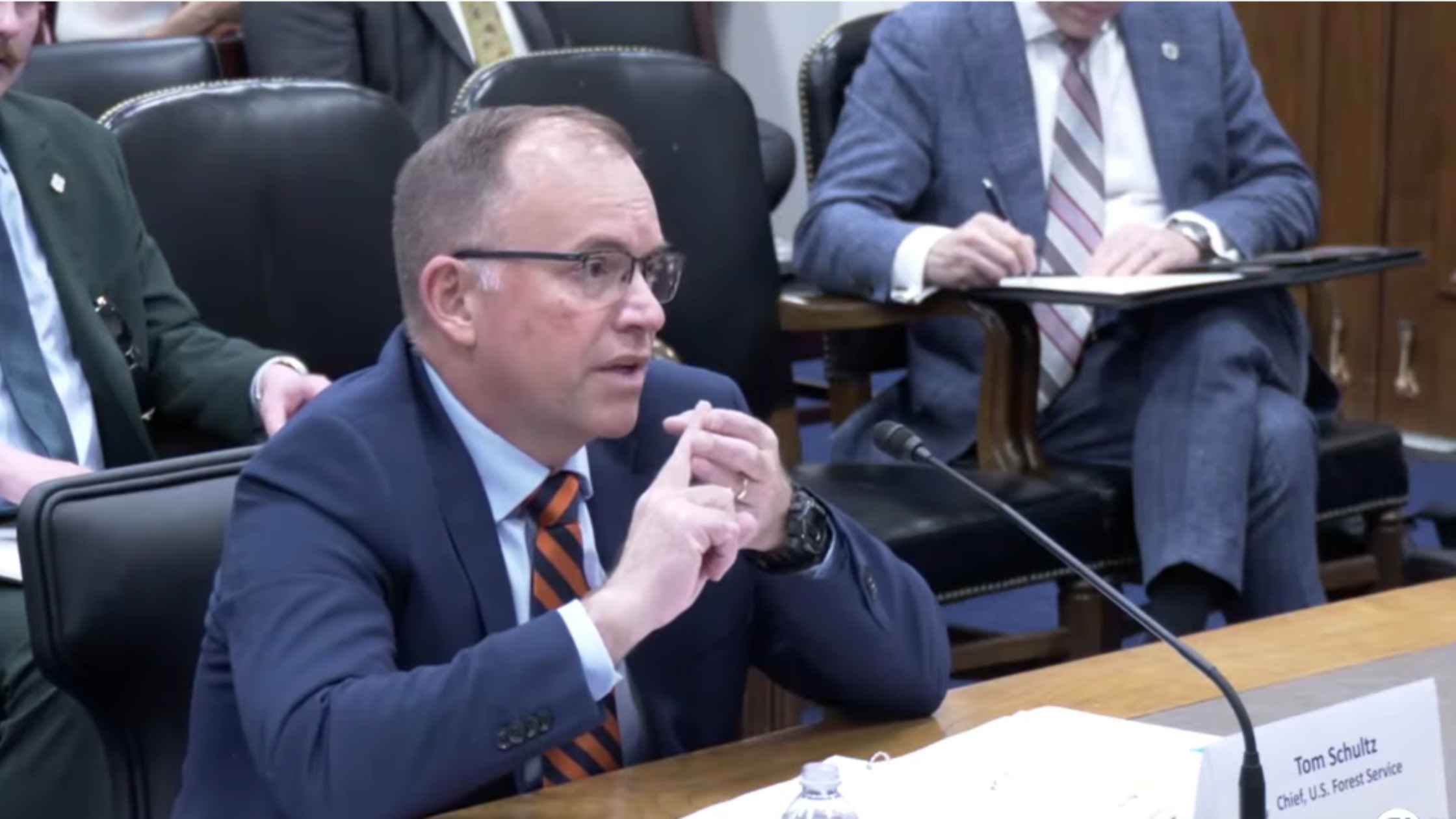
Tom Schultz (04:05):
Chairman Simpson, Ranking Member Pingree, and members of the subcommittee, thank you for inviting me here to testify today. Established in 1905, USDA's Forest Service is the nation's foremost federal forestry organization. We have the privilege of managing 154 national forest and 20 national grasslands covering 193 million acres in 43 states in Puerto Rico. The Forest Service works with communities, states, local government, tribal governments, forest industries, and private forest landowners managing for multiple uses.
(04:36)
Recent analysis shows that in fiscal year '24, the Forest Service programs contributed approximately 406,000 jobs and $48 billion in GDP. This includes livestock grazing, mineral and energy development, forest products utilization, and recreation visitor use. Collectively, we have shared challenges across the nation when maintaining this level of productivity. Several of you've talked about wildfire risk, threats to watersheds, infrastructure strain, and the need to support rural economies that depend on healthy forest and grasslands. This has been a priority for the secretary.
(05:08)
None of these challenges stop the jurisdictional boundaries, and none of them can be solved by the federal government acting alone. They require partnerships. Community and tribal members bring local knowledge, experience, and accountability. The best outcomes happen when we plan and act collectively, especially as wildfire risk grows and pressure in public lands increases.
(05:28)
My focus over the past year as chief has been to return to fundamentals, keeping people and community safe, reducing risk to communities, actively managing forests and grasslands so they remain productive, resilient, and also we want to increase and improve public access to recreation and other uses of the national forest system. Wildfire readiness remains central to our mission. As of early March of this year, we have hired 9,390 firefighters, which is 5% more than last year at this time and 9% more than we had in 2024. Our firefighters are world renowned for their rapid response. This year, we will continue demonstrating that strength to keep fires small and communities safe while also increasing use of risk reduction tools such as prescribed fire and mechanical thinning.
(06:09)
Just now, last year when we had our fire season, it was also predicted to be a very bad fire season. We had 12% more starts. During the course of the fire season, we burned half as many acres. So the Forest Service was very proactive and aggressive in fighting wildfire last year. We also were very safe.
(06:26)
In much of the western United States, mortality on productive timberlands now exceeds growth, particularly on the national forest. This is driven by fires, insects, and disease. In other words, our forests are dying faster than they're growing. The Forest Service does now currently harvest more than about 0.5% of total forested acres every year. And despite our reserves, we still rely heavily on Canada to meet our domestic timber demand, which is about 25% of our lumber comes from Canada.
(06:55)
Active forest management is not optional. It's how we restore health to our forest. It's how we lower fire risk. It's how we keep them open for access and productive. For example, on the El Dorado Forest, active management is down roughly 70% over the last 20 years. This is a forest in California. And the focus that we had for the last 20 years has been on protecting spotted owl habitats. So we set aside areas, these packs. In 2021, we had the Caldor fire, about 235,000 acres. Half of that fire was standard placement. We burned up half of the spotted owl habitat on that area that burned. There was an area that had been managed in that area, and that area did not have catastrophic wildfire that burned through it.
(07:35)
So in many of the cases that we've pulled back on management for protecting species, in many cases, we now see the consequences of what we've done. Expanding timber production, modernizing grazing processes, and accelerating reforestation are all part of restoring forest and grassland health and productivity. This last year, we planted 285,000 acres more than we've done in the last 25 years. Stronger management means stronger local economies, more jobs in forest and energy sectors, and productive working lands that fuel rural prosperity. Our frontline workforce is critical to expanding the management of national forest. This year, I committed to hiring 2,000 seasonal employees for the summer of '26 to ensure we're able to do that. To date, we have made a lot of progress on this, offering positions to more than 1,600 candidates with 520 expected to start this next week and the rest will be starting over the next four to eight weeks as they align with mission-critical activities. 75% of those are focused on recreation.
(08:28)
Our national forests provide far more than clean water and places to recreate. They're working lands that support America's energy security and innovation. Energy security is national security. Responsible resource use strengthens the nation's economy and resilience while upholding our multiple use mission. The fiscal year '27 President's Budget focuses on Forest Service efforts to actively manage forest, range land, and critical minerals permitting, and energy development. Additionally, the budget emphasizes efficient and effective fire management by building on our current best practices to unify the federal suppression response apparatus into the US Wildland Fire Service under the Department of Interior. The unification of wildland fire under one DOI bureau will allow the Forest Service to focus on remaining core mission of delivering critical outputs and services from the national forest system lands.
(09:15)
The '27 budget request firmly supports the president's goals by significantly increasing funding for active forest management. The budget proposes to increase the amount retained by the agency from ranchers and permitees from grazing fees to provide direct reinvestment in the national forest system lands. So the grazing fees that we currently bring in, we're going to increase that by about $4 million and that money will be put back on the ground. To contribute to the domestic production of critical minerals for a stable supply of energy, we work hard along with the BLM to manage leasable minerals from the national forest systems. To support this work, the '27 Budget Request maintains funding for the Forest Service Minerals and Geology Program.
(09:51)
Our public lands offer some of the best recreational opportunities in the world. The Bureau of Economic Analysis recently reported that outdoor recreation accounts for 2.4% of current-dollar GDTP. National Forests alone received more than 160 million visits from users annually. Maintaining safe and reliable infrastructure for these visits and other management uses is critical, and that's [inaudible 00:10:13] request reauthorization of the Great American Outdoors Act.
(10:17)
Similar to the '26 President's Budget, the '27 request reduces or eliminates some aspects of federal funding from the Forest Service budget to ensure stewardship of the American taxpayer dollars and better balance appropriate roles of federal and state governments, stemming the reliance on federal government to fund or deliver these services.
(10:33)
In closing, the '27 Budget Request underscores our commitment to focus on investments and products from the national forests that are critical to supporting rural communities. We are prioritizing the fundamentals of managing our national forests for their intended purposes and ensuring maximum value to the American taxpayer. Thank you for inviting me to be here today and I look forward to your questions.
Mike Simpson (10:52):
Thank you, Chief. [inaudible 00:10:54] questions. First of all, as you know, in this President's Budget, they recommended, again, combining the wildfire fighting in the Department of Interior as they did last year. Congress didn't go along with that, mainly because ... I don't know if it's a good idea or a bad idea, but we had a lot of questions that were unanswered. And so our final FY26 Interior Appropriations Bill Conference Report directed the Department of Agriculture and the Department of Interior to contract with an outside group for a comprehensive study on the feasibility of consolidation, consolidating wildland fire management operations within the Department of Interior as proposed by the President's Budget Request for these past two fiscal years, and any challenges that might bring. I understand the Forest Service and DOI have begun the process of getting this study completed. Can you please provide an update on where things are in the process and a timeline for when you expect the study to be completed?
Tom Schultz (11:52):
Yeah, thank you, Mr. Chairman. So we have recently received input from vendors from an RFI request for information that we put out. We had about 12 vendors supply that information, so we are currently reviewing that, and that information will be put together in an RFP that we expect to go out sometime early May. So over the next two to three weeks, we'll be compiling that as an RFP, and then we expect that to go out for probably at least 30 days. The study, we think will take up to six months to complete. So sometime this fall, we expect that study to be completed, and then that will be available to everyone.
Mike Simpson (12:25):
Okay. One of the challenges we have obviously is if we're going to do a study to find out what the challenges are, what the advantages are and so forth of doing that, and it's not done until fall, which I understand why that is the case. In my view, anyway, it'd be kind of stupid to combine the Forest Services and the wildfire fighting in our bill without having the study completed. Otherwise, why do the damn study, or the darn study, excuse me, I'm not supposed to swear. So anyway, I look forward to having some of our questions answered and stuff, because as I've told people, this might be the best idea since sliced bread. I don't know, but I just need a whole bunch of questions answered and that's what we're in the process of doing. Secondly-
Tom Schultz (13:13):
Mr. Chairman, if I might just respond briefly, there has been a lot of work done. So the executive order did direct DOI and Forest Service to work together to consolidate some functions already, which we've been doing that, so whether it's training, how we carve those things. The other thing is we're learning as DOI is implementing their own structure right now. So there's been communication. DOI sent out guidance just this week on how they're going to implement that. So I think the intent of this study is to inform Congress, inform the administration on this process, but we think there's a lot of progress we can make even short of the study being done. So that's the intent we're taking, sir.
Mike Simpson (13:44):
I would hope that acquisition would be one of those things, how the different firefighting agencies acquire things.
Tom Schultz (13:51):
Yes, sir.
Mike Simpson (13:51):
I know, I've been at a conference in Las Vegas that were- [inaudible 00:13:56]
Tom Schultz (13:55):
Procurement and contract on a big part of that. Yes, sir.
Mike Simpson (13:57):
Yeah. Okay. One of the big things you've announced is the reorganization of the Forest Service, moving headquarters from DC to Salt Lake City. One of the main goals, as I understand it in this reorganization, is around the transition to a more state-based structure, shifting authority closer to the field by organizing leadership around the state level accountability. Tell me exactly what we're doing, what our goals are that we hope to achieve by doing this.
Tom Schultz (14:28):
Back in July of 2025, the secretary put out some direction on reorganization at a high level. And one of the key pillars was to make sure that we have a structurally sound budget. The Forest Service in 2024 had about a $750 million shortfall in our budget, so this is something that we had to correct things. So this even predated this administration [inaudible 00:14:48] in office, so we had to take action. So first and foremost, that's a driving principle. We've got to make sure that we live within our means. So we know that we had too many people. We had a surge of employees that we hired with IRA funding and IIJA funding, which was termed out that money was not long-term funding. So we had a fiscal imbalance, so we had to take action, which we did. We have been working on this plan for the last year, and we have had input from agency employees as we've done this. So this is not something that was done in a vacuum. This was done with input from outside the Forest Service.
(15:19)
Goal was not only fiscal [inaudible 00:15:22] of ensuring that we're [inaudible 00:15:23] sound, but as you mentioned, it's also driving decision making down to the most appropriate level. One of my favorite books is the book called The Forest Ranger, was written in 1960, and it talks about the culture of the Forest Service in the 1950s. It's a seminal study on culture. And what you'll see is back then, there was a lot of responsibility and authority that was given to forest rangers and the people on the ground. The book's basically summary is that the most important person in the Forest Service is not the chief, it's not the regional forester, it's not even the forest supervisor, it's the man or the woman on the ground doing the work. And what we've seen over time is we have created more and more managerial levels and more bureaucracy. What folks don't realize is the Forest Service, in addition to having code, in addition to having regulations, in addition to having a manual, we have a handbook. The handbook has about 3,600 directives. I'm going to say it again, 3,600 directives. So if you think about how tall that would be, it's probably at least six feet tall if we were to stack that up and down. I'm 5'8" eight on a good day. So that direction that we have, and policies that have been created have been created in many cases by regional offices. So regional offices historically have not just had an implementation, an operational perspective, but a policymaking role. That has created more hurdles to get work done, so 2,400 directives created by regional offices, in addition to another 1,200 directives created by the Washington office on top of all of the other things that we do.
(16:48)
So what we're trying to do is cut through the regulation. We're trying to drive decision making down to the men and the women on the ground that are doing the work. That is a big focus of this. And the secretaries called this common sense, and I would say it is common sense, but we've talked about this. It's hard to legislate common sense sometimes. And this is our effort to get at common sense. Drive decision making down. It's to better work with the people. You talked about the state structure. We think a state-based model will work much better.
(17:14)
And I'll give you an example. Currently, we have a regional forester in the West. She's over Alaska, Washington, Oregon, and California. So think about the extent of that geographic scope. Think about how many relationships she has to manage, not just with the states, but with the tribes, with county commissioners. So we think a state-based approach where there's more direct communication and a liaison role, whether that's leg affairs, whether it's tribal relations, whether that's state and private programs, that will be delivered through the state directors. We think that's a much better, more accountable model that will provide much better service to the public.
(17:48)
And again, our role is two things. Forest Service does two things. We're stewards of the land and we're supposed to be serving the public, and we think this will better serve the people on the ground where they live and work. So those are the big goals that we're trying to achieve, fiscal responsibility, drive decision making down, deregulate, and ultimately be better accountable to the public for the work that we do.
Mike Simpson (18:07):
I appreciate that. I can't tell you how many Forest Service employees I've talked to over the years that ...
Speaker 1 (18:12):
I'm right behind you.
Mike Simpson (18:14):
Oh, sorry. That I talked to them and they say they went into forest management and the Forest Service stuff because they want to be in the forest, and they find themselves sitting at a desk behind a computer because of lawsuits, because of everything else, and they want to be out in the forest. This looks to me like that's where the decisions would be made, as you mentioned, the 1960 book. So I think it's very interesting what you're proposing to do and I support it.
Tom Schultz (18:43):
Mr. Chairman, to the other point there is the other thing is this will ultimately drive more resources to the ground.
Mike Simpson (18:48):
Yeah.
Tom Schultz (18:49):
So as we remove middle layers of management, the intent is not to riff anybody or have a reduction in force, it's to find other roles and responsibilities, different reporting structures, but it is to ultimately move more resources to forest and districts where the work is being done on a daily basis.
Mike Simpson (19:04):
Do you believe you have the authority to do this reorganization without Congress okaying it-
Tom Schultz (19:11):
Mr. Chairman, we have consulted with OGC and we have been afforded what they perceive to be a direction to do this, move forward, that the secretary has this authority.
Mike Simpson (19:21):
Thank you, Chief.
Tom Schultz (19:22):
Yes, sir.
Mike Simpson (19:22):
Ms. Pingree?
Chellie Pingree (19:25):
Thanks, Mr. Chair. Just a little bit about what you were just saying, so I have two thoughts. When you talk about living within our means, and I understand having a $750 million shortfall is not a good position for any agency to be in. As appropriators, we're in charge of thinking about the entire Appropriations Bill, and we've been presented a bill by this president that had 40% increase in defense and huge cuts to all of their departments. So one of my concerns is that we're going to respond to needs that are proposed by other agencies or other concerns and shortchange what we should be defending here, which is the Forest Service, and making sure that we're providing all the resources needed by our states, by our federal land, and by our forests.
(20:14)
So I worry a little bit, we're not talking about profit centers in a business. We're talking about advocating for the thing that we're here to do. So I'm deeply concerned about the shortchanging of resources and the cuts across the board. So for me, that's number one.
(20:28)
And second, while I would love to believe that we're going to push more of this down, I'm a firm believer, and I've never read the book, but the idea that the people who are on the ground should have decision making authority and more power and that we don't always need the bureaucracy, and policy manuals, and many more layers, we haven't seen this organizational chart. So I have no way to know that we're not going to lose a lot more employees just as we did last year with the misguided DOGE effort, which just allowed probationary workers to go, lost a huge number of people because of the retirement plan that was set forward. So we've lost a lot of expertise in people who were on the ground and knew what they were doing because this has been so poorly handled by this administration.
(21:09)
So I don't believe you have all this authority. I know we're not the lawyers here who are going to fight this out. And I would really like to see those organizational charts and those things that explain to us how this money is going to be spent and how we make sure we do preserve the people who are best able to do those jobs.
(21:26)
So moving on from just my overall frustration with where we are in this process, I just want to talk about a couple of other areas to begin with, state and private forestry. So I'm lucky enough to represent Maine. We're the most forested state in the nation proportionately, but we aren't national forests. We're nothing like my colleagues in the West who just deal with completely different situations than I do. But cutting out the state and private forestry programs is hugely detrimental in our state and that's slated for elimination.
(21:59)
So I'm just wondering, do you have any thoughts in mind about how to mitigate the loss of state capacity for this partnership and the shared stewardship if those are just completely eliminated? I mean, what are we supposed to do and what do I tell my state forester?
Tom Schultz (22:12):
Ms. Pingree, first of all, I want to thank you for your comments. Your interest in public lands and conservation of those, we're a hundred percent aligned. We have a lot of concurrence on that. And I can tell you the people that work for the Forest Service feel deeply, and like I said, they really do conserve the land, they're stewards, and they want to serve the public. And I've met so many people, I've been all over the country and met those folks, and they care deeply what they do. So they share the passion that you do.
(22:35)
When it comes to the reorganizations, to touch back on your other comment, yeah, as we provide more information, we put a lot on the website so far, we'll continue to update that. So we'll have a top line org chart that we're still working through some of the details, and not every piece of the organization is totally ingrained yet in terms of how we're going to do this. We're building out the lower parts of the organization and we actually have folks inside the Forest Service helping inform that how we. So there'll be more information as
Tom Schultz (23:00):
... as we proceed, that we will share with you all. So, bear with us.
(23:04)
And I guarantee we will make mistakes. There's no doubt. And our goal is to learn from the mistakes that we make, hopefully not repeat them. And if we do fall down, we'll learn something and pick something off the ground, and we'll work from that.
(23:15)
When it comes to state and private, so we talked about a state-based model. One of the responsibilities of a state director, my primary responsibility is to supervise the forest supervisors in those states and also to be a liaison with both the states and tribes, county commissioners and cooperators. So, that state and private responsibility that you're talking about will reside with that state director, and they will have a minimal staff to do that. We're still going to have service centers that will provide opportunities. What you see in the budget is a reduction in that program, but we're still going to provide some of those services through that.
(23:45)
The expectation, though, if you look at the history of the state and private programs... And as the chairman mentioned, I've worked in state government for 20 plus years, both in Idaho and Montana. So I'm very familiar with the Cooperative Forestry programs and how it works. The history of that was, initially, when those state programs were being started up, the federal government stepped in and provided funding and expertise to help the state stand up those programs.
(24:09)
What we've seen over time, in many cases, and again, I've experienced this personally, that states have staffed up, many states. And I know like the state of Idaho has got about 25 people in the Good Neighbor program that do work on federal lands. The state of Washington has 38 people. State of Michigan is probably ahead of everybody in terms of the work they do in the Good Neighbor program.
(24:27)
So, what we've seen is states, over time, have developed their own set of expertise. Many states manage state lands, whether they're forested lands, range lands, for mineral leasing. And I would say that the federal government very much had a paternalistic role with states early on, and that was because the states did not have the funding, did not have the expertise. So a lot of these programs, as they came into being, were really to assist states in getting staffed up and started up. And over time, what we've seen is states have built their own expertise and capacity, so much so, now, that we rely on them for some of the management that we do in the national forest.
(25:00)
So, I would say, today, there's no longer this difference in terms of who has the experience and the knowledge. Just so happens we've historically had more money, so over time, what we've seen is states have staffed up, and they've provided more funding, and like the State of Utah is considering funding this year for federal lands. We're seeing the State of North Dakota is providing state funding on federal lands. I've seen the State of Idaho do the same thing, use general fund monies to help manage federal land. So, over time, we have seen a shift where the states have taken more responsibility, both in terms of funding, and staff, and expertise, to assist in the management of the National Forest System.
(25:36)
So, back to the state and private question, what I would say is that continues to be an evolution. And that's what I think this budget is proposing is that we will continue to work with states. We will continue to have a liaison role through state directors, but that ultimately we would expect more of the funding for those state and private programs to shift from the federal government to the states themselves.
Chellie Pingree (25:55):
Well, honestly, that was just the answer I was hoping you wouldn't give because I am just deeply worried, and I think all appropriators should be worried about this. We can go to any one of our subcommittees, and we hear this administration say, "Well, we're going to shift that responsibility back to the states." Might be about benefits. It might be about what we're going to see at the EPA with state and local funding there. I mean, there's just this constant conversation that we hear from this administration.
(26:20)
And I realize you're in this position here, and we're talking about the big picture. But every time we meet with somebody who says, "Oh, but the states can take that over. The states can take that over." I guarantee you my state is not prepared to take over all of the things that the federal government is currently doing. We don't have those resources. And as the federal government continues to pile them on, it means something like the Forest Service, where we've been depending on these resources, may not be at the top of the list because we have to deal with Health and Human Services or vital food needs. So, I'm just deeply worried about these kinds of shifts, and this is one more example of it.
(26:51)
I have more questions, but why don't I wait? Are you going to do a second round?
Chairman (26:55):
Sure.
Chellie Pingree (26:55):
So, I can let other people...
Chairman (26:55):
Yeah.
Chellie Pingree (26:56):
Yep.
Chairman (26:56):
[inaudible 00:26:57].
Chellie Pingree (26:57):
Thank you for that answer. I obviously have more to say, but I'd be glad to let my colleagues. And thank you, Mr. Chair.
Chairman (27:02):
Mr. Zinke.
Mr. Zinke (27:07):
Thank you, Mr. Chairman, and thank you for your service. As a person that's very familiar with reorganizations, one of the areas of reorganization is actually quality of life, I think, for the members. As many of you may recognize, that D.C. is a little expensive. And when you take your personnel and you bring them out west, the schools are better, the cost of living is better, the opportunity to have a house is better, and you're closer to where the actual forests are. I think it does make a difference to understand the difference between Superior National Forest and Lewis and Clark National Forest, and the difference between the Yellowstone movie and a Yellowstone River, and why it applies.
(27:57)
So, moving things out to the west, I think, is important because most of the issues are west. It doesn't mean all the issues are west, but most of the issues are west. So, I compliment you on that from a personal side, and I know it's difficult. We elected details on funding, and how you're going to do it, and timing, and the structural. I think that's part of our job of oversight.
(28:22)
But I'm going to shift a little. Super Nino, it looks like the evidence would say it's going to be a hotter summer, particularly out West. And hotter summer coupled with a very, very dry and low snow pack, I would imagine, is going to be problematic on forest prevention and forest fires. So, what's the service doing right now to prepare for what I think will be a very, very rough, rough season?
Tom Schultz (28:54):
Thank you, Mr. Zinke. Just to reiterate some of your points, I pulled some of the data this morning from the SNOTEL sites in the west. Many of you probably are familiar with the data. Some of you may not be, but just to put some of this in perspective. So, in Montana, Western Montana, so Flathead Watershed, 85% of historic levels of snowpack at this point. Western Montana, so you go Libby and south there, about 75%. Go to the Bid Route, it's 66. You go south of Billings, it's as low as 26%. So, what we've seen is...
(29:23)
And Montana is in better shape than many states. So let me jump to Utah, for instance. I'm going to show you the map. This is Utah right now in terms of the SNOTEL data, as of yesterday. So, as you look at where Salt Lake sits, this is the Weber-Ogden watershed, 15% of average. Bear Lake area is about 33%. As you look at the whole Uinta-Wasatch Range, you're somewhere between 15 and 25%. So, Montana is sitting at 65 to 75%. It's great condition.
(29:55)
You look at the Idaho map, Idaho is not quite as interesting as the burns, but I'm telling you, these are my props. Idaho is sitting about 65% north of the Salmon. As you go south of the Salmon, Owyhee County, 2%, a historic number. So, as you go around the west, to reiterate your point, Oregon is sitting... This is Oregon, the entire state, red. So, Oregon is somewhere between 11% and 30% across the state.
(30:19)
So, we've had a significant lack of precipitation, primarily snow. What that is setting us up for is, potentially, a very rough fire season. I mentioned in my opening comments that we've hired over 9,000 firefighters to date. Our goal, typically, is 11,300. We're 5% ahead where we were last year, and we're 10% of where we were, year over year, from '24. So, we are going to be prepared.
(30:44)
The other thing that we're doing right now is... My intent letter is coming out here shortly in the next week or so. The secretary is looking at her memo, as well, but we are going to be providing, again, clarity in terms of expectations and leaders intended for the fire season. You're going to see, again, very aggressive initial attack. You're going to see us, again, look at safety as a primary factor in how we fight fires.
(31:02)
We did have a fatality last year in Idaho. We had a state employee who was killed by a snag, basically a tree strike, was killed. She was working on a prescribed fire supporting the Forest Service, the Nez-Clear Forest. So, safety is an issue. We had two employees that were struck by trees that were paralyzed from the waist down, in active wildfire operation. So, it's something we have to take a look at.
(31:22)
So, we are going to be safe. Again, that will be a function, but we're going to be very aggressive on initial attack. You'll see that we have a full suppression strategy for every fire. We're going to be clear. We're going to mostly go direct in a lot of instances, but when it makes sense to attack a fire indirectly, we will too, for safety reasons or topography reasons and different things. So, we are going to be prepared for fire season. We're ahead of where we were last year at this time, and our folks, they're ready to go.
(31:45)
And all of the reorganization discussion that we're having, just so we're clear, we talk about moving away from a regional model structure. That is not going to happen until after the western fire season is completed. So, we do not anticipate moving any of the field personnel, in any fashion, until after the fire season.
Mr. Zinke (32:02):
And just to follow up, Mr. Chairman, if I may, one of the principal complaints I have is for the usajobs.gov website. It's frustrating for the authority to deploy their superintendents or district managers because they have a pretty good idea of who is hiring and who's available to hire. And a lot of times, a district manager will know who has housing. And sometimes it's better to look at local hires rather than to go to a USAJOBS site.
(32:33)
Is there a discussion to at least give a probation hire, give that authority to the district managers, district supervisors, and they can catch up on the screening at some point? Because it looks like we're going to be hurting for people, and I think we're going to have an early fire season. So, is there a discussion to bypass the usajobs.gov site in D.C. and give these guys local hiring authority, at least probationary?
Tom Schultz (33:04):
Mr. Chairman, Mr. Zinke, so when I came into office in this role, I was told that it took eight to nine months to hire a seasonal employee through that website, the usa.gov. We have reduced that. So, that was one of the key concerns we had, not only going into this fire season, but also for the seasonal hires that we're making. We've reduced that [inaudible 00:33:23] six weeks, so we have a much more expedited process we have worked through this year. We identified that. We created a team internal to the Forest Service to really identify where those bottlenecks were. We removed the bottlenecks. We are making a lot more local hires.
(33:36)
I saw that when I was in Panguich. We have folks that want to work locally, but they wouldn't make a cert list at a national level. So, we are working to identify local employees that are qualified for jobs, and we've expedited this process, literally, from eight months to less than eight weeks. And that's why we've hired more folks this year than we did any other year at this point in time.
Mr. Zinke (33:56):
Well, thank you. I yield back. And thank you for your service, again.
Tom Schultz (33:58):
Yes, sir.
Chairman (33:58):
Mr. Harder.
Mr. Harder (34:00):
Thank you so much, Mr. Chairman, and thank you for being here. Chief, I wanted to talk about the Sierra Nevada National Forest. So, the headwaters of the Sacramento and San Joaquin river systems, 60% of California's water supply, serves tens of millions of folks, originates in our Sierra headwaters, much of it on forest service land. And in my community, the Delta really underpins both our municipal water supply and our ag economy, so the health of these upstream forests is really existential.
(34:34)
This budget quadrupled its timber sales while eliminating some of the research programs that monitor watershed health and sediment in those headwaters. We know that logging can increase sedimentation, reduce reservoir capacity, and degrade water quality downstream. That's basic physics. Tell me a little bit about how you are going to be monitoring sediment and water quality impacts from some of this increased timber activity in the Sierra National Forest.
Tom Schultz (35:02):
Mr. Harder, thanks for the question. Just so you realize, I've been to California more than any state I've been to. I think I've had four to five trips already to California, Northern California and Southern California. So, I've been on many, of course.
Mr. Harder (35:12):
The food is delicious. Come back anytime.
Tom Schultz (35:14):
Yeah. But I've been meeting with our folks, locally. I've met with our researchers. I've looked at the forest conditions. Just so folks have an awareness, California has been heavily impacted by wildfire, significantly. In the last 20 years, or last 10 years, the State of California has had 14 million acres burn.
(35:31)
There's 20 million acres in national forests. In the last five years alone, we've burned about 22% of national forests in California. The Mendocino Forest, 92% has burned in the last five years. The amount of fire, the Rim Fire, the Caldor Fire, these fires have been catastrophic, impacting people's lives, physically their lives, their homes, their wellbeing. I mean, it has been significant.
(35:55)
So, the work that we're doing, we cannot do enough work in California. I mean, to your point, I mean, the cost of post-fire recovery, when these fires burn, it's absolutely... So, the Caldor Fire was 235,000 acres in 2021. I mention that burned. Half of that was stand replacement, burned up half the spotted owl habitat. We're spending, on average, 7,500 to $8,000 an acre post-fire recovery to cut down the dead snags, to spray herbicides, to beat back the brush, and then plant trees. The cost to suppress the fire was probably over $20,000 an acre. Think about the cost of this. Our plan for reforestation and recovery post-Caldor Fire, we're lucky if we're going to treat 30,000 acres over the next 10 years. The impact of this fire is so impactful, we're converting forestland to grassland at a rate that's much more than we would expect normally. So, it's a huge issue.
(36:50)
The monitoring question you raised, so in addition to... We have monitoring that we work... We have agreements with tribes. We have our own folks that do monitoring. We also have agreements with universities. So, we would expect to continue to partner with folks.
(37:01)
The monitoring that goes on, like our research folks have done tremendous work out there. When you look at the silviculture we're doing in California, in those areas... We went back to 1905, 1910. We pulled the maps. Our folks looked at the stand density index that existed back at those times. This is all research that came out of the Pacific Southwest Station out there, and that is guiding our work that we do. It's published work. Our scientists are great.
(37:26)
What we would expect over time is that there's going to be a greater reliance on academia for new research that would come down, but we would also expect that the monitoring would be done with existing employees and existing partners. We have a lot of, as you know, NGOs that we partner with there. And the tribes have done a tremendous job, as well, working with us.
Mr. Harder (37:43):
Totally. I'll get to the research question in a minute, but what if that monitoring show increased sediment, degraded water quality? Are you, then, going to pause some of these timber sales?
Tom Schultz (37:54):
Mr. Chairman, Mr. Harder, so yes, we would. We always take a look at things. We use best management practices. We look at things, but I can't... The impact from wildfire, it dwarfs, I mean, dwarfs any impact from management. And the impacts of management, and you look at the science behind this which our researchers have done, is so much more beneficial than having these landscapes just go up in flames.
(38:19)
Again, think about this. 22% of the national forest in California have burned in the last five years. I mean, it's like anywhere else in the country. It is so impactful. And the work that we can do with commercial timber management and thinning and fuels work, it's... Like that Caldor Fire, we had an area that we had managed within the last five years. The fire went through there. It didn't go up in the crowns. It stayed on the ground. It had beneficial impacts. That was due to the management that occurred.
(38:45)
So, in most cases, I would argue... not all cases. In most cases, forest management activities, whether they be reforestation, grazing, thinning, mechanized treatments, prescribed fire, commercial timber sales, all of that helps improve the health of the forest and reduce the risk to communities from [inaudible 00:39:03] wildfire.
Mr. Harder (39:03):
Chief, we're totally on the same page on prescribed burns and the need for better forest management, especially in California. Totally agreed. I'm glad to hear that you're going to continue to be monitoring. I think some of the impacts on water quality are bringing some of our locals pretty concerned, so looking forward to continuing to work with you on that.
(39:24)
Second, you mentioned some of the great research that has come out of these-
Tom Schultz (39:27):
That's right.
Mr. Harder (39:27):
... sesearch stations. I agree with you. It has been tremendous. This reorg, my understanding is it closes 57 of the Forest Services 77 research stations. Is that right?
Tom Schultz (39:38):
We have about 130 sites. What we've identified in the reorg, so far, is that 20 sites would be retained, for sure. There's 57 sites that have been preliminarily identified for closure, and we're still evaluating those sites, to be clear. But I have to mention again the why behind this. We currently have about $37 million less this year, in our budget, for facilities than we did just last year, so we were funded at a much lower level. We have a $3 billion deferred maintenance backlog. We have many facilities that have either zero employees, one, two, or three employees. So, what we're looking to do, and this way I'm communicating this, is we are looking to retain research and researchers over facilities and facility managers. And many-
Mr. Harder (40:18):
But isn't it true that there's also a reduction of 800 scientists in this reorg, as well?
Tom Schultz (40:23):
No. No. There is no reduction of any scientist in this reorganization that's proposed. None.
Mr. Harder (40:30):
Got it. But the entire forest and rangeland research budget is getting eliminated. Correct?
Tom Schultz (40:34):
Two things. So, we have an reorganization plan that was approved by the secretary, that we're rolling out right now, that is focused on consolidating offices, reducing our footprint, retaining research and those things. What this budget is doing is this budget, and again, what you all propose back to us and gift us, may look like the president's budget, may not, but the president's budget is looking to shift research from where it is today to more of a model that would be done either in the private sector or with universities.
Mr. Harder (40:59):
So, your understanding is no scientist jobs lost, just-
Tom Schultz (41:03):
Under the current USDA reorganization plan that was rolled out two weeks ago, we are not proposing to reduce any scientists. That is correct.
Mr. Harder (41:10):
Got it. So the elimination... So, the folks that are employed in the Forest and Rangeland research would get moved to a different budget? Is that-
Tom Schultz (41:17):
Right. So, under this budget, research is reduced to zero, but under the reorg plan... The reorg plan and the budget-
Mr. Harder (41:24):
Got it. I see.
Tom Schultz (41:24):
... it's a transition.
Mr. Harder (41:25):
So the reorg doesn't do anything-
Tom Schultz (41:26):
That's right.
Mr. Harder (41:27):
... but the budget does reduce 300.
Tom Schultz (41:30):
That's correct. Yeah. Well, currently, we have about 1,100 researchers with research and other people that support research. That's correct.
(41:37)
It doesn't remove everything. Some of it gets moved. The FIA program actually moves into the National Forest System. You'll see that in the budget.
Mr. Harder (41:43):
Okay.
Tom Schultz (41:44):
So, the FIA is where we do all the plots across the country, so that program has retained the forest. The Fire Sciences Lab is also retained in the budget. The Forest Products Lab is retained in the budget, those things, so it's not a complete elimination. Some of those things are shifted in the budget.
Mr. Harder (41:57):
But in the budget, it is a reduction of 800, as planned, if enacted, the reduction of 800.
Tom Schultz (42:04):
If the budget were enacted, it would be a reduction, yes.
Mr. Harder (42:05):
Of 800 scientists?
Tom Schultz (42:06):
I don't know what the number is, exactly, but R&D is zeroed out in the budget. That's correct.
Mr. Harder (42:10):
Okay. Okay.
Tom Schultz (42:12):
Different than the reorg plan. I just want to clarify that.
Mr. Harder (42:14):
Sure. I get it. I get that they come from different people, but that still sounds pretty concerning. In that scenario, in the budget scenario, and this will be my last question, Mr. Chair, tell me what would happen to those research and prevention functions. So if you lost that, what would happen?
Tom Schultz (42:30):
Right. What that would do is that would shift either, like I mentioned, the private sector to the universities. A lot of our researchers are currently co-located at universities, do work, whether it's in Missoula, whether it's in Moscow. A lot of that research we think would then shift.
Mr. Harder (42:43):
But then they'd be able to dramatically increase the amount of research they're doing with no extra funding? I mean, if I was to talk to a researcher, they would say they can't do more with the same amount of funding. Right?
Tom Schultz (42:51):
No. What I'm saying is that those researchers most likely would go work in the private sector or work with the state.
Mr. Harder (42:55):
Where's the money to pay them?
Tom Schultz (42:57):
Well, you would have to have... The states would step up, like we talked before about some of those programs, whether it would be university or in the private sector.
Mr. Harder (43:05):
Okay.
Tom Schultz (43:05):
Yes, sir.
Mr. Harder (43:05):
Thank you. Yield back.
Chairman (43:07):
Ms. Maloy.
Ms. Maloy (43:13):
Chief, thanks for being here.
Tom Schultz (43:14):
[inaudible 00:43:16].
Ms. Maloy (43:15):
Notice the only person who's willing to sit with you on this side of the table-
Tom Schultz (43:18):
I can see that. Right.
Ms. Maloy (43:19):
... in solidarity is me. But thank you for all of the work you've done with our local elected officials. I really appreciate being able to bring local officials to your office and let them talk to you about the things they've been concerned about for a long time with the Forest Service. So, I want to give you a really easy question first. Can you just talk about your reasons for wanting to move headquarters to Salt Lake City?
Mr. Zinke (43:44):
Desperation.
Ms. Maloy (43:47):
I heard something about great schools, earlier.
Speaker X (43:51):
[inaudible 00:43:50].
(43:51)
Yield back.
Tom Schultz (43:52):
Mr. Chairman, Ms. Maloy, there's a lot of positives about Salt Lake. First of all, one of the key focus areas of the reorg was to move the headquarters to where the people are, and we have about eight million acres of national forest in broader Utah. Salt Lake is a very family-friendly community. It has a tremendous airport. As Mr. Zinke was mentioning earlier, the cost of living is more affordable than many of other western states. So, we think, between just the atmosphere, the locale, the accessibility, the airport, we think it's a great location.
Ms. Maloy (44:27):
Thank you. I probably spend as much time in the Salt Lake Airport as most pilots, and I do concur that it is a really nice airport.
(44:35)
With the agreements that the Forest Service is signing with states, I've noticed a lot of optimism in Utah about active forest management moving forward, forest management that has local input. I do have a couple of questions, though.
Tom Schultz (44:49):
Yes, ma'am.
Ms. Maloy (44:50):
In February, the Forest Service announced new terms and conditions for the agreements, and it includes things like prior approval from the USDA for sub-awards and completed NEPA before funds can be transferred. I know that those are intended to make sure [inaudible 00:45:08] waste and fraud, and I applaud that goal. I'm hearing a lot of concern from locals that it'll just become a new kind of inefficiency and a new way for the federal government to call all the shots and not allow some of the flexibility everyone was hoping for. Will you just address that?
Tom Schultz (45:22):
Yes. Mr. Chairman, Ms. Maloy, so you're spot on, and we are trying to ensure that we have greater accountability in fiscal management. There was an executive order, 14322, specifically, that addressed some of these issues.
(45:33)
We have received letters from states, National Association of State Foresters, we just got a letter in today from the State of Idaho, that have some concerns about those issues. So, we are continuing to listen, work with stakeholders.
(45:46)
We do have some opportunities for deviations to be requested. You talked about the one about the NEPA exception, so that's one that is moving forward. But we continue to make sure that we're accountable to the public and the taxpayer, but
Tom Schultz (46:00):
We're also entertaining that feedback and we will be continuing to view that and work with OGC as we go forward.
Ms. Maloy (46:06):
Okay. I have another similar one with the grazing MOUs.
Tom Schultz (46:09):
Yes.
Ms. Maloy (46:09):
Again, there's a lot more optimism than I've ever seen in Utah about working with the Forest Service. But so far the focus seems to be on vacant allotments without a lot of attention to the suspended AUMs. And everyone's hoping that we can get some of these suspended AUMs back in play at the discretion of foresters who understand the conditions so that we can have some flexibility in management that responds to weather conditions like we just talked about this year and maybe flexible on off dates depending on what the weather is. Is there any plan to make that part of the MOUs?
Tom Schultz (46:45):
Mr. Chairman, Ms. Maloy. So there are a couple of things there. One, so when it comes to vacant allotments, we are taking a hard look at this. Some of those are easy to put back out working with current permitees and others in the area. Some need water development, some need fencing and those things.
(46:57)
So that's where we actually had talked about an increase in funding for grazing activity. So we have more funding this next year that we'll have to help assist in putting those back up for lease.
(47:06)
When it comes to existing permits and permitees, that's something we're going to be taking a look at too, looking at why were there reductions over time, evaluating those and coming forward with plans to address that. So we do anticipate more work. The secretary has made it very clear about the MOU. She's got a grazing plant she's also put out there.
(47:24)
So we're working with permitees. We're actually conducting, I think in the next two months, 11 round tables with ranchers and permitees to make sure that we aren't just doing things without their input and feedback.
(47:34)
And so we are going to be looking at, you talked about timing, turn on dates, turn off dates, flexibility there, looking at conditions and whether there's increases in AUMs based on conditions. Those are all things that we're evaluating.
(47:46)
We're also updating our regulations today. BLM has updated their regulations. We're working in concert with BLM to update our grazing regulations. So there's a multitude of things we're doing to basically prioritize grazing and attention to these issues on a go-forward basis.
Ms. Maloy (48:03):
Okay. The only other thing I have is with the shared stewardship agreements we have, people are wanting to see those move faster, get more of the projects done, cut through some of the red tape. So if you'll work with us on that. We're very happy. We're excited to have you in Salt Lake. Welcome to Utah.
Tom Schultz (48:20):
Yes, ma'am. Thank you.
Ms. Maloy (48:21):
Also, last question.
Tom Schultz (48:22):
Yes, ma'am.
Ms. Maloy (48:22):
Can I have that map you just showed of Utah?
Tom Schultz (48:24):
Oh, the one of Utah? You bet. Yes.
Ms. Maloy (48:28):
Yeah. It actually-
Tom Schultz (48:29):
Yeah, these are actually in our CS.
Ms. Maloy (48:29):
... kind of looks like a political map. [inaudible 00:48:31]
Tom Schultz (48:33):
There you go. There's Utah.
Ms. Maloy (48:34):
Thank you. Thank you.
Tom Schultz (48:34):
Yes, ma'am.
Ms. Maloy (48:36):
I yield.
Mike Simpson (48:37):
I appreciate that. The governor declared Idaho a drought disaster area, all 44 counties, what, two days ago or something like that? It's going to be ugly year.
(48:50)Ms. McCollum.