
How Law Enforcement Transcription Helps Justice Move Faster
Learn more about law enforcement transcription, including what it is, how it works, and the benefits for both law enforcement and legal defense teams.


Law enforcement transcription is the process of turning recorded information like video recordings, witness testimony, 911 calls, and case notes into text documents. That text can then be easily used in trials, investigations, evidence-gathering, and other legal proceedings. In a fast-paced work environment like law enforcement, efficiency can be the difference between life and death, freedom or prison. In many cases, law enforcement transcription provides that efficiency.
While law enforcement transcription is similar to police transcription, it’s a little more all-encompassing, used in types of legal events that don’t always directly involve police. Understanding this distinction is key to making sure you get the right legal transcription service for your needs.
Here’s everything you need to know about law enforcement transcription, from the most common types and the benefits of accuracy to the importance of choosing the right platform for your needs.
Types of Law Enforcement Transcription
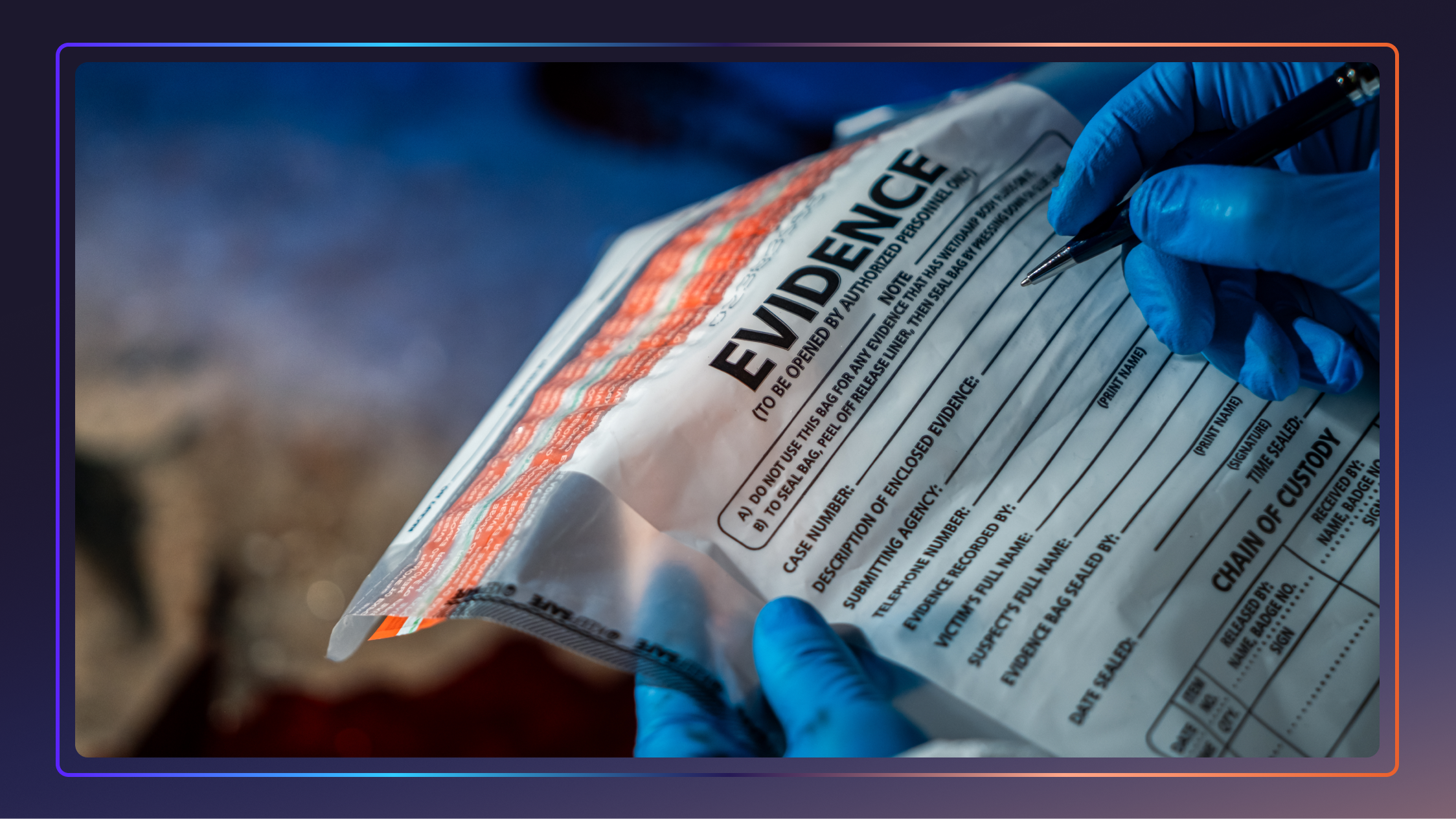
Though law transcription does often directly aid the police, it is used to make all areas of law enforcement more efficient and accurate. Evidence management is a huge job across the entire legal industry, and transcription helps make evidence management, well, manageable.
Detailed, accurate transcripts are much easier to organize and file than large audio or video files, meaning that they help law enforcement officials find what they need, when they need it. And it’s recorded exactly as it was originally stated, so there’s no confusion or guesswork.
There are dozens of ways law enforcement transcription is used, but here’s a breakdown of the most common.
911 Transcripts
In 2024, nearly 240 million calls were made to 911. Every 911 call is recorded, meaning that there are millions of hours of emergency call footage logged every year. That’s a lot of hard drives! These calls can help save lives, prevent disasters, and they’re often used as evidence because they’re real-time records of events and emergencies.
911 call transcription turns those audio recordings into the recognizable text documents we’ve all seen on TV and online. But these transcriptions serve a much higher purpose than making news reports easier to follow along. A timestamped transcript with speaker identifications is much easier to search through and use than manually scrubbing through an audio file.
In an emergency, details matter, so accurate transcription is important. However, 911 calls are rarely made under the best of circumstances. There are often bad connections, chaotic environments, plenty of crosstalk, and unclear dialogue. If your 911 transcription gets critical details wrong, lives can be on the line.
If, for instance, an address is recorded with a number recorded incorrectly, a subject’s innocence could be called into question. This is why using a law enforcement transcription service with industry-leading accuracy is vital.
Officer Reports and Case Notes
A 2022 study showed that more than 25% of police officers suffer from hopelessness, depression, or burnout. It’s a hard job, and that’s before dealing with the tons of paperwork that come with every case. That is part of the reason why there is a police shortage crisis across the nation.
When officers or other law enforcement officials have to manually comb through every recorded interaction when filing reports or writing case notes, there isn’t a lot of time to do the actual job. Automated transcription can make their nearly impossible job much more doable, saving time and (hopefully) relieving just a bit of stress.
Video and Audio Recordings
For law enforcement, recording whenever possible is key to limiting inconsistencies and misinformation. Everything from routine traffic stops and witness canvassing to depositions and court proceedings should be recorded. These recordings protect officers and civilians alike, providing both transparency and accountability. They’re also used as evidence in legal disputes quite often.
Transcribing the audio and video recordings from law enforcement tech such as police body cams, courtroom cameras, and investigator voice recorders turns cumbersome recordings into text files that can easily be searched, shared, entered into evidence, or presented in court.
The downside of law enforcement transcription is that the audio can be recorded in any situation, meaning it isn’t always crisp and clear. When choosing between law enforcement transcription services, it’s important to use one with automatic speech recognition capabilities that can handle audio recorded in less-than-ideal situations.
Wiretaps
A wiretap isn’t nearly as glamorous as TV and the movies make it seem. According to the 2023 Wiretap Report, the average reported length of a wiretap operation was 30 days. That’s potentially hundreds of hours of recorded conversations, any detail of which could make or break a case. Turning those recordings into text documents that you can search within and get summarized for you can save investigators literal weeks of work.
Witness Statements
For police or law enforcement officials, collecting witness statements is an everyday part of the job. Whether the interviews for those statements are collected in person, over the phone, or via teleconference, they should be recorded as an accurate record of exactly what was said.
Accurate transcription of those interviews, complete with timestamps and speaker IDs, can make collecting the important information from those recordings a much more efficient process. And even in these more controlled environments, accuracy of the transcription is vital. Witness statements can include sensitive or personal information that might have direct consequences for a case or individual, so getting every detail right is crucial for true justice to be served.
Court Proceedings
With a national court reporter shortage that appears to be around for the long haul, the ability to record and transcribe court proceedings can be a life raft to short-staffed teams. After all, a record of events is always needed in court proceedings, and while AI will never replace court reporters, ASR can help them do their job more efficiently.
Whether it’s heated debates in trial or days-long depositions, most court proceedings can benefit from a legal transcriptionist. For instance, allowing a jury to review transcripts of witness testimony can save time and help them accurately deliberate what occurred.
On the other side, offering legal teams a way to quickly scan and review a long deposition can mean the difference between a client spending the night in jail or getting out on bond that same day. That’s the power of an accurate written record!
How Law Transcripts Are Used
Law transcripts provide a consistent, singular information source. With everyone on all sides of a case—from police and investigators to judge and jury—referring to the same documents or records of events, it’s easier to come to a fair, correct judgement. Video or audio can be open to interpretation; once the law transcript is certified, much of the guesswork is eliminated.
When used as evidence, an accurate transcript helps legal teams make their case. They provide an official record that supports witnesses and law enforcement on both sides of a case. It’s much easier to point out inconsistencies in testimony with a text document than it is live or through recorded testimony.
Law enforcement transcripts also make investigations easier. There can be thousands of hours of recorded audio attached to any single case. Combing through that audio manually can take longer than the runtime of the actual recordings. Text files are easily searchable and shareable, meaning that the whole legal team can find what they need in a fraction of the time it would take otherwise.
Law enforcement transcripts provide a concrete record of events, which not only helps officials solve crimes, but also keeps them accountable and provides transparency for everyone involved.
Benefits of Accurate Transcripts in the Legal Field
Accuracy is important for all types of transcription, but it’s especially so for law enforcement. Inaccurate dialogue or incorrect details can put people in both physical and legal danger, so it’s important to use a transcription service with a history of reliability.
Here’s why accurate legal documentation matters:
- Provides an official record of events
- Makes it easier to spot inconsistencies in testimony
- Saves time and makes the entire legal workflow more efficient
- Makes case management simpler with easy-to-organize files
- Streamlines evidence management
Law Enforcement Transcription Services to Consider
Law enforcement transcription can come in many forms, some more efficient and reliable than others. With the prevalence of transcription platforms and AI tools in law enforcement, there’s no great argument for doing transcription in-house, but it’s always an option. However, training up transcriptionists can take time and may be prone to inaccuracies, especially at the beginning.
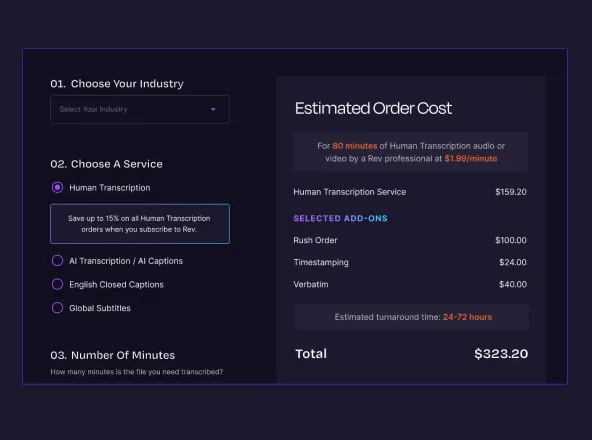
Outsourcing is your most efficient and cost-effective way to get reliable, accurate, and fast law enforcement transcription. Finding a transcription service that offers human transcription with 99% accuracy as well as AI options ensures that you’ll have the most reliable records possible, and you’ll always have the opportunity to receive near-instantaneous drafts if time is of the essence. Plus, law enforcement transcription pricing needs to be taken into consideration as well.
Here are a few of the more reputable law enforcement transcription services.
Rev Helps Cases in Real Time
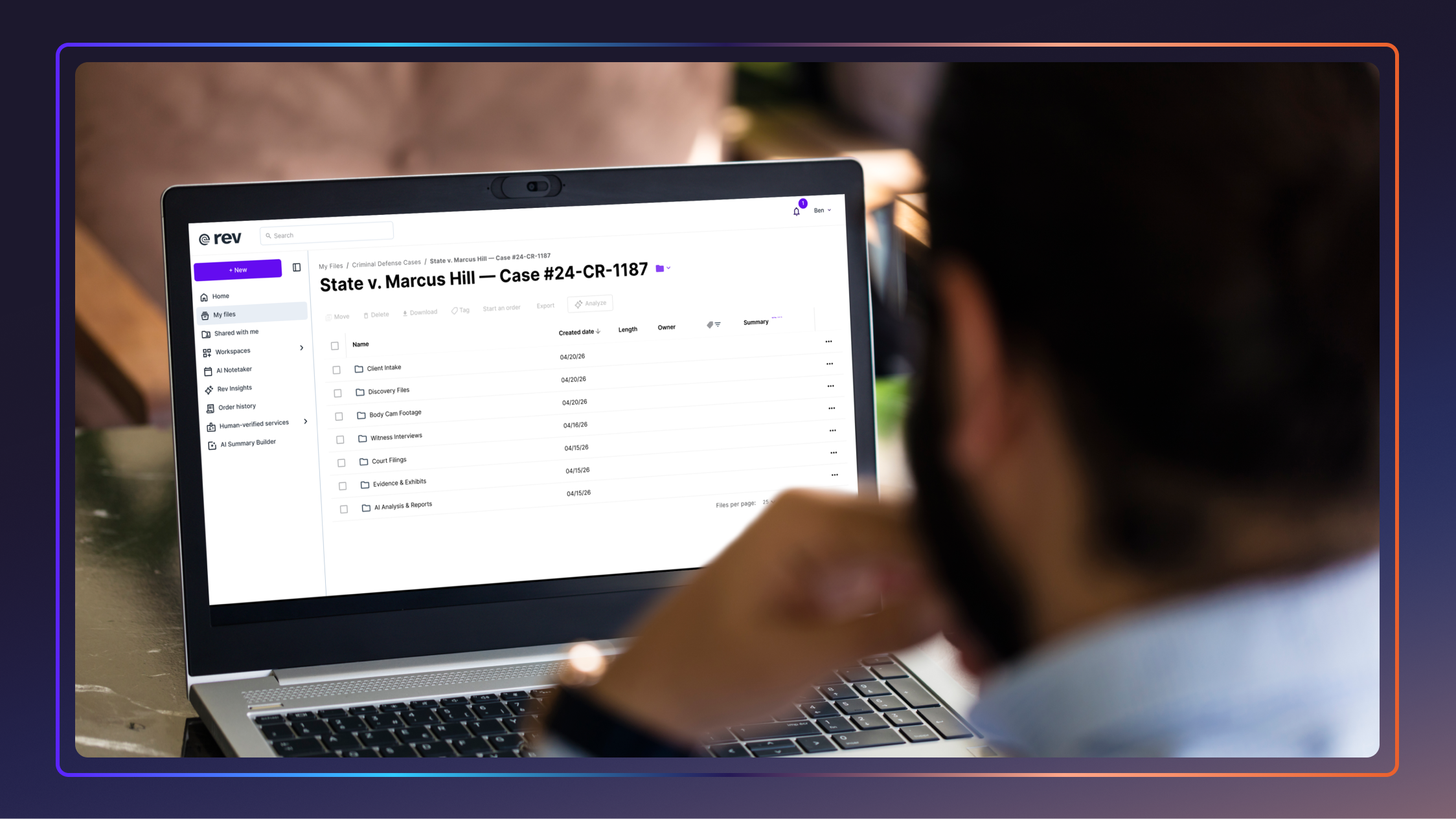
Rev exists to make the jobs of law enforcement and legal teams easier, and we have evidence to prove it. We recently partnered with Anderson Law LLC, a defense firm that found itself buried under piles of digital evidence, which started to hinder the ability to help their young clients.
By using Rev, they were able to turn an overwhelming stream of evidence into manageable, searchable, and efficient data. With our array of AI services, Anderson achieved a 94% reduction in evidence review time, enabled same-day freedom for detained youth, gained real-time courtroom dominance over lying officers, and saved thousands of dollars.
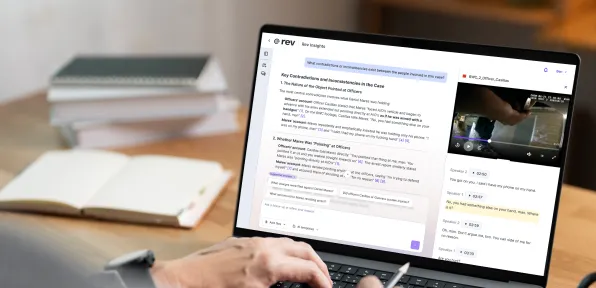
With the most accurate transcription available, human and AI transcription options, fast turnarounds, and an AI assistant that can summarize and analyze transcripts, Rev can streamline the workflow of anyone in law enforcement.
Rev Is Trusted By Law Enforcement
Rev is ready to help law enforcement and criminal defense teams make their case. Our plethora of services are built specifically for the legal industry, from our emphasis on accuracy to our multi-file uploading and analysis platform. We’re ready to protect and serve your case.