


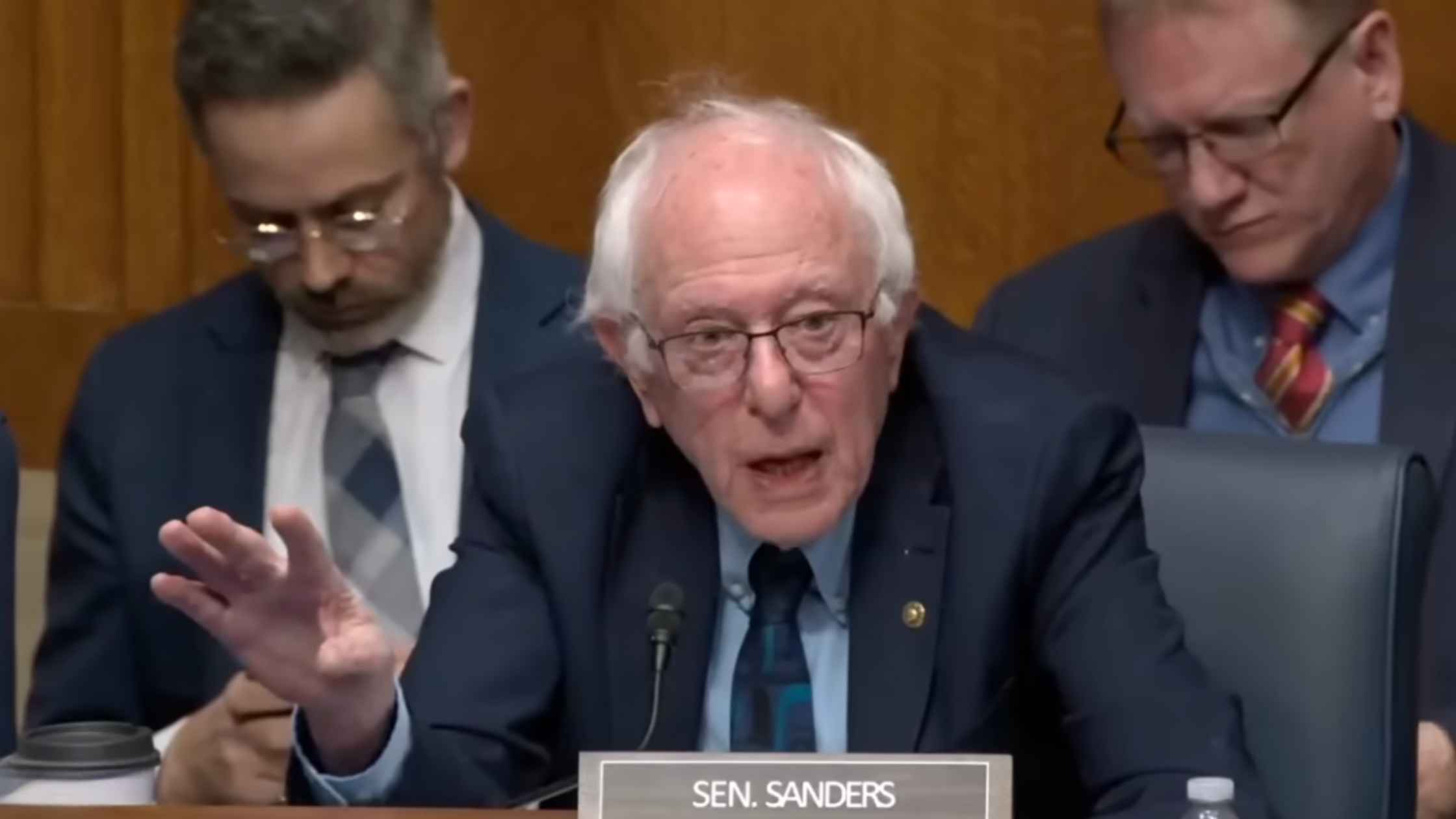
Senator Bill Cassidy (00:00):
The entire commercial insurance market. Today, we're looking at why costs are going up so much within the individual and small business marketplaces, because if you're in those marketplaces, you're paying more and you're getting less. During the COVID pandemic, Democrats passed extended temporary enhanced premium tax credits, or EPTCs, which ultimately send money to giant, highly-consolidated insurance companies.
(00:29)
And I'm not knocking insurers, they're essential to our society. I'm just pointing out, and by using these subsidies, they were hiding the true cost of the premiums. Now, this doesn't actually lower the cost of healthcare. It masks it. It papers over it. It puts a bandaid on a broken bone. Now, let's get some facts. In 2014, taxpayers covered 68% of the Obamacare exchanges enrollees premiums. By 2020, that 68% had become 80%. From 2021 to 2025, the era of the enhanced premium tax credits, if you will, the taxpayer share grew to 93%.
(01:13)
Now, despite this increase in subsidies, total premiums never decreased. The enhanced premium tax credit just masked the cost. In fact, increased subsidization actually increases the price for the unsubsidized and the small group market when they are included in the same actuarial pool. Think about that. Subsidizing the sum increases the premiums for those who are not subsidized, but are in the same actuarial pool. Now, how do we address this? We should go to the root cause of rising healthcare cost.
(01:53)
Now, to be sure, we're having two conversations here. One, how do we lower healthcare costs going forward, period, just from here to eternity? And a very immediate conversation about January 1, 2026. What do we do for those folks, particularly those who are in their 50s and their 60s on the exchanges for whom the premiums have become unaffordable, and because of their increased use of healthcare, of having to put more of their budget to this?
(02:27)
Now, Republicans are not interested in the status quo. I can tell you as doc, putting a bandaid over a broken bone does not help anything. But Republicans are absolutely interested in figuring out a solution that can make healthcare more affordable and health insurance more affordable from 2026 and beyond.
(02:51)
Now, I'm speaking to both sides of my diocese right now, my Democratic and Republican colleagues. I'm hoping that we can find a bill that can get 60 votes, that can fix the problem of the exchanges for January 1, 2026. It shouldn't be a Republican solution. It shouldn't be a Democratic solution. It should be an American solution. And this is a committee of jurisdiction. So I'm asking us not to yell at each other, not that we do, maybe occasionally, but let's find a solution because the American people are looking us to find a solution. Now, we can push for big ideas, grandiose ideas on the right or the left, but we got to have a solution for three weeks from now. So, Senator Sanders will speak about Medicare for All. That will not be ready in three weeks. In fairness, people on my side will speak about things that cannot be ready in three weeks. We should focus our minds on what can get done by three weeks from now. Now, that means we have to build on what we have. Neither side's going to particularly like that, but if we're going to do something in three weeks, we got to do it in three weeks. And if you want an American solution, not an RRD, that is the reality.
(04:16)
Now, there is a sweet spot between that which Republicans and Democrats would like to do, knowing that we have to have a solution in three weeks. We've got three choices. We can do nothing. We accept the premise that no deal is possible, that the enhanced premium tax credits go away, that no reforms are made to a failing system, and we have a failed floor vote where there's a Democratic bill and a Republican bill, and they both go down and the American people are not served. That's one option.
(04:46)
Alternatively, we can roll up our sleeves and seek out something we can all live with. Now, from my perspective, that recognizes that increased support for some patients, for some people must continue. It also, though, includes shifting dollars away from the current structure of the enhanced premium tax credit, 100% of which goes to insurance companies, and repurposing those dollars for pre-funded health savings accounts paired with the Bronze Plan, because when you put it in an HSA, 100% goes to the patient. By the way, when you give it to the insurance company, 20% of that goes for overhead and profit. When you give it to the patient, 100% goes for the healthcare they need.
(05:36)
Now, let's address the elephant in the room, or in respect to my Democratic colleagues, the donkey. There are people with strongly held positions on the issue of life or choice on both sides. Let's just acknowledge that and let's have an honest conversation. I am pro-life, and I'm not going to compromise that, and I know people are pro-choice and they don't wish to compromise that.
(06:03)
But we've found ways through the annual appropriations process to find common ground for many years. So let's just not say right off the bat, "Oh, we can't address that," and then allow the people in their 50s and 60s to have unaffordable premiums. Let's try and find a way that we can all live with this incredibly important issue, no matter what side of that issue you are.
(06:27)
Now, President Trump supports the concept of this third approach, which clearly strengthens its chance of passing. I'm pleased to say I've had Democratic colleagues in both chambers with whom I've had productive conversations. Again, they want an American plan, not a side-by-side Republican and Democratic set of plans, both which fail, like so much fails here in Congress.
(06:52)
The American people want something to pass, so let's find something to pass. Let's give power to the patient, not profit to the insurance company. Let's make healthcare more affordable again. And with that, I recognize Senator Sanders.
Senator Bernie Sanders (07:05):
Thank you very much, Mr. Chairman, thanks to the panelists for being here, and thank you for holding this important hearing. And I agree with some of what you said. Hard to dispute that the current healthcare system is completely broken. It is dysfunctional and it is cruel.
(07:27)
I think most Americans recognize that the function of the healthcare system today is to make the insurance companies incredibly wealthy, provide huge compensation packages to their CEOs, make the drug companies extremely profitable, provide huge compensations to their CEOs, massive amounts of stock buybacks. That's what the system is about. So for the drug companies and the insurance companies, the system is working really great, and that is what it is designed to do. Unfortunately, for the rest of the American people, the system is not working very well.
(08:05)
What does that mean? It means, unbelievably, Mr. Chairman, as a nation, we are spending $15,000 per person today on healthcare, adding everything together. Family of four, $60,000. So if you're spending $15,000 per person, you must be getting the best healthcare system in the entire world, right? Everybody in America has high-quality healthcare, go to any doctor they want. Low cost prescription drugs, because we're spending twice as much for capital. Well, not quite the case.
(08:43)
The reality is that despite spending $15,000 per person, we got 85 million Americans who are uninsured or underinsured. What does that mean, Mr. Chairman? It means that if you are underinsured or underinsured and you get sick, you don't go to the doctor. And you know what happens when you don't go to the doctor when you get sick? Sometimes you die. And there are estimates that in the richest country in the history of the world, some 60,000 Americans die every single year because by the time they walk into a doctor's office, it is too late.
(09:19)
Now, clearly in the richest country in the history of the world, our life expectancy is higher than other countries, right? Wrong. Four years lower than OECD countries. And if you're working class, it is a lot lower than that. Clearly in America, richest country and earth spending all this money, we have more doctors and nurses and psychologists and dentists. We got all. You go to anytime you want, you have to wait online. Well, not quite the case. We got a massive shortage of doctors, nurses, dentists, mental health providers.
(09:49)
So what is the bottom line? Mr. Chairman, I appreciate very much your sentiment about wanting to do something quickly. And the reason for this hearing, to be frank, is that my Republican friends understand they got a political problem. And what is their political problem? Their political problem is that all over America today, people on the Affordable Care Act are opening up packages coming from the insurance companies, and guess what? Their premiums on average are doubling, in some cases in my state, tripling or quadrupling. And if I'm a Republican, frankly, I don't want to go back to my district and explain to people why their ACA premiums are doubling or tripling.
(10:32)
So Mr. Chairman, yes, the current system is broken. Yes, we need to create a new system, but unfortunately, we aren't going to do it in two weeks. You're not going to undo the current American healthcare system. So what should we do? Well, the common sense would suggest, okay, you got a broken system, but you and I think agree, you don't want to see people seeing a doubling in their premiums. So let us extend the current ACA tax credits for at least another year, two years, three years, while in fact, and I'd love to work with you on this, in this committee, we tackle the real issues.
(11:08)
And by the way, if we're going to tackle the real issues, the first thing I think that we should do, Mr. Chairman, and I mean this very honestly, is have a panel with people from different countries around the world who are, A, providing healthcare to all of their people as a human right. And we are the only major country on earth that does not do that. And say to the people in France, in Japan, "How do you manage to provide quality care to all of your people at half the cost that we do in the United States?" What can we learn from other countries? I think that will be the first approach, and we can argue from there.
(11:45)
But anyhow, I think the immediate task is to, as bad as the current system is, we don't want to see a doubling, tripling of premiums. We got to extend those, and then let's sit down and develop a system that works for the American people, not the insurance companies, not the drug companies. In my view, in Dr. Fegan's view, the answer is, in fact, going to be to emulate what many other countries do, guarantee healthcare to all people by extending Medicare in this country, Medicare for All. Thank you, Mr. Chairman.
Senator Bill Cassidy (12:14):
The reason people are uninsured is because there's $6,000 deductibles. As a doctor, I know that was a barrier to care. That is the status quo. We can change that status quo for next year. I just don't want people to be underinsured.
Senator Bernie Sanders (12:30):
All right. Can you change that status quo and make sure, like every other country does, and guarantee healthcare to all people with virtually no out of-pocket expense?
Senator Bill Cassidy (12:37):
So if there's going to be a big idea, that will not happen by January 1, 2026. It is something we can consider for 2027 or beyond, but I'm focused on 2026 because that's where the immediate need is.
Senator Bernie Sanders (12:50):
And if that's what we're going to do, let's extend tax credits and then let's have that discussion.
Senator Bill Cassidy (12:54):
So people remain underinsured.
Senator Bernie Sanders (12:56):
Your program is not going to guarantee health insurance to all people.
Senator Bill Cassidy (12:59):
We will not accept that.
Senator Bernie Sanders (13:00):
We will not accept the doubling of premiums.
Senator Bill Cassidy (13:03):
Good. Then maybe we can have common ground. That's the common ground. Let's proceed. I will now introduce our first witness, a good man. We're joined today by Joel White, President of the Council for Affordable Health Coverage. Mr. White has over two decades of experience in health policy, and has led national coalitions focused on lowering healthcare costs and improving market competition.
(13:39)
He has expertise in insurance markets, benefit design, and reforms to expand affordability for patients in small business. He's a graduate of American University where he earned a bachelor's in economics. Mr. White, thank you for being here.
Joel White (13:56):
Thank you, Chairman Cassidy, Ranking Member Sanders, Members of the Committee for the opportunity to testify today. My name is Joel White. I lead the Council for Affordable Health Coverage. Our mission is pretty simple. We want to ensure that every American has access to affordable coverage. And I'm here to say the cost of healthcare is a threat to our economy, it is an escalating burden on our families and businesses, it's a ticking time bomb for the federal budget, and it's unsustainable for the United States of America. And those words were said by President Obama in 2009. They were true then and they're true today. The problem is the situation today, it's even worse.
(14:39)
Healthcare is becoming less affordable, less competitive, and less responsive to consumers. Premiums and out of-pocket costs keep rising, while choices narrow and consumers pay more for less. The ACA forced people into expensive, more restrictive plans, and pushed 12 million small business employees out of better employer coverage and into higher cost exchange plans. Since enactment in the ACA, individual market premiums more than doubled twice the pace of employer coverage, out of-pocket costs doubled as well.
(15:15)
Next year, exchange premiums are projected to jump 26%, driven by medical inflation and the structure of the law, and premiums are only the start. Even after paying record high premiums, families must spend thousands of dollars before coverage even begins. When they finally access care, they face friction and delay from prior authorizations, narrow networks, and restrictive drug formularies. Taxpayers and working Americans finance these high premiums and high deductibles that pay for shrinking access, while local hospital and insurance monopolies grow stronger.
(15:53)
Simply put, the ACA poured gasoline on the healthcare cost fire. The system is unsustainable for families, for businesses, for taxpayers. It's a major driver of deficits and debt. And adding more subsidies won't fix these underlying problems, it only reinforces them. So relief from the ACA's high costs requires a different approach, one that empowers consumers, not corporate America.
(16:22)
First, I suggest you make subsidies portable. Let individuals use federal tax dollars to buy coverage or care arrangements that work for them. First dollar coverage, direct primary care, lower premium plans, services at transparent cash prices. Depositing subsidies into HSAs that patients own and control would give them real purchasing power and force plans to compete on price and quality. In every market across America today, there are health plans that are less expensive than the ACA policies. If consumers were empowered to shop and use their subsidies for alternative plans, competition would drive down costs and access to care would improve.
(17:09)
Second, it's absolutely imperative that we help small businesses. They face the highest premiums and the fewest choices. Updating the broken small business tax credit and expanding options like Association Health Plans would let them offer coverage again. The small group market is currently in a death spiral. Just a third of small businesses offer coverage today. Used to be 50%. Half the exchange market is made up of small business employees, where they pay higher premiums, higher deductibles, and they're in an HMO. That is not common in small group market. You could keep people in small group plans and give them better coverage at two thirds less costs. Third, we should empower states to bring down costs through accelerated waivers and high risk pools that have been proven across America to lower premiums by up to 40%. And then fourth, long-term affordability requires addressing the cost of medical care itself. Local hospital markets are monopolies that drive up prices for consumers and costs for taxpayers. For too long, we've restricted the supply of local doctors, nurses, and pharmacists. We need policies that promote competition, not consolidation, so prices fall and innovation rises. I think the path forward is pretty clear. Empower consumers, expand choices, restore competition, and lower medical costs. That is how we make healthcare affordable again. Thank you.
Senator Bill Cassidy (18:47):
Next is from Ms. Strouse. Thank you, Mr. White. And we're joined today by Marcy Strouse, owner and partner of Capital Benefits Group. She has more than two decades of experience helping small business owners navigate rising healthcare costs and design affordable options that keep their employees and families healthy.
(19:13)
I think maybe even more importantly, she brings a personal perspective as the mom of three who has seen firsthand the realities families face in accessing and affording healthcare. Thank you, ma'am.
Marcy Strouse (19:27):
Chairman Cassidy, Ranking Member Sanders, and distinguished Members of the Committee. Thank you for the opportunity to testify today on behalf of millions of small business owners and individuals across America who care deeply about building stronger, healthier communities. My name is Marcy Strouse, and I'm a partner and benefits consultant at Capital Benefits Group in Des Moines, Iowa.
(19:48)
For more than two decades, I've helped small business owners navigate an increasingly complex health benefits landscape. I've sat across from owners who lie awake at night wondering how they will continue to afford employee coverage. And as a small business owner myself, I understand how an uneven playing field can hold back growth.
(20:05)
I am also the mother of twins with a neuromuscular disease, so I know firsthand what it means to navigate a healthcare system for loved ones with complex needs. This dual perspective, both as a consultant and as a parent, deepens my understanding of how today's system is failing families and employers alike.
(20:20)
Small businesses and individuals are facing a healthcare coverage crisis. Small businesses are the foundation of the American economy. They represent 99.9% of all US businesses and generate nearly half of our nation's GDP. They coach our kids, support our communities, and create opportunity every day. A key part of that commitment is offering employer-sponsored health coverage.
(20:43)
But for four decades, according to the National Federation of Independent Business, the number one problem small business owners report is the high cost of health insurance. Premiums have risen more than 120% since early 2000s. While the number of insurers offering small group plans has sharply declined. It's no wonder that 98% of small business owners fear they will no longer be able to afford coverage in the coming years. The underlying problem is structural. Too many government regulations and too many industry middlemen separate patients and employers from the care they need.
(21:17)
Today, 9 out of every $10 spent on healthcare flows through a third party, limiting employers' and employees' ability to shop for plans that truly fit their needs. It is time for Congress to legalize healthcare tools that increase choice, flexibility, and affordability. The following key reforms will help to restore affordability and choice.
(21:36)
Enact the choice arrangements. ICRAs are already a valuable tool that let employers contribute towards employees' individual health coverage in a predictable, budget-friendly way. Passing the Choice Act would codify and strengthen these arrangements, expand eligible expenses, and offer tax credits for small businesses that use them. This gives employers another sustainable option for providing meaningful benefits.
(21:58)
Reform association health plans so small businesses have the ability to join together across industries to purchase coverage the same way large employers do. Allowing more pooling through AHPs and similar ERISA-regulated structures would mean lower premiums, stronger networks, and better plan options.
(22:13)
Codify the short-term limited duration plans to offer affordable, flexible coverage, especially when paired with direct primary care. Removing federal time limits and codifying these plans would expand lower cost options for small employers and individuals. HSAs should be modernized so families can save more, use funds to pay for small group premiums, and treat HSAs as true long-term health investment tools. This empowers consumers to make smarter decisions and better manage unexpected costs.
(22:40)
Eliminate one size fits all ACA mandates, such as essential health benefits, the medical loss ratio, community rating, and the removal of lifetime limits. They have unintentionally contributed to rising cost, fueled industry consolidation, and reduced flexibility.
(22:56)
Essential health benefits require businesses to pay for coverage their employees may never use. Medical loss ratios tie insurer revenue to higher claims, discouraging cost control and contributing to market consolidation. Community rating rules inflate premiums for younger workers, pushing many out of the market and driving up rates, and the removal of the lifetime limits has contributed to uncontrolled cost growth across the system. Eliminating, or at a minimum, right-sizing these mandates would help bring premiums back in line with what small employers and families can afford.
(23:27)
In conclusion, small business owners must budget carefully each year to provide healthcare to their employees. Many feel trapped as premiums continue to rise and options dwindle. Yet, the private market is already developing innovative solutions, international drug sourcing, biosimilar programs, negotiated surgical rates and more.
(23:44)
When government barriers are reduced, these tools can work not just for large employers, but also for the smallest groups, including those with fewer than 25 employees. Thank you for the opportunity to share my testimony and I look forward to answering your questions.
Senator Bill Cassidy (23:58):
Thank you. I asked Senator Sanders to introduce his witness.
Senator Bernie Sanders (24:02):
Thank you, Mr. Chairman. I'd like to introduce Dr. Claudia Fegan, National Coordinator of Physicians for National Health Program. Dr. Fegan recently served as Chief Medical Officer of Cook County Health in Chicago and is a past president of the Health and Medicine Policy Research Group. Dr. Fegan, thanks so much for being with us.
Dr. Claudia Fegan (24:21):
Thank you, Chair Cassidy, Ranking Member Sanders, and the all members of the Senate Health Committee. I want to thank you for the opportunity to address the issue of healthcare affordability. My name is Dr. Claudia Fegan. I am the National Coordinator of Physicians for a National Health Program.
(24:37)
Everyone in this room knows that the US healthcare system does not work. It does not meet the needs of the American people. An expanded Medicare for All system, as proposed by Senator Sanders, would solve many of our problems related to the cost of healthcare. We could have high-quality, trustworthy, universal healthcare that is free from profit-driven conflicts of interest and delivers better health outcomes for Americans.
(25:03)
Without enhanced tax premium credits, Americans will die. The subsidies established in the Affordable Care Act, expanded in the American Rescue Plan Act, allowed workers to purchase health insurance, saving lives. When 10 million people lose Medicaid coverage because of the changes in the Republican Reconciliation Bill, over 42,000 more people may die as a result.
(25:27)
I've practiced internal medicine for over 40 years, the last 25 years at Cook County Health, the third-largest public health system in the United States. Before retiring as chief medical officer last December, I repeatedly saw patients with advanced conditions that could have been prevented or cured had they come in earlier.
(25:44)
I saw patients who came in with kidney failure who needed dialysis that could have been avoided if their hypertension had been treated. As people are looking at the increases in premiums they are facing on January 1st, they are weighing the decision to go without insurance. There are patients trying to get screening tests done before the first of the year or get preventive services while they can.
(26:05)
Every year, more than 31,000 people die in the United States as a direct result of not having health insurance. That is because when people lose coverage, because they can't afford insurance without subsidies or because they lose Medicaid, they don't get necessary care and they are sicker when they get to the hospital.
(26:22)
Common sense and basic compassion teach us that treating high blood pressure to prevent a stroke is better than dealing with the possibility of permanent disability and rehabilitation. It saves money and lives to provide patients with chronic diseases, such as diabetes and hypertension, with routine care instead of waiting for their conditions to spiral out of control.
(26:43)
Allowing private insurance companies to manage Medicare through Medicare Advantage plans has led to fraud and abuse. The practices that claim to improve quality often actually deny care and cut costs for insurance companies, which harms patients and blocks them from getting needed treatments.
(27:01)
For example, Medicare Advantage plans impose numerous prior authorization requirements, averaging nearly two per enrollee. Although only 10% of denials are appealed, 80% of them are overturned upon appeal. In contrast, traditional Medicare uses just one prior authorization for nearly every 100 enrollee. When we deny care or take access to care away, people die.
(27:25)
It is well documented that our healthcare system wastes 20 to 30% of our healthcare budget on bureaucracy and profit. And adding proven ineffective layers, like work reporting requirements to Medicaid, just creates more waste and red tape for the government and participants.
(27:41)
I would also like to speak to the recent proposals to expand the use of Medical Savings Account to address healthcare affordability. The idea of giving a limited cash benefit directly to patients so that they can make better choices to meet their needs is a farce. They will use the money to purchase health insurance because there is no access to care in this country without insurance.
(28:02)
The only savings will come when patients accept greater out of-pocket expenses without the savings that come from spreading the costs across large populations. Low wage workers will make poor choices when having to decide between preventive services and immediate needs, such as rent and groceries.
(28:19)
We know that pap smears, mammograms, colonoscopies, and even blood pressure checks save lives. We also know people living paycheck to paycheck have a hard time investing in the prevention of future problems. An underserved workforce unable to receive basic health services costs us in decreased productivity and lower profits. Somehow we've come to believe that people who can't afford healthcare are disposable. Our society is worse off because of it.
(28:46)
We can save lives and improve our society by giving people the care they need. We've make it too hard to access care, and every year tens of thousands of patients die because of it. We often say the United States has the best healthcare in the world. That's only if you're wealthy enough to access it. Thank you.
Senator Bill Cassidy (29:05):
Thank you, Dr. Fegan. And I'll start. Now, Ms. Strouse, Senator Sanders spoke about people being underinsured, and the problems of having to have significant copays are… But clearly, under the status quo, if you have a $6,000 deductible, that is almost the definition of being underinsured.
(29:27)
Indeed, Dr. Fegan, talking about people under the current system delaying care, you can imagine because they cannot afford the deductible. Now, I'm saying this. Quickly, what is the impact of a $6,000 deductible upon an Obamacare policy upon somebody's ability to access care?
Marcy Strouse (29:47):
Well, I would say it's one barrier. The out of-pocket maximums are huge. They're significant, so deductibles and out of-pockets. Prior to the ACA, if I had told somebody their out of-pocket maximum was 5,000, I wouldn't have sold a policy. Now, people are begging for a $5,000 out-of-pocket maximum-
Senator Bill Cassidy (30:05):
So what is the typical out of-pocket maximum under the current status quo which folks want to continue?
Marcy Strouse (30:09):
About $8,300.
Senator Bill Cassidy (30:09):
8,300?
Marcy Strouse (30:12):
Yeah. So-
Senator Bill Cassidy (30:13):
So that's the decision? That's what people are trying to continue under the current system?
Marcy Strouse (30:17):
Absolutely.
Senator Bill Cassidy (30:18):
Let me go. I'm sorry, just real hurry.
Marcy Strouse (30:19):
Yeah.
Senator Bill Cassidy (30:19):
Thank you.
Marcy Strouse (30:21):
Yeah.
Senator Bill Cassidy (30:21):
Next. If you'd had a pre-funded HSA with your own family history, pre-funded. The money is placed there, it doesn't come out of your paycheck. It's put there. Instead of going to an insurance company who takes 20% for profit and overhead, 100% goes to families. And that would give you first dollar coverage. Would that have made an impact upon your ability to access that care?
Marcy Strouse (30:44):
Yes.
Senator Bill Cassidy (30:45):
Yeah, clearly.
Marcy Strouse (30:47):
Yeah.
Senator Bill Cassidy (30:47):
How not?
Marcy Strouse (30:47):
And I think too, part of the problem is that we can't force people to go to the doctor. We have preventive health benefits and people are not utilizing them. So even when they are $0 costs, which they are in every plan-
Senator Bill Cassidy (30:59):
Well, that's one issue, but some people wish to go, and that $6,000 deductible for maybe not something covered at $0 is a barrier?
Marcy Strouse (31:07):
Yeah, absolutely.
Senator Bill Cassidy (31:08):
Mr. White, premiums, I'd like to talk about the total cost of being insured. Folks are focusing on lowering premiums with subsidies, leaving that $6,000 deductible and an $8,300 maximum out of pocket, apparently incredibly callous to the impact that has upon somebody's budget.
(31:26)
And we're talking about a pre-funded HSA, in which the subsidy would flow to help somebody afford that care. Speak about the cost of being insured versus the cost of the premium, please.
Joel White (31:38):
Yeah. I think that people are focused on the premium. We're talking about almost $27,000 is the average for 2026, which is about the cost of a new Chevy Trailblazer, every year that you just have to get a new one every year.
(31:53)
But really, the outrage here I think is the deductibles. And what we're seeing right now is 6, 10,000, $14,000 deductibles on family policies. That actually is restrictions on access to care.
Senator Bill Cassidy (32:07):
So the deductible that we would continue with status quo if we do nothing is a restriction on primary care?
Joel White (32:13):
100%. It's not just that 83% of exchange enrollees are in an HMO or a most restrictive type of health plan where you can only see a network doctor. You have to meet your deductible before the insurance will actually kick in, which means you've got to pay out of pocket when you go see that doctor until you hit your deductible limit, say it's $10,000. First United Bank says the typical American has $1,000 in their bank account.
Senator Bill Cassidy (32:43):
So status quo does not work for that family with 1,000 bucks?
Joel White (32:47):
100%.
Senator Bill Cassidy (32:48):
Keep that in mind. Status quo is not working. Let's not pretend otherwise. Now, Mr. White, according to the Congressional Budget Office, cost share and reduction payments, as originally intended under Obamacare, reduces premiums by 11%, reduces the deficit by more than $30 billion.
(33:06)
Can you explain how appropriating cost share and reduction payments, which in fairness was part of original Obamacare, lowers premiums and ultimately saves taxpayer dollars?
Joel White (33:15):
Yeah. The original law envisioned two subsidies. One was the premium subsidy, the other was a cost sharing reduction for people up to 250% of poverty. That funding for the cost sharing reductions was never funded by Congress. A court ruled that Congress either had to appropriate the money or the funds weren't available. And so Congress has never appropriated those funds.
(33:42)
What the insurers have done is called silver loading. They've increased their premiums and then take that to provide a higher actuarial value plan to the consumer, so 94%, for example. That lowers their out of-pocket costs. So essentially, they've raised their premiums,
Joel White (34:00):
Taking that money and then provided more benefits in lower cost sharing. The challenge with that though is that everyone pays the higher premium. If you don't have a subsidy, if you're an unsubsidized individual, your premium costs are way up. So if you actually appropriate the money for the cost sharing reduction subsidies, that silver loading, those premium increases go away, premiums go down for everyone, but taxpayer subsidies go down for those plans as well. And so that's how you save $33 billion and you lower premiums by about 11%.
Senator Cassidy (34:33):
Gotcha. Thank you. Senator Sanders.
Senator Bernie Sanders (34:35):
Well, Mr. Chairman, you and I agree.
Senator Cassidy (34:37):
We do.
Senator Bernie Sanders (34:38):
The status quo is not working. I look forward to your signing on to Medicare for All so that we can finally do what every other country on earth does, guarantee healthcare to all people as a human right. Let me very briefly, and I don't have a lot of time, ask the panelists very briefly, yes, no. Should the United States, in fact, join every other major country on earth guarantee healthcare to all people as a human right? Mr. White?
Joel White (35:03):
I think the experience we've seen in every other country is that it doesn't work well.
Senator Bernie Sanders (35:06):
Doesn't work well, huh? Ms. Strouse?
Marcy Strouse (35:10):
I would say looking at the way the ACA has worked for us, absolutely not. This is the first indication that it will not work in the United-
Senator Bernie Sanders (35:17):
Dr. Feagan, you've studied other countries around the world. Mr. White says they don't work all over the world. Countries want to join the United States, see a doubling of their healthcare costs and deny millions of their people without healthcare. Is that what the trend is?
Marcy Strouse (35:29):
You should ask the people with the conditions-
Senator Bernie Sanders (35:35):
Okay, let Dr. Fegan-
Marcy Strouse (35:35):
… in those countries how they get-
Senator Bernie Sanders (35:35):
Ms. Strouse, you had your time. Dr. Fegan?
Dr. Claudia Fegan (35:36):
Yeah. Every other country has managed to cover over 99% of their population and their life expectancy is longer than ours and they spend half as much as we do. We absolutely should do it.
Senator Bernie Sanders (35:48):
Dr. Fegan, the nonpartisan congressional budget office has estimated, and this is really the important point. You want to talk about affordability? The CBO has estimated that Medicare for All would save the American people $ 650 billion a year. $650 billion. That's an enormous amount of money and provide comprehensive healthcare every man, woman, and child. That's not me. That's the CBO.
(36:14)
When we talk about an expensive system, current system, we're talking about enormous amount of waste and bureaucracy in administering hundreds of separate plans. She has a $10,000 deductible. I have a $5,000 deductible. You have no health insurance. Dr. Fegan, based on your experience, what does that mean the complexity of the plan and the cost of the plan and the impact on patients who walk into your office?
Dr. Claudia Fegan (36:47):
Patients can't figure out how to access the care they're entitled to. And as a result, they often don't get the care they need. We could save billions, as you indicated, hundreds of billions of dollars, and we know that over 50,000 people a year die as a result of not having health insurance.
Senator Bernie Sanders (37:05):
As you well know, everybody here knows, the Trump's big, beautiful bill is going to throw approximately 15 million more or less people off of Medicaid. These are low income and working class people. And that decision was made in order to give a trillion dollars in tax breaks to the top 1%, Mr. Musk, Mr. Bezos, and others. What happens when you throw 10, 15 million low income and working class people off of Medicaid healthcare they have now?
Dr. Claudia Fegan (37:39):
When we take away health insurance, people die. It's just that simple. People do not get preventive services. They do not get the basic problems that we know how to treat. Their diabetes becomes uncontrolled. Their hypertension results increase strokes. We know that people have greater disabilities. We know that working class people will make decisions that will mean skipping their healthcare until they are desperate and come into the emergency department. And at the time that they present with their illnesses, we'll be forced to take care of them and it will cost us more.
(38:08)
It costs us more to take care of the stroke. It costs us more to put patients on dialysis. It costs us more when patients have diabetes and that's out of control and then we have to amputate limbs. We know that eventually they'll come into the emergency department and COBRA requires that we take care of them, regardless of the cost. And so we're costing ourselves more at the back end and we're losing contributing members of society.
Senator Bernie Sanders (38:30):
Which raises the question of why we spend approximately half as much per capita on primary healthcare, disease prevention as other countries. If I'm an insurance company, do I want to really invest in keeping people healthy? Is that where I make my money?
Dr. Claudia Fegan (38:46):
The United States has about 0.3 primary care physicians per thousand patients. And every other country has over at least like 0.8 or 0.7 primary care physicians per thousand. So we don't produce enough primary care physicians to take care of the population at this point.
Senator Bernie Sanders (39:03):
And we underpay those physicians as well.
Dr. Claudia Fegan (39:05):
We do.
Senator Bernie Sanders (39:06):
You say as a primary care physician, right?
Dr. Claudia Fegan (39:07):
As a primary care physician.
Senator Bernie Sanders (39:09):
Just so everybody understand you and I, a couple of years ago were in Toronto as I recall, right?
Dr. Claudia Fegan (39:13):
That's correct.
Senator Bernie Sanders (39:14):
Okay. And the doctors there were telling us they do major surgery, good quality care. What's the bill when somebody comes out of a major procedure at a Canadian hospital? Oh, are they going medically bankrupt?
Dr. Claudia Fegan (39:26):
Absolutely nothing.
Senator Bernie Sanders (39:27):
Nothing.
Dr. Claudia Fegan (39:29):
And matter of fact, we visited the billing-
Senator Bernie Sanders (39:30):
And how much do they spend per capita compared to us?
Dr. Claudia Fegan (39:33):
They spent half as much.
Senator Bernie Sanders (39:34):
There you go. All right.
Dr. Claudia Fegan (39:35):
But four years longer.
Senator Bernie Sanders (39:36):
Maybe we should study that.
Senator Cassidy (39:39):
Senator Collins.
Senator Collins (39:41):
Thank you, Mr. Chairman. Mr. Chairman, I feel compelled to respond to the ranking members' remarks about whether or not Republicans care about this issue. It is obvious that we care deeply about the affordability of healthcare for our constituents. I would point out that the chairman of this committee is a Republican. He's the one who has convened this important hearing. He is also the one who has worked night and day with many of us to talk about solutions.
(40:27)
By contrast, the policy that we're talking about during the Biden era was ramped through with no Republican support and it was supposed to sunset so that we could have a more thoughtful approach, and it's now placed working Americans in a terrible bind. Mr. White, in his written testimony, refers to the affordability gap, the growing difference between the high price of coverage and workers' earnings. And that's why we should be putting partisan politics aside and trying to work together to come up with solutions.
(41:22)
The so-called free bronze plans have huge out of-pocket deductibles, enormous unaffordable deductibles. That is an untenable situation, which is why our chairman has talked about health savings accounts, has talked about cost sharing reductions. I want to bring up another issue. And let me say, I think there's a limit to what we can do in this first year. I think we're going to need a two-year plan. Senator Murkowski and others have proposed multi-year plans as well.
(42:12)
But I want to ask Mr. White about a short-term solution that could be added this year, and then a longer term solution that I'd like to hear the panel's views on. First, there is no income cap on the tax credits, on the enhanced premium tax credits. That means, according to our calculations, that a family of four living in Augusta, Maine, making $325,000 a year, which I can tell you would cover very few people in Augusta, Maine, qualify for a taxpayer funded subsidy. Mr. White, do you think we should put a reasonable cap, phase it out so we don't have a cliff on who qualifies for these enhanced premium tax credits?
Joel White (43:23):
Absolutely, yes. We need to understand that those subsidies above 400% of poverty are financed in part by taxes on working Americans.
Senator Collins (43:35):
Exactly.
Joel White (43:35):
Someone working in a bakery, a gas station, a lower income family is paying taxes to subsidize the subsidies for someone making 200, 300, $400,000 a year. That is not fair. So there needs to be some kind of recognition that we can't tax low income people to pay for high income people's subsidies.
Senator Collins (43:57):
Ms. Strouse?
Joel White (43:58):
The second point I just make is there's no asset test on these enhanced subsidies. And so as an early retiree, I might have a sizable nest egg, maybe a million dollars, and have an income of $200,000 and still qualify for a subsidy paid for by a lower working class American. That's not fair either.
Senator Collins (44:18):
Thank you. Ms. Strouse, same question.
Marcy Strouse (44:21):
Yeah, I agree that if we are going to keep the subsidies in place, that we would need to have some sort of an income cap on there. And then also for those people that potentially are underestimating their income to receive subsidies, they should be required to pay subsidies back at the time that they verify their taxes at the end of the year. So there should be some sort of safety net that makes sure that they're paying the appropriate amount that they should be paying.
Senator Collins (44:47):
Doctor, what about an income cap?
Dr. Claudia Fegan (44:50):
I would have to get back to you on that. I have concerns about there are health expenses that people can have that could make their income problematic.
Senator Collins (45:02):
My time has expired. For the record, I'm going to submit some questions on the use of invisible high risk pools and reinsurance, which also can lower premiums. And we did that for a while and we did it in the state of Maine with some considerable success. Thank you, Mr. Chairman.
Senator Cassidy (45:26):
Thank you, Senator Collins. Senator Murray.
Senator Murray (45:28):
Well, thank you very much, Chair Cassidy. We got to be real here. We are a month into open enrollment, a full month. The time to save people from these huge increases in costs they're going to see because the ACA tax credits expired was before these premium hikes were all but locked in saying, let's start talking about fixing this now a month into open enrollment instead of at any point earlier this year when we actually had time to stop premiums from skyrocketing or look at some of these different reforms. This is about as serious as expressing concern about RFK Jr's anti-vax crusade after voting to make him the most powerful public health official in the country. The time is out.
(46:13)
Realistically, the only way, the only way now we can stop people from seeing these huge increases is a clean extension and a longer open enrollment. And I think we should be honest about that. I appreciate, Mr. Chairman, the ideas being tossed around, even if I have some concerns with some of the proposals. But if Republicans had come to the table any point earlier this year, there would be time to sit down and talk about this. But we have now seen the Republicans run out the clock. They blew right past the start of the open enrollment. Forget about time spent negotiating.
(46:47)
Even if we passed a bill today, there is not time to implement anything more complicated than a clean extension. So if Republicans are serious about preventing the mega healthcare hike, they should work with us right now to pass a clean one year extension as fast as possible, literally right now. And if their call for reforming tax credits is serious, we should look at that. We can talk about those reforms ahead of the 2027 year.
(47:21)
But I have to say, I am not optimistic that most Republicans are serious about this because they refuse to talk about this problem before right now, and I've been down this road before. During the Trump administration, the first one I sat across from Chair Alexander. We hammered out a bipartisan plan to lower costs. We were on the one year yard line. And then a call came down from Trump and Republican leaders, they did not want us to get to a deal. They didn't want to help us lower healthcare costs, and they started demanding restrictions on abortion, something that had never been an issue before in our talks until then, and used that pretext to torpedo months of bipartisan negotiations.
(48:07)
So excuse my skepticism today when we've seen this tired playbook. If Republicans want to talk about healthcare, Mr. Chairman, great. Unfortunately, we've heard many Republicans make it clear they're not serious. But if that changes, Mr. Chairman, I'm at the table. I am at the table. I'm ready to talk about our healthcare system in this country. So Dr. Fegan, let me talk to you. Did any of the cuts Republicans made in their reconciliation bill this summer make healthcare more affordable for American families?
Dr. Claudia Fegan (48:41):
They did not.
Senator Murray (48:44):
Can you tell us why?
Dr. Claudia Fegan (48:46):
The reality is that when we make people pay more for their deductibles, that they don't get care. The reality is when we say we're going to give them a medical savings account, the only choice patients have is to purchase health insurance. And so it puts them right back. And when you're purchasing health insurance on an individual basis, it's more expensive than if you're having part of a large pool. The only way that you get a cheaper price is when you agree to have greater deductible or greater out-of-pocket expenses and you have fewer choices. So they didn't save any money and giving the money to the patients doesn't help the patients make better decisions.
Senator Murray (49:29):
Okay. And we heard a lot of discussion about coverage more affordable for small businesses and employers. I think what is important to acknowledge is that nearly half of the adults within the ACA marketplace, our small business owners or employees are self-employed and letting these tax cuts expire is going to hurt them dramatically. And Mr. Chairman, before my time is up, I do want to note that tomorrow CDC's vaccine committee is meeting to discuss the childhood vaccine schedule and the hepatitis B vaccines. Something the chair of this committee has said many times saves lives.
(50:07)
The CDC advisory committee is going to hear from who knows who, but based on the fact that the CDC's own website now spreads anti-vax disinformation, I want to state for the record, I am deeply alarmed. This committee has not done more oversight and we still have not done a thing to force RFK Jr. to come here and answer questions about his decision to fire the CDC Director Monarez's and limit access to life saving changes. And Mr. Chairman, I hope that will change.
Senator Cassidy (50:39):
Senator Murkowski.
Senator Murray (50:40):
Mr. Chairman, just quickly, I want to submit for the record unanimous consent to enter a record into the statement from the American Cancer Society Cancer Action Network.
Senator Cassidy (50:49):
Without objection. Senator Murkowski.
Senator Murkowski (50:51):
Mr. Chairman, thank you for this hearing. And I want to accept the chairman's challenge this morning. You've kind of challenged us here. We've got a couple things that we need to be thinking about. We've got the short term and it is really short. It is really short. It didn't have to be this short. I believe it was December 12th of last year that I raised a flag about this, that we were going to see this. We were going to be dealing with this cliff and it wasn't going to be comfortable and for a host of different reasons. That conversation was deferred early in this year and things started to heat up this summer. And we are where we are.
(51:36)
But I am in the same campus as Senator Collins has outlined as a Republican who cares deeply about this issue because my home state of Alaska appears to suffer some of the most extremes of the extremes when we're talking about these high costs, and people are expecting us to come up with a solution. They're looking at this cliff and saying, " What we are paying already," to your point, sir, the status quo is not sustainable, but if we fail to act, if we fail to do something relatively soon here, the consequences are severe to people.
(52:13)
When you're talking about close to one third of your family's income going towards your healthcare coverage… I got a text from a friend over the Thanksgiving break here and she was telling me about the insurance that she and her husband currently have. They are in their late 50s. She says this was before the ACA. For two years, they paid $2,600 a month, $30,000 a year for a terrible plan, high deductibles, no dental, no vision, terrible plan. We just watched our dollars go out the door. Every one of us gets messages like this from friends and colleagues. They were able to receive support through the subsidies. Their premiums went down to $500 a month and then even lower than that.
(53:09)
And then just recently they got their notice saying that for the exact same terrible plan, they're going to be paying $3,000 a month, $36,000 per year. And she asked me the question. She says, "I asked you why you voted against the repeal of the ACA back then. And you said it was because there wasn't a replacement. Have you or others been able to come up with a replacement?" So we got two issues here. We've got a situation where she's now going to be looking at $36,000 a year that she and her husband are going to be paying, but she also fairly wants to know what's the plan here for reducing overall cost of care.
(53:55)
And Mr. Chairman, I think you've pegged it here. We need to address the short-term reality that we are facing and we need to be looking long-term. And again, this is the role of this committee, to be doing exactly, exactly that. And so I want to focus on not the message, not to be able to say, "I told you so, it was coming," but I want to be able to say we have helped address this. I think we're going to need to have a short-term extension, but I think we can put reasonable caps on. I think that we can put some of the parameters that we have been talking about.
(54:35)
There's no great secret sauce here to how we're going to deal with this particular dilemma that we're in, but we've got to be looking longer term to how do we ultimately reduce these costs of care. I have one minute left in my comments and I want to ask a question about the longer term because we're going to work out or not work out whether people like my friend are going to be going off of this cliff and making a decision that they're not going to be covering themselves potentially.
(55:12)
But we focus a lot or we talk a lot about the prevention side. And we know that if we can keep you from getting sick in the first place, we save some money. I've been watching what we've been doing recently and I'm concerned that we're seeing some major cuts to public health and prevention funding. I worry about that because I think that that actually helps us in the long run. If you had to pick one or two prevention type programs that have the strongest evidence for reducing long-term costs, what would you tell us to prioritize? And you got two seconds. Mr. White, quickly, quickly, what would it be?
Joel White (56:00):
I would allow premium discounts in the individual market for wellness programs. Those are currently illegal. We can incentivize people to take better care of themselves through financial incentives.
Senator Murkowski (56:11):
Yeah. Ms. Strouse?
Marcy Strouse (56:13):
I would open up HSA accounts to allow for more holistic and preventive services to flow through those accounts. And then also really highlighting direct primary care and the ability that we have to go lower prices through direct primary care and making sure people are actually getting the care that they need.
Dr. Claudia Fegan (56:31):
I think primary care as well as screening. We chart pap smears, colonoscopies, the things that we know save lives.
Senator Murkowski (56:37):
Thank you, Mr. Chairman.
Senator Cassidy (56:38):
Thank you, Senator Murkowski. Senator Baldwin.
Senator Baldwin (56:41):
Thank you, Mr. Chairman. As much as we disagree on things, I just want to note the underlying agreement that this system needs a lot of reform. And Mr. Chairman, you opened up with saying we have three weeks. We have 12 days. That's how long we have until open enrollment closes. And obviously we could take some future action to extend open enrollment, but this is something… There's an immediate issue. And then of course, there's a lot of agreement on the structural and systemic problems in our healthcare system.
(57:24)
I want to make a point that just under 50% of Americans get their health insurance through employers or group insurance. 20% are on Medicaid, 15% on Medicare, 1% on TRICARE and VA, and just over 6% are in this market. There are problems with this market, but I have to say that abandoning the ACA by getting rid of these and trying to overturn it or destruct it is not going to solve the system as a whole. And many of our experts here talked about some of the problems of consolidation, of the pervasive role of middlemen in the healthcare system, addressing private equity in healthcare.
(58:21)
And part of the pursuit of solutions there will involve much greater visibility on what's happening behind the curtain. Transparency efforts, and I know there's bipartisan agreements on a number of them, will inform this committee in major ways of what we need to do to extract reforms and make sure that this isn't just a profit motivated system, but is, in fact, focused on patients and the well-being of Americans. But the solution is not to let these enhanced tax credits expire. We've got to buy ourself time to do these larger reforms.
(59:05)
What allowing the Affordable Care Act tax credits to expire will do is move people who are currently the 6% of Americans who currently buy their insurance in the individual market they'll become uninsured or go for junk plans. We can talk about that later, but the Affordable Care Act with all its flaws requires that health insurance plans cover a wide range of preventative services at no cost to the patient. So no matter how big your deductible is, your preventative care is covered under the ACA. A lot of the Wisconsinites that I've been talking to who are lamenting the fact that their premiums are doubling, tripling, quadrupling are saying, "I get it for the preventative care that I can provide my entire family before dipping into the deductible." And then it is a medical bankruptcy prevention insurance. Right?
Senator Cassidy (01:00:17):
Maybe.
Senator Baldwin (01:00:17):
It means that if you have a $10,000 deductible, but you have a crisis, an injury, an accident, an illness that costs more than that, you won't lose everything. We can definitely improve the ACA. We can improve the entire system, but the solution is not to let four million people not be able to afford it anymore. And so we must figure out a way to extend the Affordable Care Act tax credits to allow our committee, the minds in this room to work on structural and systemic reforms. Dr. Fegan, why is it so important that we extend the enhanced premium tax credits as soon as possible, given there's 12 days left of-
Dr. Claudia Fegan (01:01:15):
Right, because people are making those decisions now about whether or not they should keep their health insurance, because they realize… We have to recognize that this is a huge financial burden on the household, and people are making decisions that maybe I should go without health insurance. It's a huge problem for working class people because it allowed people who otherwise wouldn't have insurance to have insurance. And the idea that they're going to go without, you can't predict when you're going to have… You feel tired and abnormal blood test shows you have leukemia. You can't predict when you're going to be in an automobile accident. And to subject working people to that stress in addition to everything else that's going on in the country today is frightening.
Senator Baldwin (01:01:56):
Thank you.
Senator Cassidy (01:02:00):
Thank you, Senator Baldwin. Senator Husted.
Senator Husted (01:02:05):
Thank you, Mr. Chairman. I very much appreciate the work that you have put in here over the last few months to try to advance the conversation across in a bipartisan way. I know that January 1, whether we say it's 12 days, 30 days, we have a time crunch because there are… It's interesting to me because if you don't work, you get free health insurance in this country, but if you do work, you're getting screwed right now. It's just not fair for people who are trying to do it the right way, who are working.
(01:02:42)
And I have a fresh approach to this because I was not here when the ACA was created. I was not here when the tax credit COVID subsidies were implemented and scheduled for expiration. But I do see a lot of Americans, and I've talked to many of them who don't care whether the Democrats created the problem or the Republicans created the problem. They just want their government to fix it. They just want their government to help them. And we have a few days to prove that we care, that we're going to try.
(01:03:24)
And it is frustrating. And I know we could do this because Senator Hassan and I had the SMART OTC Act, which was a bipartisan effort to help make it easier to take prescription drugs and make them over the counter drugs. And we got that done here in the last few weeks. That's just one small step. There are a dozen small steps or even moderately successful steps that we can take to reduce the overall cost of healthcare in this country. It's the number one driver of inflation in 21st century. It is a burden on small businesses and rate payers.
(01:04:08)
And I've proposed in recently just a simple start to this. I called it fraud, freeze, and fix because we know in the system as it is right now, the zero premium plans are susceptible to fraud because insurance brokers who've been prosecuted for this sign up people who don't even know they're being signed up, siphon off hundreds of millions, billions of dollars of money that go to the insurance companies and never actually cover a person.
(01:04:40)
So we can fix that. That should be something everybody… Even if it's just a dollar to say, "Hey, I'm a real person and this is a real policy and we're going to eliminate the fraud." And we can freeze the subsidies where they're at right now for a temporary period of time. I don't know if that's one year, two years, to help give some relief. And by the way, just because we continue those tax credits does not drive down the cost. It transfers the burden to the taxpayer and future generations, but it is a little help right now that we both can agree on.
(01:05:23)
And then we got to fix it. And there are at least five to 10 really solid pieces of legislation that I know have some bipartisan support that we could tackle to prove that we're serious about driving down the overall costs. And that's what I hope we'll do. That's what I hope we'll do because there are a lot of people out there. I talked to a gentleman recently, he makes $83,000 a year. He doesn't want government insurance. He said, "I don't want the… " But he said, "But the government created this problem. I have one plan to choose from. One plan. It's all I can get in my little rural community," and it's going to cost almost a third of his salary to pay for it all. Plus has a huge deductible.
(01:06:15)
That's what the government did to people, the ACA and other things. And again, we can start fresh. We just got to get better. It's going to be a piece at a time. It's going to be a moment in time. And we have a lot of ideas. I know I'm going to run out of my time here to be able to do this, but I'm going to introduce soon a Healthy Competition for Better Care Act that enables more group health plans and health insurance insurers to ensure agreements that providers to guide enrollees for high value providers.
(01:06:48)
And literally we have contracts that people enter into that say, "No, you can't tell people about a better deal." I mean, seriously, that's what we allow in this country. We don't allow real consumers in shopping and healthcare. And so I guess I'm out of time, but how's that sound to you, Mr. White?
Joel White (01:07:11):
Go get them. Sounds good.
Senator Husted (01:07:14):
Thank you, Mr. Chairman.
Senator Cassidy (01:07:16):
Husted is at the foot of Markowski in terms of milking the clock. So now Senator Kaine.
Senator Kaine (01:07:22):
Thank you, Mr. Chair. And to the chair in ranking, this is an important hearing, great witnesses, a lot of agreement about things we need to do, a sense of urgency about some things we should do very quickly, and then a commitment to look longer term at bigger solutions. Just to tell you that the life of a senator, we get a lot of letters. Let me tell you about healthcare letters this year. Last year, in the period from the beginning of the year to the beginning of December 2024, I got 55,000 pieces of correspondence about healthcare last year. This year in the same period, 140,000
Senator Kaine (01:08:00):
… and 40,000 pieces of correspondence about healthcare, almost triple. A few examples, a family in Crozet, Virginia, near Charlottesville, their Marketplace plan premium will triple in price without the extension of the ACA subsidies. Glen Allen, Virginia, a couple, that's a suburb of Richmond, their premiums will more than double from 940 a month to 2,200 a month without the extension of the ACA enhanced subsidies. And a gentleman from Lake Frederick, Virginia, in the Northwestern part of the state, on fixed income, he'll be paying 2,600 a month if the enhanced subsidies expire. And this is just a small snapshot of the 150,000 pieces of correspondence.
(01:08:42)
We missed an opportunity, and I just want to put this on the table, the reconciliation bill that was passed at the end of June gave tax cuts to people in the top 1% of American wealth, totaling a trillion dollars over 10 years. We gave tax cuts to the top 1%, totaling a trillion dollars over 10 years. What would it have cost for us to extend the premium tax subsidies? 350 billion. Not cheap, but one third. One third of the tax cut that we gave to the top 1% of people in this country who sure didn't need a tax cut. We could have given them $650 billion of a tax cut and extended the ACA subsidy, and that was not the choice. So that's one of the reasons why I voted against the reconciliation bill.
(01:09:41)
We're talking about doing a short-term extension, possibly of the tax credits, about $35 billion a year. So for two years, $70 billion up against a trillion dollars of tax kits to the wealthiest. We can do this. We should be able to do it. We should extend the enhanced tax credits for a period of time and then work on the ideas that are around the table. And now, let me just focus on ideas. We want solutions that promote competition, that support small businesses, working class families, that are affordable, that don't pad the pockets of middlemen. I'm so frustrated with middlemen.
(01:10:20)
I'm so frustrated with middlemen. I have two ideas that I want to put on the table for the longer, well, actually one is for the longer term discussion. One could be short-term. Senator Bennet and I are going to soon reintroduce our Medicare-X Choice Act, which would direct CMS to offer a nonprofit insurance plan covering the Obamacare essential health benefits. Medicare operates on an administrative cost of about 1 to 2%. It exists in every zip code in the United States. It doesn't have to pay fancy salaries, it doesn't have to market on TV, it doesn't have to do a return to shareholders or pad people's pockets. A policy directed by CMS with premiums that would cover the cost of it. But the ability to use premium tax credits to bring the premium down even further would be such an attractive option.
(01:11:14)
We don't want to have just one option available to everybody. So make a public option available. What's wrong? It would promote choice, it would promote competition, would bring down cost. I recognize this proposal would be one part of a long-term solution. It's different than the one that Senator Sanders is talking about. It shares some elements, but it's different. But these are the kinds of big ideas that we ought to be talking about as we're trying to find a long-term solution. And the second one, I think is even short-term. We've already done it, PBM reform. This committee passed a fantastic bipartisan PBM reform bill a year ago. Again, on the middlemen theme, I don't like the consolidation of the insurance industry and that huge profit margin that jacks up everybody's costs.
(01:11:58)
And I don't like pharmacy benefit managers who don't do any medical research, who don't produce any products. I don't like them charging based on a percentage of the drugs that they're sending out, which gives them an incentive to not focus on low cost affordable drugs, but skew the market toward higher cost drugs so that they'll make more money for basically doing nothing. And we passed this bill out of committee with like a 19 to 2 vote a year and a half ago. And it was almost taken up at the end of last year on the floor, but we sort of ran out of time. We should do that bill right now. That's kind of like in the [inaudible 01:12:34] theory of let's hit some singles or some doubles on things where we agree. Would PBM reform be a good idea to the panel?
Speaker 1 (01:12:46):
It's essential.
Senator Kaine (01:12:47):
Essential.
Speaker 1 (01:12:48):
Absolutely.
Marcy Strouse (01:12:50):
I agree. However, a one-size-fits-all does not solve the problem because there are great PBMs that do things the right way. We have a few that are the greedy middlemen. So yes, I do think PBM reform.
Senator Kaine (01:13:03):
I'm glad that there's not only agreement here, but on the other side of the dais. Thanks.
Chairman (01:13:08):
Thank you, Senator Kaine. [inaudible 01:13:10].
Senator Marshall (01:13:12):
Thank you, Chairman. I just see a great opportunity this morning. I really do. The stars are aligned. We share so many of the same motivations. We all recognize the challenges that the cost of healthcare is a major challenge for Americans. I think most of us recognize that the ACA empowered insurance companies. We're sending $150 billion a year to insurance companies, and one of our solutions is to take part of that money and add it to an HSA where patients get to make their own choices. If we give patients choices, we turn them into consumers again. And they're great shoppers. Americans are great shoppers if you give them the opportunity to look at price tax.
(01:13:56)
Senator Sanders mentioned that a Medicare for All, according to CBO, would save $650 billion a year. I think putting in proportion, we're spending, remember, we're spending $5 trillion a year right now on healthcare. Our Price Tags Bill would save Americans a trillion dollars a year. That's according to 40 economists. And these economists are from the West Coast, the East Coast, the Midwest. I saw even some people from the Southeast Conference have economists too. I didn't know that. So we think that the transparency part of this, the price tags part of this is just so important to go along with giving expanded HSAs. Mr. Chairman, I'd like to ask unanimously consent to enter four documents into the record. The first is the letter of support from 40 economists pointing out ways price transparency will lower the cost of healthcare. The second, a letter of support from the National Association of Benefits Insurance Professionals. The third is a letter of support from 54 employer groups and unions highlighting the importance of passing Patients Deserve Price Tags, which Senator Hickenlooper is my co-sponsor on that bill.
(01:15:09)
We have eight senators sponsoring it. It is bipartisan, four, I believe are on this committee. The fourth is a report from the patient's rights advocate showing how price transparency can reduce healthcare costs by more than a trillion dollars annually.
Senator Cassidy (01:15:24):
Without objection.
Senator Marshall (01:15:25):
Thank you. Mr. Chairman, again, it's time for us, this isn't a single or double, I think that this is a home run bill. And I would just like to ask your feelings on giving us some type of a markup on it, hopefully sometime this year.
Senator Cassidy (01:15:37):
Absolutely. And by the way, Senator Baldwin also echoed that sentiment. So again, there is bipartisan consensus and the need for transparency.
Senator Marshall (01:15:44):
Yet, I think that whatever we agree upon, let's get it done. And I think that probably 80% of some of the solutions we agree upon, so let's move. The American people need it, and they deserve that as well. I'll ask Mr. White, what do you feel like the impacts of price tags for consumers would do?
Joel White (01:16:05):
It would be a game changer. I think that right now we have an opaque system where people don't even know what they're buying until after they've bought it, after they get the bill from the company, after they get the care from the doctor. And so having that upfront price disclosure, absolutely foundational, critical to getting better market results, lower costs. In specific markets, like within one zip code, the price of an MRI can vary by up to seven times. Seven times. So $500 at one imaging facility, $2,500 at another imaging facility, and the consumer may not even know that they're getting a bad deal. Disclosing that upfront can absolutely encourage shopping, can lower costs.
Senator Marshall (01:16:48):
Especially if you know that the outcomes are better at the less expensive place. I think hip surgery is another great example. You might have a hip replacement in a surgical center that get reimbursed, 10,000 and some other hospital, it's $50,000 as well. Ms. Strouse, let's talk about consumers again. I'm sure you know that women make 80% of the healthcare decisions for families. So when I was running a hospital, we would market towards women as well. By giving shoppers price tags and expanding their HSAs, whether it's for direct primary care or for these preventive medicines, how do you think it'd impact, the real spend, not just the government subsidies, but the real spend of healthcare?
Marcy Strouse (01:17:31):
Yeah, I think it would have a tremendous impact. And I think what other place in our world do we buy something without not having any idea what the actual cost is? And so we do need to make sure that transparency is a big part of that. But I do think having accounts where people can be in their own driver's seat of their own healthcare is essential. It also makes them more accountable for the choices that they're making. So when they're spending the money and they know exactly where it's going, they're going to be a little bit more thoughtful about that. And again, on the preventive, we can give free preventive all day long, but if somebody doesn't take advantage of it, they're not getting the service. So direct primary care is a huge benefit.
Senator Marshall (01:18:08):
And I got a lot more things I'd like to talk about, but I think there's great opportunities with expanding healthcare plans across state lines through association healthcare plans. If Amazon or Costco was able to offer their members some type of an association healthcare plan, it would help those small businesses as well. And wanted to just briefly circle back to the importance of community health centers. It's the closest thing to Medicare for all that I can think of, is expanding these community health centers, which is going to take funding as well and making America truly healthy again, a more holistic approach. Thank you, Mr. Chairman.
Chairman (01:18:44):
Senator Hussan.
Senator Hussan (01:18:46):
Well, thank you, Mr. Chairman, and to the ranking member for this hearing. Thank you to our witnesses for your care and your expertise. I want to start by just echoing what I think we've heard on both sides of this dais today, which is there is a lot of agreement on things like price transparency, something I've worked on with Center Cassidy, on PBM reform. There's a lot of good ideas about ways to lower the overall cost of care, but we also know that one of the ways you lower the overall cost of care is to make sure that people get the preventive care they need and get their care at the right end of the system. And as important as these bipartisan ideas are right now, I do want to emphasize and agree with my colleagues who have pointed out we've got like three weeks to solve this.
(01:19:33)
Open enrollment for people who need coverage starting January 1 ends on December 15th. If you're waiting for February 1 coverage, it ends on January 15th. We are running out of time. And in my own view, this means we do have to do a short-term extension straight up. There are a couple of reforms on the enhanced subsidies that I think there's some bipartisan agreement we might be able to get to, but we need to do that right now and then think about what's next in terms of overall cost reduction.
(01:20:04)
But I do also want to make a couple of other points. The PBM reform that we're talking about, that was in a bill that was ready to be passed on the floor of the United States Senate last year until Elon Musk vetoed it. One tweet essentially vetoed what was a bipartisan bill. And so I just think we all got to return to some of the work that we have done, and get to it, understanding that it's come through the committee, understanding that it reflects a lot of bipartisan work.
(01:20:32)
The other thing before I get to questions is I do want to acknowledge, one, how difficult and broken the system is right now, but also what it was like before the ACA, because I think there's been some amnesia up here. Before the Affordable Care Act passed, my constituents who had preexisting conditions had no option for insurance. Senator Husted said there's only one insurance plan for some of his rural constituents that's becoming a real problem in New Hampshire too. But before the ACA, people with preexisting conditions couldn't get health insurance, full stop.
(01:21:10)
Before the Affordable Care Act put Medicaid expansion into place, which my state adopted on a bipartisan basis, people who needed addiction treatment couldn't get care. People who didn't work enough hours to be counted as a full-time employee, in their employer, maybe because they had caregiving responsibilities that they weren't paid for, couldn't get coverage, but Medicaid expansion allowed them, people who were working, to get coverage. And the Affordable Care Act, to the point that I just want to emphasize, it covers preventive care at no cost.
(01:21:50)
So I want people to understand that even if you have a high deductible, and we do need to bring those deductibles down, you can get preventive lifesaving, preventive care, because of the Affordable Care Act. That was also not true for a lot of covered folks before the Affordable Care Act passed. Now, my office recently heard from one of my constituents named Karen, who lives in Bow, New Hampshire. She will have to pay $200 more each month in order to keep her health insurance next year if we don't extend these tax cuts. However, Karen's family can't afford to pay those higher premiums. She can't afford that extra $200 a month because of the rising cost of groceries, energy, and housing. She can't afford it unless we do something.
(01:22:43)
So Dr. Fegan, what action can Congress take to ensure that people like Karen and her husband can afford their health insurance on January 1, and have you heard any proposal discussed here today that could lower my constituents' premium payments in 2026, which is just four weeks?
Dr. Claudia Fegan (01:23:00):
I think the logical thing is to extend these subsidies that currently exist. I can tell you that I've had patients, I had a nurse's aide who went without insurance and came in with a sore throat she'd had for several weeks and turned out to have inoperable throat cancer because she made that decision.
Senator Hussan (01:23:21):
Yeah. I appreciate that, and that's one of the things we're trying to prevent. One last question for you, Dr. Fegan. As I mentioned, before the Affordable Care Act, insurance companies could set, they could deny coverage for people with preexisting condition. They could also set an arbitrary lifetime limit for patients, meaning that they could deny a claim once that that limit was reached. Now, some of the testimonies submitted by the other two witnesses here today suggest that we should reinstate lifetime limits in health plans, meaning that insurance companies could stop paying for care for a patient with a chronic or preexisting condition. So Dr. Fegan, can you talk about the dangers of lifetime limits on care that we saw prior to the ACA?
Dr. Claudia Fegan (01:24:03):
I can think of nothing worse than telling a patient who survives a horrible diagnosis of cancer, and we cure, and then tell them they are no longer eligible to get insurance should they have any other problems. Before the ACA, 80% of our outpatients and 56% of our inpatients were unfunded at Cook County, so it's made a world of difference for us.
Senator Hussan (01:24:21):
Thank you very much. Thank you, Mr. Chair.
Chairman (01:24:23):
Senator Hawley.
Senator Hawley (01:24:26):
Thank you very much, Mr. Chairman. Thanks for calling this hearing. Thanks to all of the witnesses for being here. I just want to start with the numbers that I think are absolutely unbelievable. The cost of health insurance, the increase in health insurance expenditures, or health expenditures since 1960, is up. I think we've got a chart maybe over my shoulder here. Since 1960, there has been a 2,109% increase in the cost of health in the United States, healthcare spending, 2,109% increase. Today, Americans spend more on healthcare than on groceries or housing. I mean, this is extraordinary. More than on groceries or housing, 41% of adults in the United States have debt from medical expenses. And I noticed a recent Gallup report found that 31 million Americans borrowed money last year to pay for healthcare. 31 million Americans.
(01:25:20)
I want to just add to some of the testimony that's been offered here today by reading you something from a constituent in my state. This is a mother in my State of Missouri. She wrote to me recently and said, "The health insurance coverage for myself and my two daughters are showing to be $1,500 a month, enough to actually make a mortgage payment. I'm a small business owner and wondering how I'm going to be able to afford this." She goes on to say in that same letter, "I thought about just getting insurance for my daughters, but I also remembered the time where I couldn't afford insurance one year and the doctor and hospital bills were twice as much for cash payers because they bill you the maximum amount possible."
(01:25:59)
I mean, I think we should just be honest about what we're facing here. This is a crisis. This is a crisis. And I realize that in Washington it's treated sometimes as a numbers game. It's treated as a white paper to be discussed, but for people at home, they cannot afford to go and see a doctor. I'm the father of three small children. I can't imagine what it would be like to say, "I can't afford it. I can't take my kid to the hospital." I mean, we're fairly frequent visitors to the hospital in my family. I've got two boys. We're there a fair amount for their various injuries. And thinking about parents in my state or anywhere else saying, "You know what? I think my kid's got a broken bone, but I can't go to the hospital. I can't afford it. I can't go to the doctor. I can't afford it." And millions of Americans are saying that.
(01:26:45)
On the subsidies, on the premium tax subsidies, let's just be honest, if we don't do something on this issue, if Congress does not take action on this issue in the next few weeks, this will be a crisis for 24 million Americans and counting. In my state, premiums are already going up by, between 24 and 50%, depending on the healthcare plan, depending on the region of the state. I mean, so we are looking at a massive crisis unless Congress acts, and acts soon. And my message is to the leadership of this body, to the leaders of the house, the leaders of the Senate, maybe it's time you all locked ourselves in a room and got to a solution here because it's not going to be a solution in a couple of weeks to say, "Well, we just couldn't get it done. We couldn't think of anything. Better luck next year."
(01:27:31)
If that's the attitude that ends up being taken in this body, millions of Americans are going to go without healthcare coverage. And let's be honest, millions of Americans can't afford it now, before we hit the cliff. So I think it's time to get serious here about the crisis that we are facing. We have got to take action on the subsidies. As I've said for months now, listen, I'm open to proposals. I'm open to any proposal that will keep the costs down, but we've got to take action. Doing nothing is not a solution. But I have another suggestion to make, and it's a bill that I'd like, a proposal I'd like to introduce. I am introducing today.
(01:28:07)
In addition to taking action on subsidies, why shouldn't we make healthcare tax-free in this country? Why shouldn't we just exempt all healthcare from taxes? We did no taxes on tips, no taxes on overtime earlier this year. How about no taxes on healthcare? If you pay premiums, you ought to be able to deduct that from your taxes. If you have out of-pocket medical expenses, you ought to be able to deduct every dollar off of your taxes. You want to lower the cost of healthcare immediately? Do that. No taxes on healthcare for any American.
(01:28:39)
And you set an upper limit so you don't have people, rich people gaming the system. I get it. That's fine. But let's think about working people in this country who cannot afford healthcare. What if we said to them today, "We're not going to tax your healthcare costs." Does anybody on the panel have a reaction to that? Let me start with you, Dr. Fagan. We'll just go down the panel. What do you think? No taxes on healthcare.
Dr. Claudia Fegan (01:29:02):
It could work. People are paying a lot for their healthcare. I think working people look for any advantage that they could get, but I'd have to look at it more in detail.
Senator Hawley (01:29:14):
Sure. Ms. Strouse?
Marcy Strouse (01:29:15):
Simple answer is yes. Anytime you can get a savings on a tax deduction, absolutely, and especially something around healthcare.
Senator Hawley (01:29:22):
Mr. White, any reaction?
Joel White (01:29:24):
Taxes increase costs. So eliminating them should lower costs. The people here, especially affected are the self-employed, and they have to itemize up to 7.5% of their income in order to get the same tax benefit that a big company can get. So what you're talking about is equalizing, leveling the playing field for everyone.
Senator Hawley (01:29:44):
Yeah, that's exactly right.
Joel White (01:29:44):
That makes sense.
Senator Hawley (01:29:45):
That's exactly right. Instead of 7.5%, and you have to itemize, let's move it above the line. Let's say that you can take that deduction, no matter if you're itemizing or not, very few people itemize, and let's allow them to take the deduction on the first dollar. I mean, that would lower healthcare costs for millions and millions of Americans. I think it's something that we should seriously consider. We're almost, I am out of time, I guess.
Senator Moody (01:30:12):
You are out of time.
Senator Hawley (01:30:13):
I am out of time.
Senator Moody (01:30:14):
Senator Hickenlooper.
Senator Hickenlooper (01:30:16):
Thank you, Madam Chair. And thank all of you for coming over and for your service in this efforts. Ms. Strouse, I'll talk with you, I'll start with you. Some of the ideas you've discussed would take us back to what I think of sometimes as before times, before the Affordable Care Act was passed. Things like the lifetime limits on enrollees or removing a requirement to cover what are called the 10 essential health benefits, basic things like maternity care, prescription drug coverage, mental health treatments. These are things that affect the vast majority of Americans. And I'm concerned that some of the changes could take our nation's medical debt problem that you've referred to and make it much worse.
(01:31:07)
Right now, we have more than 20 million Americans reporting, having some amount of medical debt that hangs over their head. Colorado, that's over 360,000 people. So have you actually modeled how re-imposing lifetime limits and other similar changes would impact the current medical debt crisis?
Marcy Strouse (01:31:27):
Yeah. So we do have information out on just how quickly, as you saw the chart that Senator Hawley just put up here, you could see from the time the ACA hit, our costs increased much significantly faster than prior to the ACA. So when you look at things like that, what we did was we just pulled off the cap on what people can charge. We're seeing $32,000 monthly costs for drugs today for cancer drugs. You're seeing people charging for imaging at a huge amount, where before there was some sort of control. I'll give you an example. I have my twins that were born with their neuromuscular disease spent the first three and a half months in the hospital in 2004. They each got a hospital bill for $400,000 for one month. We didn't even come close to our lifetime maximum.
(01:32:16)
So the numbers that you're looking at didn't always feed into what that lifetime maximum was. I never ran across somebody who did not have coverage and I did see very high cost claimants come through that system. So also with the Affordable Care Act, I'll just give you an example of my own personal. My family's on a grandmothered plan, so a pre ACA plan. We have a $2,500 individual deductible, a $7,500 out of-pocket maximum. For my family of five in 2026, our premiums are $1,221 a month. If I look at a marketplace plan today, that same equivalent plan that now takes my out of-pocket maximum up to 8,200 is double at $2,440.
(01:32:58)
We have a crisis due to the Affordable Care Act regulations. And what it did is exactly the opposite of what you wanted. It lined the pockets of all the middlemen and gave them their own ability to charge and to collect income on much higher numbers with no negotiating happening at all.
Senator Hickenlooper (01:33:17):
Well, certainly that would argue for more price transparency, which was my next question. I wanted to start with Dr. Fegan, that so many of the ideas floated here today are obviously worthy of our attention and discussion. But we're not going to have time in just the next few days to effectuate certain changes, especially as so many people are seeing their premiums skyrocket. One proposal that we push forward for future discussion is our patients deserve Price Tags Act with Center Marshall, which really does look at how do you create transparency and give people, especially people that manage the health plans for a large number of employees, the data to really hold the market, create some market competition.
(01:34:06)
So Dr. Fegan, you've seen firsthand the impact that high costs on patients, and impact their decisions, regarding accessing care and prescription drug treatment. Do you believe it's more important for any future legislative work on health reform to also include some efforts to get price transparency into the operating norm?
Dr. Claudia Fegan (01:34:28):
I think that price transparency is important, but I think that people need to understand that healthcare does not behave as normal market forces, and that people don't have the capacity to shop as we imply for some elective procedure, you can look and see if an MRI is cheaper here or cheaper there, but the majority of time people are making serious health decisions. It's just a time of a health crisis.
Senator Hickenlooper (01:34:56):
I'm not suggesting people go out and shop every time they go see a doctor.
Dr. Claudia Fegan (01:34:59):
Right. I think we should have-
Senator Hickenlooper (01:35:01):
No, no, hold on. I think that what I'm suggesting, especially with the large employers that actually are managing the healthcare for thousands of people, when they can see what one hospital is charging versus another for the same thing, they begin to use pressure to make that data available and use it in making decisions on which insurer they're going to use. I think that's how you begin to drive prices down.
Dr. Claudia Fegan (01:35:22):
Yes. I think that's essential. I think in Chicago, we have seven medical schools, and no one knows what each one is charging, and what results in people charging what the market will bear. Well, we don't know what Northwestern charges, why don't we try this and see if that's what they're going to be able to get.
Senator Hickenlooper (01:35:38):
Exactly my point.
Dr. Claudia Fegan (01:35:38):
So I think that makes the difference.
Senator Hickenlooper (01:35:40):
Great. I appreciate that. And again, thank all three of you for being here. I think I'm out of time.
Senator Moody (01:35:45):
Thank you Senator Hickenlooper. Over here. They made a huge mistake, they put the most junior member in charge of the gavel. Such a mistake.
(01:35:52)
Thank you very much and appreciate all of you being here today and taking the time to talk about one of the most important issues, I think, facing Americans right now, and that is the skyrocketing premiums that we are seeing for all Americans. Certainly we're talking about a limited scope in terms of the Democratic pushed structure of subsidies that have been enacted over the last few years, but we're really talking about skyrocketing premiums for all Americans because I firmly believe that the misguided, ill-informed, reckless decisions on some of these things and the allowed fraud among it, the, just taxpayer money that we're just lighting on fire in many instances and giving to bad actors and not going to healthcare, has caused this rapid increase in all healthcare premiums for all Americans.
(01:36:43)
And so I appreciate your time being here today because I think the best way to govern is to roll up our sleeves, talk about the facts, figure out how we got here, and how can we fix things. I come from the State of Florida. I'm really proud of that, the way we govern and lead there. So many of what we've done is because we're willing to put in the hard work and our answer isn't gutturally all the time, just throw more money at a situation and cross our fingers and make a prayer and hope a problem goes away. It's how do we unravel where things might have gone wrong, or put in safeguards to make sure we can save money and operate more efficiently. And so I was really excited to be here as the newest United States Senator to bring some of that approach and perspective to DC.
(01:37:26)
And this is one of the main things that I don't think people can wrap their heads around, like how did we get here? In fact, in Florida, I want to just point out, we are now ground zero for fraud in some of this money that has been pushed out there. And again, I think we should always go back and say taxpayer money that I think is in many instances because we have a system now built with virtually no safeguards, where fraud prevention is an afterthought, we are wasting taxpayer money when it could be going directly to how Healthcare. And so in Florida, I told you we're ground zero for this fraud. We had a great, now a congressman, a former CFO who opened 900 investigations into subsidy fraud. He said there was less verification for getting some of those COVID subsidies than there was for signing up for Uber.
(01:38:21)
And the examples are staggering. We had a federal grand jury, in West Palm Beach, convicted two people for 233 million in Obamacare fraud, a scheme that signed up homeless and drug addicts for these subsidies. And then those people got huge kickbacks. There's a conviction in April where a man defrauded the government, and when I say the government, the taxpayers, for over 130 million by fabricating documents for ineligible people to get them signed up for zero dollar plans. And it's this example of, I hear time and time again that, "Well, let's just keep doing everything the way we've been doing it."
(01:39:04)
That is not responsible. We're not living up to what we've committed to the people who sent us here to do. Yes, let's address skyrocketing premiums. Less talk about what is the best place, how do we get to making sure that we have healthcare and people can afford healthcare in this country. But what we're doing isn't working. In fact, the opposite. What we're doing right now is causing these skyrocketing premiums, causing it. And so when I hear, let's just keep doing everything the same, I'm thinking to myself, is it just me? I mean, is it just because I'm new here? That's insane. That is not what we signed up to do as leaders coming to Washington and saying, "We're here to help the American people."
(01:39:45)
Let's dig in, roll up our sleeves. Let's do it the Florida way and get to the reason why these skyrocketing costs are going up, and not this guttural reaction of let's just keep throwing money to bad actors that are taking advantage of this government and taxpayers and even people that are seeking healthcare, legitimately vulnerable people that are being taken advantage of. So I'd like to ask you, Mr. White, why is it that we're seeing so much fraud in these subsidies? Do zero dollar premiums incentivize fraud and who benefits the most from such fraud?
Joel White (01:40:20):
Yeah. I think there's four things that happened. So in Obamacare, we made the plans 50% more expensive on day one. And then we said, "The only place you can use your subsidy is on those expensive plans." And then we said, "We're going to send the subsidy to the insurance company, not the person." So the person was disintermediated. And then under the enhanced subsidies, we said there'll be $0 premiums. Once you set the premium to $0, that's when fraud took off. CMS says that 35% of people on the exchanges had zero claims on their plans once those subsidies were in place. So it just encouraged the fraudsters because someone's getting signed up for a plan, they don't even know they're being signed up for a plan, that's six million people on the exchanges this year. That's fraud. So there are tools that we can use to prevent that fraud, but the biggest thing that kicked off that fraud event was the $0 premium. So just charge the state's minimum wage per month. Do something reasonable to get a financial incentive in place to say, "Oh yes, I'm actually enrolled in this plan." I get a notice on my phone just like I do with any credit card when something happens financially to me, to say, "Yeah, I'm actually enrolled in this plan. I actually can use this benefit," or, "I never signed up for this. What the heck's going on here," so we can stop that fraud.
(01:41:46)
Six million people with these subsidies on the table is billions of dollars in fraud lost every year.
Senator Moody (01:41:52):
Thank you, Chairman. Thank you for holding this hearing.
Senator Kim (01:41:58):
Thank you, Chairman. Thank you to the
Senator Kim (01:42:00):
… three of you for coming out here and talking to us about this important issue. And when I was preparing for this, I was trying to talk through to some of my constituents back in New Jersey and hear the challenges that they're facing right here and now. And I remember I was talking to Cindy from Tom's River who I had recently met with and she was saying that, she said, "I received a new premium estimate for 2026. I wanted to share them with your team. Last year we paid approximately 27,000 for our plan for our family. This year, the same plan will cost us approximately $50,000, an increase of about 85%." And I think about this, Cindy's 85% increase is half of the average increase that we're expected to see in New Jersey of about 174%. I've heard a lot of these stories, unfortunately, across my state and across this country, and I'm worried about what we're going to be able to do for Cindy and others.
(01:42:59)
And Dr. Fegan, as a physician and a former chief medical officer, I know that you have seen firsthand how devastating it is not to have health insurance or access to care. So I wanted to ask you, what kind of choices have you seen your patients make when it comes to healthcare becoming unaffordable? Would you be able to provide some insights on how many Americans are likely to forego necessary or regular healthcare visits and what the overall consequences would be on our nation's public health?
Dr. Claudia Fegan (01:43:28):
Well, it'd be devastating on our public health. I mean, we already have four years shorter than most other industrialized countries in terms of life expectancy. But what we see is that patients forego preventive services, that patients don't get their blood pressure checked, that patients don't get pap smears, that they don't get mammograms. Things that don't hurt, they don't feel any immediate effect. And the results are that we're treating more advanced stage cancers, that we're treating more the cardiovascular disease that results from uncontrolled hypertension and patients with diabetes.
(01:44:04)
The RAND Corporation did a study back in the '70s where they looked at copayments as low as 50 cents to a dollar and found that copayments deter people from necessary care just as often as unnecessary care. They repeated that study in the early 2000s where they looked at copayments for medications and they saw that patients systematically decreased the medications they took. First, they stopped taking their arthritis medicine or they took it every other day or they took it once a week. The next thing they cut back on were their blood pressure medicines, where they would spread it out over every other day or stop taking or taking once a week. The last thing they stopped was their diabetes medications.
(01:44:38)
But we know when we put costs in between patients and care, that they make decisions and they aren't wise decisions. And they will, like I said, they've shown deter people from necessary care just as often as unnecessary care. So there's a high price we pay because there's decreased productivity from workers who are not able to function at full force because of illnesses that go untreated.
Senator Kim (01:45:00):
Dr. Fegan, these families that are seeing these prices double, triple, is it their fault?
Dr. Claudia Fegan (01:45:05):
Absolutely not.
Senator Kim (01:45:06):
Ms. Strouse, these families, is it their fault that their prices are going up?
Marcy Strouse (01:45:10):
No, it's the ACA in Congress.
Senator Kim (01:45:13):
And Mr. White, is it their fault?
Joel White (01:45:17):
No, it's the law and the underlying medical inflation.
Senator Kim (01:45:20):
I think we all agree there's a brokenness to the whole system. And I very much wanted to be on this committee to try to find bipartisanship in terms of a solution that can try to address this. But I think the challenge that I'm having, Mr. White, Ms. Strouse, Dr. Fegan, there are lots of different plans that are out there that have been talked about, but do you see something? Is there something that we've talked about that can be implemented in the next month that can offset the costs that these families are facing? Mr. White, is there something here that you see that can be passed and implemented in a month?
Joel White (01:45:55):
Within 2026, there's three things you can do. The first thing I think is-
Senator Kim (01:46:00):
I'm asking about the remainder of 2025, before these-
Joel White (01:46:04):
Doing it in '25, it will impact '26. So the first thing you should do is fund CSRs. That will reduce premiums by 11%. That was actually in the bill, the One Big Beautiful Bill in the House version that passed-
Senator Kim (01:46:15):
That can be implemented by January 1st?
Joel White (01:46:18):
Midyear, I would say.
Senator Kim (01:46:19):
Midyear?
Joel White (01:46:20):
Yeah.
Senator Kim (01:46:20):
Anything that can be implemented by the beginning of the year?
Joel White (01:46:23):
You can immediately give those subsidies to consumers through an HSA product.
Senator Kim (01:46:28):
You're saying that that can be done immediately?
Joel White (01:46:30):
100%. Because bronze and catastrophic plans are now HSA eligible in every area of the country. You can take that $625 and give at least half of it to those consumers.
Senator Kim (01:46:41):
These HSAs, they're tied to specific types of health plans, but more importantly, they cannot be used to pay for health insurance premiums.
Joel White (01:46:48):
Right.
Senator Kim (01:46:48):
So can you explain how that's going to lower the premium cost that these Cindy-
Joel White (01:46:52):
I would suggest that should be a fundamental part of that law, that you should allow those subsidy payments to go to those individuals as part of bronze and catastrophic and allow them to use those dollars to pay for premiums.
Senator Kim (01:47:04):
I'll just end here, Chairman, just saying, look, I'm open to exploring different ideas that are out there, but Cindy and all these other people that are facing it, they're going to have the rug pulled out from under them. Even if it's not perfect, extend and be able to give them some support while we get our acts together here, and that is what I just feel like they're seeing us and they feel like we're playing with other people's chips and they're right. We're not the ones that are going to be feeling this. And I just urge us to try to figure out how we can help them in the meantime. With that, I yield back.
Senator Bill Cassidy (01:47:36):
I'll take the chairman's privilege. If they request a bronze plan, they will have a lower premium. In fact, if you look at it, for most people on a bronze plan, it's less than 8.5% of their income, which is kind of the target we've been shooting for. They do get a higher deductible, but if you use that subsidy to put it into a HSA, their net deductible can be lower. And as Mr. White said, we've already made those bronze and copper plans eligible for HSA, so that law is in place. The only difference is that you want that subsidy to flow into the HSA to the patient instead of to the insurance company. So yes, you can lower premiums simultaneously with funding those HSAs under current law. Thank you. Senator Banks. Banks is next. Yeah. Sorry.
Senator Banks (01:48:37):
Thank you, Mr. Chairman. Mr. White, in your testimony, you talk about the role of hospital consolidations and the lack of competition. You said nationally, 97% of hospital markets are not competitive. That's certainly the case in Indiana. In Indiana, we have five major hospital networks who control almost all of the hospitals in our state. Can you give us a little bit more of a background on how that happened? How did the ACA encourage hospital consolidations and crack down on competition?
Joel White (01:49:12):
Yeah, I think it built off a longstanding trend. We were already at 80% concentration by the time the ACA came online. It just accelerated that trend. And basically there were several things happening at the same time, but a big change was in 340B, the Drug Discount Program available to hospitals that provided extra cash through markups for nonprofit hospitals to buy up other physician practices to the point where now 40% of doctors work for a hospital. They don't work for themselves. Pharmacies. And then the second-biggest thing was the medical loss ratio, which allowed insurers to vertically integrate with PBMs, pharmacies, et cetera.
(01:49:55)
Those two factors were the biggest factors. So we got to 97% and you say, well, so what? It means we don't have free markets in these markets for hospital services, for insurance, et cetera. That means prices are higher. So in highly concentrated hospital markets, prices increase by as much as 30% after a merger, and those prices flow straight through to premiums. And that's what everyday Americans are paying for. They're paying for these uncompetitive, highly concentrated markets.
Senator Banks (01:50:25):
Give us good ideas to do something about it. I mean, in Indiana, for example, we have a strong healthcare merger review law. Our attorney general gets a 90-day advanced notice to review all acquisitions. Is that a good model? Are there other good ideas of what we could do to create more competition in hospital markets?
Joel White (01:50:45):
Yeah. I think empowering the FTC maybe to look more at nonprofit mergers in particular could use some statutory beefing up and enforcement authority. It's hard to get the toothpaste back in the tube though. These are big buildings, right? It's not like a service company that you could break up. They're highly localized monopolies. And so I think taking a look at the economic incentives is important too. So right now we pay hospitals more for the same service that a physician delivers and that should probably be the same payment rate so that we don't have these economic incentives.
(01:51:20)
On the input cost side, what we see is those drug discounts through 340B are only given to nonprofit entities, not to for profits. And so they get lower input costs, they get higher reimbursement, and they use that cash to buy up other entities. So I think local review boards, a more beefy FTC enforcement structure and changes to how hospitals are actually paid and financed could go a long way towards creating competition.
(01:51:47)
The last thing I'd mention is that what we see in local markets is anticompetitive contract clauses. These force most favored nation pricing clauses, they prevent price discounts, they prevent people in health plans from being sent to a lower cost, high quality provider. The Healthy Competition Act, which Chairman Jodey Arrington introduced would ban those anticompetitive contract clauses and create free markets in those services, that saves $5 billion in lowers premiums.
Senator Banks (01:52:17):
You've been around the capital for a while. Can we find bipartisan support to do some of that in your opinion?
Joel White (01:52:24):
That bill is bipartisan. Yeah. And I think there's a lot of support for saying, look, if we have this much concentration and empowerment of this corporate, big health type systems, look, we need to do something about this. This is the biggest cost driver in healthcare today. And I think this committee obviously has a lot of jurisdiction over that.
Senator Banks (01:52:44):
Ms. Strouse, walk me through how the community rating works and how changing it to a five to one would bring down premiums.
Marcy Strouse (01:52:53):
Yeah. So prior to the ACA, we had the ability to rate people based on maybe their age and risk. So at that time in Iowa… So I lived in a state who had a solution for everyone. So I know one of the senators mentioned, I think it was New Hampshire that their state had people uninsured completely. We didn't have that in the state of Iowa. If you were ever excluded or ridered a condition out, we had a high risk pool, which really could be like the marketplace today to help to manage some of those things. When we had our individual market previously, the younger population was getting rated based on their age and their risk. So we had people in their 20s with premiums that were about $120. Well, when we went to this three to one ratio, a 60 year old and now this 20 year old, all it did was inflated all of the numbers and brought everyone's rates up.
(01:53:49)
So right when we went into the ACA, that same 20-year-old person now had a $300 monthly premium. And these are the people who really weren't using the insurance. They had it for catastrophic reasons. Maybe they had a few things that were going on, but we needed to keep them in the marketplace to keep the rates down. But all we did was inflated the rates on them, so they exited the market, which is what we're seeing today on a much bigger scale. People are just going completely uninsured because in their minds, they don't think they need to have the coverage, especially if they're paying six, $700 a month for their coverage.
Senator Banks (01:54:23):
Very helpful. Thank you. My time has expired.
Senator Bill Cassidy (01:54:25):
Thank you, Senator Banks. And now Senator Blunt Rochester.
Senator Blunt Rochester (01:54:28):
Thank you, Mr. Chairman, and thank you so much to the witnesses. We're all here today because healthcare in America is unaffordable for families, for farmers, for small businesses. Just two weeks ago, I heard it from the Delaware Central Chamber of Commerce. We spent half our meeting talking about healthcare. We've gotten thousands of letters and emails and calls from our constituents and many who are really concerned about this very present moment and what we're on the precipice of seeing. So as we pursue solutions to lower costs for hardworking families, I want to make sure we continue to hold this up as a priority and a sense of urgency that it is and also remember some of the things that have gone before us so that we also don't throw out some of the positive things.
(01:55:18)
I thought about the fact that just 15 years ago, a woman could be charged more than a man for health insurance just because of their gender. 15 years ago, those with diabetes or even asthma could be denied coverage or charged more for insurance because of their preexisting condition. I hear that so much from people. Insurers imposed lifetime limits, as we heard Senator Hassan talk about, on what would pay for essential health benefits, leaving those with costly conditions exposed to significant financial strain.
(01:55:55)
So the ACA changed those things to ensure that millions of people could get access to healthcare. That doesn't mean that it's perfect. That doesn't mean that we can't make things more affordable in this country. My concern is that some of the proposals… Some are really good. I signed on to Senator Marshall's bill right while we were here, the transparency, because that's something I've worked on in the House along with telehealth and PBM reform. But some of what is being proposed might leave patients to fend for themselves in an already complicated and overpriced healthcare system.
(01:56:34)
If doubling or tripling in premiums wasn't bad enough, the Trump administration has also made it easier for insurers to stick patients with more costs when they need care. In June, the administration changed the rules for private insurance that would increase out-of-pocket costs for 160 million Americans, including people who are covered through their employer. This change would amount to a $900 more per year for a family with significant health needs. The rule would also allow ACA plans to raise deductibles while covering fewer services. In other words, pay more for less.
(01:57:14)
Dr. Fegan, this change is currently held up in court, but can you please explain how allowing insurers to raise deductibles and other out-of-pocket costs might impact individuals with chronic conditions?
Dr. Claudia Fegan (01:57:27):
Senator, I saw patients who would tell me that if… They were worried about the car fare to come for a visit and that if we scheduled a test for them as well on the same week as they had a visit, that I should choose between which was more important. So I think that we have a tendency to underestimate how small a charge can be impactful in terms of patients in managing their care. As I said, the study has showed that patients with copayments as low as 50 cents or a dollar made poor choices. Patients will make decisions about not getting screening tests or will not show up for an appointment because they can't afford it this week. It's going to interfere with their rent payment or their groceries. So at County, we saw this on a daily basis.
Senator Blunt Rochester (01:58:14):
Thank you. Tomorrow I'll be introducing a bill to tackle these issues and make it more affordable and make healthcare accessible. My new bill, the Restoring Patient Protection and Affordability Act will do four things. First, it will prevent health insurance premiums from spiking by extending the ACA tax credits for three years. Second, it would eliminate red tape and unnecessary paperwork, making it easier for busy working people who want coverage to enroll. Third, it would force insurance companies to be more transparent about eligibility options. And fourth, it would lower out-of-pocket costs for millions of Americans, including those with employer-based coverage.
(01:58:57)
I urge my colleagues, as we've had discussion here today, and we've talked about different options. I urge my colleagues to look at this legislation. I think the biggest message, if nothing else comes out of this hearing, is that we are 12 days away, 12 days away for many Americans of seeing the end of open enrollment and them having to make really difficult decisions and feel the impact. And so the clock is ticking. My time has run out as well, but I hope that we will as a committee and as a Congress act on behalf of the American people. Thank you and I yield back.
Senator Bill Cassidy (01:59:40):
Hear, hear. Senator Alsobrooks.
Senator Alsobrooks (01:59:44):
Thank you so much, Mr. Chair. I'd like to say I'm just really glad, first of all, that we're actually having this discussion and conversation. This is, I have to note, the very conversation that my colleagues and I were begging to have before open enrollment began. And so I'm really glad that we're having it. And in fact, this is not an abstract policy debate for Marylanders. You should know that my constituents are calling and writing, and so many of them are sharing their stories with me and have done so at events across the state and even at my grocery store about their healthcare premiums and how they will skyrocket next year. It is an extreme concern.
(02:00:20)
And instead of solving the crisis, it feels like we've taken a time machine to a time before the Affordable Care Act reimagined what healthcare was supposed to look like when patients with preexisting or chronic conditions were either denied outright or priced out of coverage. And the Affordable Care Act we know is not perfect. And in fact, few laws are, but more needs to be done to increase affordability and access to coverage. And we should work together, I believe, on good faith solutions instead of revisiting what I believe to be old rhetoric about gutting the patient protections at the core of the Affordable Care Act. And put simply, I am not willing to go back to a time when a family member's cancer diagnosis was a sentence for bankruptcy.
(02:01:04)
And so I have just a few questions. I'll start with one for Ms. Strouse and Dr. Fegan. And it's that we know that pregnancy dramatically changes a person's calculus and need for health coverage. And before Thanksgiving, I introduced the Healthy Mom Act, a bill that would create a special enrollment period for women to enroll in coverage after they became pregnant. Ms. Strouse, your testimony recommends codifying short-term limited duration insurance plans. And I want to just be reminded about whether these short-term plans typically cover pregnancy or maternity care.
Marcy Strouse (02:01:37):
So they can. If you're on one of those plans prior to being pregnant, then it would have coverage for you. But if you're trying to get it after you're already pregnant, there is underwriting involved in that. I do think though that the Affordable Care Act does have a burden on these women who do get pregnant afterwards because of some of the restrictions and restraints around when you can enroll in the coverage. So I do think that is something that needs to be looked at on the Affordable Care Act side of things. So then that way, if there is a pregnancy where maybe they did not have access to healthcare coverage previously, but I also think there needs to be limits on it to get them to the next open enrollment date. So then that way they have to actually enroll and get signed up like they should have for that next policy year. So I think there needs to be some parameters around it, but I do think in that situation, we should have some different enrollment opportunities.
Senator Alsobrooks (02:02:31):
And I agree because to be clear, these short-term plans actually do not cover a pregnancy. 0% of the ones that we looked at so far cover it. And I understand and agree with you that it actually should because just to be reminded, it costs $30,000 for a cesarean and somewhere close to that for a regular pregnancy. And so it is so draconian to suggest that pregnant women should have to use half their salary, if they have that much, just to cover the cost of pregnancy. And so that is what we're looking at when we talk about going backwards to a short-term plan.
Marcy Strouse (02:03:09):
Just so you know, in Iowa, we did … Our insurance division looked at those short-term limited duration plans and put additional parameters around there to protect situations like that. So if you haven't looked at the Iowa short-term limited duration plans, I would encourage you to do that. But again, this is where each state comes in with their population and has an ability to actually do something that is right for them. We had a plan prior to the ACA that covered everyone regardless if they had a new diagnosis of cancer midyear with no insurance. They had guaranteed issue. That's the program we should have instituted instead of the Affordable Care Act to make sure the most vulnerable people in our society had coverage. So we went backwards in Iowa. This really destroyed our healthcare and the access to healthcare in the state of Iowa.
Senator Alsobrooks (02:03:56):
The vast majority of the country, I have to point out this is not the case. And because my time is waning, let me just explain what is now anticipated is that we would go back to a time where pregnancy would not be covered, where individuals who have these cancer diagnoses and other chronic diagnosis would have either this short-term plan maybe not covered or there would be some limit on how much you can cover. So if your cancer cost you $150,000 per year, it is the case that we're looking at a situation now where there's a ceiling on how much of your cancer care can be covered or how much your cystic fibrosis care can be covered. We're looking at a time, again, we're totally going backwards. And I wanted to be very clear what we're asking people to do is to, again, face a time where it is more expensive to be a woman and where if you're sick or if you're vulnerable, your healthcare will not be covered.
Dr. Claudia Fegan (02:04:52):
Senator, I'd like to add that in the last 20 years, unlike any other industrialized country in the world, the maternal mortality rate in this country has gone up. When I went into practice 40 years ago, it was less than 10, and it is now over 14 women died for every 100,000 live births in this country.
Senator Alsobrooks (02:05:08):
Thank you.
Dr. Claudia Fegan (02:05:09):
We are unlike any other country in the world.
Senator Alsobrooks (02:05:11):
The wealthiest country in the world. Thank you.
Senator Bill Cassidy (02:05:13):
Senator Markey.
Senator Markey (02:05:15):
Thank you so much. And by the way, my wife ran all Women's Health for America in the Clinton administration. She was Assistant Surgeon General, two-star admiral of public health service. So appreciate your service, what you do. Absolutely an ongoing critical issue that we have to work on.
(02:05:33)
I appreciate this opportunity to discuss the challenges Americans are facing to afford their healthcare, yet I cannot overlook the cruel irony that President Trump and my Republican colleagues are blaming rising costs on the very protections and programs that have helped to make healthcare more affordable for so many. Just this summer, Trump and Republicans cut $1 trillion from Medicaid, stripped 15 million people off of their healthcare to give CEO billionaires tax breaks. And for the past year, Republicans have ignored the ticking healthcare time bomb of expiring ACA premium tax credits. So now heading into Christmas, instead of picking out presents, millions of families are wondering how will they be able to afford to stay healthy when their premiums double or triple next month.
(02:06:29)
So Ms. Strouse, in your testimony, you described the ACA as restricting flexibility and driving up costs, but the reality of the flexibility before the ACA was that health insurers regularly excluded preexisting conditions and capped benefits and families were drowning in medical debt and bankruptcy. So a little bit dismayed that you and some of my Republican colleagues want to take us back to a time when people with chronic conditions were regularly denied coverage. The only ones likely to benefit from those recommendations are health insurers looking to cut benefits and force families to pick up the tab.
(02:07:10)
And as the ranking member of the Senate Small Business Committee, I appreciate you being here testifying on behalf of millions of small business owners. However, I just want to tell you that there was a recent survey that found 87% of small business owners want the ACA tax credits to be made permanent, 87%. There aren't many things you can find 87% as a number that touches any polling number. And I'll tell you why. 10 million of small business owners and their employees who rely on the tax credits to afford health coverage are actually going to lose their health coverage or see a 50 to 75% increase. That's 10 million small business people right after Christmas lose this benefit. And those are Kiwanians. Those are Rotarians. That's Main Street America. I mean, Main Street America is going to be turned into Pain Street America on January 1st of next year, five weeks from now, four weeks from now, just absolutely unbelievable. So that's a big problem that I have just in even talking about small businesses that they are absolutely going to get crushed across the country. Dr. Fegan, you have spent over four decades caring for patients. Some of the Republican proposals we heard today focus on expanding health savings accounts and encouraging people to enroll in junk plans with higher deductibles and fewer benefits. But as you know, millions of Americans can't even afford to cover an unexpected expense for over $400, let alone contribute to an HSA. Would you say that increasing access to HSAs is an effective replacement for families who will lose either their Medicaid coverage or premium tax credits next year?
Dr. Claudia Fegan (02:09:07):
It is not. We actually refer to the junk policies as something like a hospital gown. Looks pretty good in the front, but everything's hanging out in the back. It creates the illusion of having coverage, but when you actually need it, it's not there and it's not sustainable.
Senator Markey (02:09:27):
Okay. And what's hanging out in the back? What don't they get? What will they be missing?
Dr. Claudia Fegan (02:09:27):
Well, it's the out-of-pocket expenses that they have to shoulder. People have the illusion of coverage, but because of the high deductibles and because of the high copayments, people make decisions about forgoing care or not getting a test. So at the end of the day, they have less care.
Senator Markey (02:09:46):
Yeah. So we just have to be realistic about what is about to unfold. It's 22 million Americans who are about to see a loss of their health insurance or a dramatic increase in their costs. And I have one man in Natick, Massachusetts, Jeff, who right now his cost for stage four lung cancer drugs is 30,000 a year. Beginning in four more weeks, it's going to 300,000 once the ACA tax credits expire. And there's going to be 22 million other stories that are being told at the dining room tables all across the country on Christmas Day. So we've got to solve this problem. We've got a good solution already in place. We just can't allow it to expire. There'll be a healthcare catastrophe which will be unleashed on families across the country. Thank you, Mr. Chairman.
Senator Bill Cassidy (02:10:46):
In the interest of an informed discussion with the problems Dr. Fegan identifies with the health savings account or actually the problems with the status quo, with the $6,000 deductible, if you give somebody a health savings account with, say, $1,000 or $2,000 in it, they actually have first dollar coverage for their deductible and their copay and their net deductible would be less than status quo. It's prefunded, not funded out of their wages. So I think that's a misconception that's been repeated several times here. It is a misconception. With that… got the script?
(02:11:20)
This concludes the hearing. I thank my witnesses for being here. I thank my colleagues. It was very well attended. Questions for the records will be due… hold it, hold it, hold it. The tension is building. At close of business…
(02:11:49)
What's today? I want to say Friday.
Speaker 2 (02:11:51):
17th.
Speaker 3 (02:11:51):
It's the 17th.
Senator Bill Cassidy (02:11:56):
What's that?
Speaker 2 (02:11:56):
17th.
Speaker 3 (02:11:56):
17th.
Senator Bill Cassidy (02:11:59):
Any senator wishing to ask additional questions, questions for the records will be due 5:00 p.m. Wednesday, December 17th. Thank you again for being here. We are adjourned.